Tuesday, August 16, 2022

Elvis, his Uncle Vester, Mason Rudolph, Seve Ballesteros and a drunken Danny Thomas all are on my mind on Dead Elvis Day 2022 (45 years ago, it was a helluva day for a journalist)

 Uncle Vester made sure I took my time at the gravestones of the king of rock 'n' roll and his family. Actually, Elvis' uncle was the closest I got to visiting with rock's royalty.  

It was a few months after Elvis died, or however long it took them to move the body from the cemetery to Graceland, where a visit to the grave is the cornerstone of tourism to that Mecca.  I was in Memphis to cover a golf tournament -- Clarksville's Mason Rudolph made the cut for the last time in his professional career at that Danny Thomas Classic. I liked Mason a lot, and as newspaper sports editor by that point, I was following him around the old Colonial course.

It was the same weekend where I met Seve Ballesteros, then an unknown tour "rabbit" who was sharing the Holiday Inn room next to mine with three other "rabbits."

Seve was a helluva guy and we had some nice conversations. I was sorry when he died in 2011. Brain cancer, I believe.

Anyway, that's not the story today.  I also met Gary Player, who walked with me to the beer stand, and Lee Trevino, who joked around with the press on the practice greens. I think he wanted me to take a shot, but I deferred. I only can putt well when an alligator's mouth or a windmill is involved.

In the morning -- Mason had a late tee time on Saturday --  I went to Elvis Presley Boulevard, to pay my tributes to The King.

Graceland was not a big Walt Disney-esque production then. Just a big house on a grassy hill. The stone walls were covered with graffiti, but there were not tons of people trying to get in.

I parked my old Falcon on Lonely Street and walked right up to the guard gate. Vester Presley, Elvis' uncle, was -- historically -- the main guard.

It was a quiet morning, so after he collected the $2 entry fee (I did "expense" it when I got back to Clarksville) -- he took me up the hill and to the graves. He told me all about his nephew and pointed to the house, which not yet had become open to tourists, to describe what had happened inside.

He was sad as he stood by the graves of Elvis and his folks, but he was glad to be sharing this time with me.  He looked down the hill to see a few folks gathered down at the foot of the driveway and said he needed to get back. If I remember correctly (this was a long, long time ago), I walked with him. I had a limited time to get back to Germantown and Mason's time at the first tee.

I thanked Uncle Vester, who really was a nice guy, and took a left on Lonely Street, where my car was parked right near the gate and the stone wall. I've been back a few times since, and, of course, as they capitalized on Elvis' death, it became a fortress and they charged a king's ransom to get in.  


Anyway, as you likely know, this is Dead Elvis Week in Memphis, where the folks who have turned a guy who has been dead for 45 years, found clutching a commode after heart failure on the john, into that city's sort of Mickey Mouse.
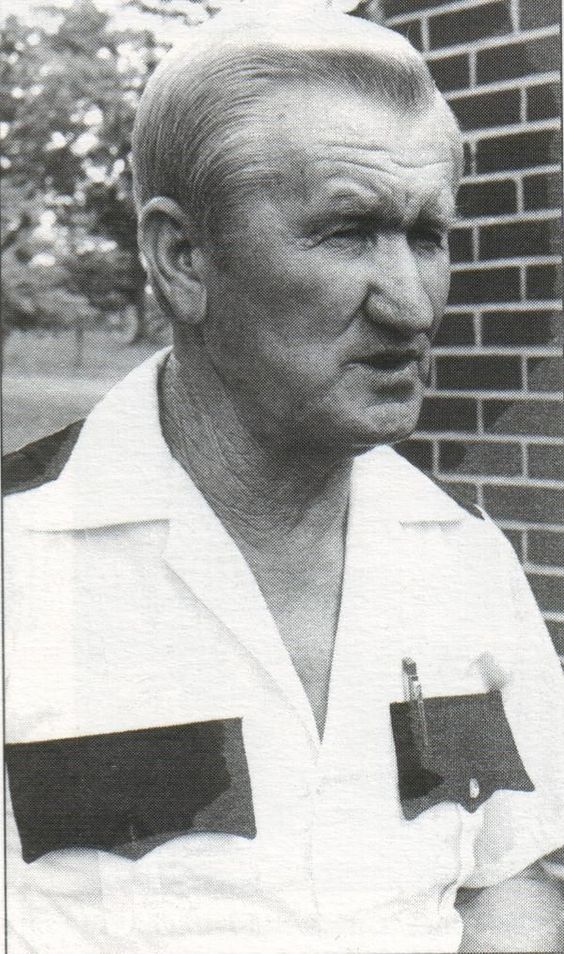
I include both Vester's image and Elvis' here (I think you can tell the difference.) I chose a later image of Elvis in is early 1970s kung fu getup or whatever it was, because that's the Elvis I saw July 2, 1973 at Municipal Auditorium in Nashville. I think my brother, Eric, and a friend at the time, an asshole named "Wizard" joined me. No, it wasn't Jailhouse Rock Elvis, but it was The King, and I was glad for his performance and all of its judo-chopping., 2001: A Space Odyssey theatrics.  
I'm not going to go on a long verbal binge here, but I thought it worth noting that Elvis remains important to, mainly because he got me ready for John, Paul, George and Ringo, who helped shape my life.  Elvis' music inspired me to buy my first recordings -- I got most of his early singles when a friend's father changed out the singles in his bar jukebox in Grand Rapids, Michigan -- for a nickel apiece. Oh, I bought other stuff, too, anything the old man was ditching.
But, of course, Elvis was the treasure.  My first LP, bought for $2 at the 1959 equivalent of a big box store out by the beltway in Grand Rapids, was "Blue Hawaii." By Elvis movie soundtrack standards, it's a fine album. But those soundtrack standards were pretty low.
I bought all of them until early 1964, when the band from Liverpool, changed my perception of rock 'n' roll and changed my life.
While Elvis introduced me to rock music, The Beatles captured my heart in different way, an almost religious fervor that still burns in me today. (Sorry, Padre).
This afternoon, when I take my hourlong trek on my stationary bicycle, I already have plans to play The Rooftop Concert, because it lifts my heart and makes me smile.
But, of course, the backbeat of my life did at least get initiated by Elvis' original drummer, D.J. Fontana, who I regarded highly in his later life. The backbeat, of course, was extended and amplified by Ringo Starr, primarily, but also by Charlie Watts. Ginger Baker. Keith Moon. Bonham.....I'm getting off-topic here.
John, Paul, George and Ringo were my guides, remain so, through life.
But Elvis always has been there. Whether it was when I was talking with my late, great friend, Scotty Moore, who had been Elvis' guitarist and first manager, or with D.J.
It's come up a lot lately when people talk about the movie that I haven't seen. Maybe I will. Maybe I won't.
Maybe I'll leave my Elvis knowledge to the books by Peter Guralnick and the long, drawling and smiling recollections by Scotty Moore.
I remember when Elvis died, and I ripped the bulletin off the Associated Press teletype machine in The Leaf-Chronicle newsroom in Clarksville ........ Bells rang when some sort of news bulletin happened. I can't remember, but it seems a certain number of bells signaled how important the story was.
I was drawn to the teletype machine by a chorus of nonstop bells. I still have that yellowed piece of paper with the bulletin that Elvis was found dead in his bathroom.
Of course, we put out a special run of the newspaper (back when there were such things) and worked on follow-up stories.   
I was a sportswriter, so I didn't do much of that. I cleared my pages out of the way so the news pages could have as much time as possible as they pushed past deadline.
I guess city editor Richard Worden, who is dead these days, and probably reporter Richard McFalls, who is not, and copy desk chief Jim Monday (who I speak with frequently), likely were the ones who put together the special pages.
"Have you heard the news?" I kept asking them. "Elvis is dead. On his toilet." 
We all laughed. That's what newsmen do when grim reality strikes them in the gut. 
Actually, whether on the toilet or near it, accounts vary, it was as good as anyplace to die, as the cleanup would have been relatively simple.
The guy was only 42. After doing what I could to help the news guys, I had to go cover a football practice. Then I went to a box store and went to their record department. I bought a new copy of Elvis' Golden Records, I believe. Or maybe it was a new copy of Blue Hawaii.
Didn't matter. I just wanted to reconnect with the guy who got me into the rock 'n' roll mindset in the first place.
As I walked out of the store, I met George Smith, the newspaper advertising director.  "It's a shame that Elvis died," said George, a nice-enough fellow that to me was an old codger back then. Of course, I'm now probably 15 years older than he was in 1977,
"He was a good boy," said George. "Not like those other ones who died because of drugs."
I didn't say anything, though I was thinking that 42 years old is probably not the age when one dies of natural causes while taking a shit. And I'd been brokenhearted by the drug deaths of Janis, Jim and Jimi.
I mean, I liked Elvis a lot.  And that night I spoke with a former colleague over in Memphis, Steve Jones, a copy editor at the Commercial Appeal newspaper, I believe, and we listened to Elvis records each played over the long-distance phone lines.
When I got to the 18th hole at Colonial and made my way to the clubhouse, there was a message awaiting me. Richard Worden was sick back in Clarksville and I needed to leave Memphis and get back to Clarksville to take over the Sunday paper.
As Sports editor I was second in line. 
So, I hugged Mason and told him I'd call him that night for more quotes when I got back to Clarksville. And I said something to tour sponsor Danny Thomas. For all of his great work with St. Jude, the beneficiary of his tournament, I found him to be a cold asshole.
Of course, he was drunk and I wasn't. That difference sometimes flavors perception.
So, I drove back to Clarksville on the same day that I'd spent the morning at Elvis' grave. 
I didn't have much time to worry about it or to be sad. As soon as I walked in the door of the newspaper, everything was in disarray. I needed to get things in order so we could get the Sunday paper out.
After awhile, I called Mason back at his hotel room. 
I told him it had been a good day. I'd met Uncle Vester and got to walk 18 holes with Mason Rudolph. Oh, and then there was the beer I shared with Gary Player.
Happy Dead Elvis Day. 
 
(FYI: I have a new book coming in March. Pilgrims, Pickers and Honky-Tonk Heroes: My Personal Time with Music City Friends and Legends in Rock 'n' Roll, R&B, And a Whole Lot of Country now is available for pre-order on Amazon or wherever fine books are sold. It is published by Backbeat Books)

Friday, July 15, 2022

Long ago cast from daily newsrooms and classrooms, I find the rewards of checking in on my friends, like this 105-and-a-half-year-old man filled with cheer, greens, love

 Doing a little research for my next book project -- the one to come after the spring release of a book I wrote by working for 18 months during the first 1.5 years of the pandemic -- I came upon something I wrote about an older gentleman in Nashville. Well, actually I wrote about him plenty. And spent even more idle hours with him on the porch on the front of the house he and his wife have occupied for 69 years. Probably 90 percent of the people I wrote about during my long and eventually ill-fated newspaper career have died, as will I, of course, eventually. And I worry about this gentleman. He doesn't want to be bothered for stories and such any more."Done that with you. No need to do more." Besides that, with COVID in the air, he still stays inside, all the time. But it cheers him (and this old man) up when I check in on him now and then. "I'm 105 and-a-half now, so I must be doing pretty good," he said, with the laugh that lifts my heart when I called him Friday. The young woman he took as his wife long ago is 99 and was cooking and cleaning the house when I called. "She's doin' pretty good," he said, happily. "Gunsmoke" or some cowpoke drama was playing on the television behind our conversation.

This nice home in a bustling part of the city is a property that developers lust after so they can plant three or four of those shitty tall-skinnies. The young white people have come in and landlords and greedy developers have chased most of his neighbors away. 

My friend is not attracted to the streams of cash offers left on his front doorstep and mailbox. "If I sold this, I couldn't afford anyplace else," he said. "And we like it here. I can't remember how long ago it was I paid my last note."
He asked me to call back, which I'll do. And he doesn't answer every call. "I just thought it must be you when the phone rang."
My time long ago ran out at the local newspapers. They didn't want my stories about regular people, particularly minorities, in their pages. Not the demographic they were after, I was told.
It was my demographic, though. Still is.
So, I sit here in my office and try to remember to check in on my old friends, who began as story subjects. The dead ones don't answer their phones, although some have answering machines I talk to.
Friday I got lucky to be cheered up by this old friend. Nope, not making money doing this, but, fuck, as my old pal Ricky Nelson said one day, "you can't please everyone, so you got to please yourself."
If COVID ever goes away, I have a standing invitation to rejoin my old friend on the porch. And maybe his wife will have a pot of greens. My favorite food.
I'll tell you more about my book, due in the spring,  in the months to come. And, now, I'll get back to my research for the sequel.
Right now, I think I'll just sit back for a bit and remember how lucky I have been to have such great friends, because of the business I was in and because so many story subjects actually took somethihg of a liking to this old, white guy.
If the newspaper industry didn't appreciate me, that's fine. 
I've got friends more valuable than paychecks.  Those living and dead are with me always.

Wednesday, July 6, 2022

July 4, 2022, when a punk with an automatic weapon blasted away brains, babies, hopes and my memories of peace on the beach


I first filed the first part of what follows, with the photo above, on July 4, 2022, on Facebook, as soon as the horrid slaughter of innocents and innocence in Highland Park, Illinois, was reported. I am reposting on my "They Call Me Flapjacks" blogger space, because I want it included with the other essays and nightmares and celebrations on that site. However, this is expanded. After the first section, join a sort of mournful Class of '69 reunion of souls. My classmates at Deerfield High School all grew up thinking Highland Park (and Deerfield) were sisters of peace and love. Or maybe that peace and love stuff was just me....

American nightmare. Here's a CNN photo of downtown Highland Park, Illinois, the lovely little city turned national tragedy and crime scene on Independence Day. Automatic, high-powered weapon and some punk mutilated people as they gathered to celebrate our nation's greatest holiday. I grew up in Deerfield, just to the west, a fistful of miles from this scene. Highland Park was virtually our "twin" and students from there were part of the same school district and went to high school with me. I was lucky enough to even date a girl from there on a couple of memorable nights. This blood-spattered downtown often was my after-school destination when I -- generally an introspective loner or at least a lonesome fellow -- drove my 1965 Ford Falcon to the end of downtown, to the Lake Michigan overlook, sometimes going down the trail to the beach, where I would think -- and smoke -- while the waves crashed. Sometimes I just drove down to the beach parking area if I didn't feel up to the climb or if I was in a hurry to get to the water and wander in peace, wondering where I was and why. The city and the lake were good for me, the lake one of my most-reliable friends. It was peaceful and safe. A half-century-plus later, "peaceful" and "safe" downtown Highland Park probably was what people expected on July 4. Instead, another powerful weapon in the arms of some crazed fucker turned the day to terror, a terror that never will be forgotten on future Independence Days. That pastoral site of my smoke-filled after-school sojourns was changed forever. And there are people who believe that these types of weapons are protected by the Second Amendment. .... If you are among those, well, fuck you. Even my lonesome memories have been scarred. I haven't been there in more than 50 years, but it felt like I was there on this July 4, when I saw that bloody downtown. I believe it was Rosewood Beach back then, I can't remember. But to get there, I had to drive right through the scene of what has become yet one more example of our American nightmare. God damn it. When will this country's leaders wake up? What matters in America? Well, when I was reading things about this bloodbath in a great little city, I was greeted by pop-up ads advertising that July 4 after-sales are underway. It's the American Dream.

----------------------- 30 -----------------

New thoughts, July 6, 2022, from a violence-addled man.

I have been in contact with some of my friends from my years at Deerfield High School, and they are also shaken.

Josh Hecht, who has turned into a real friend, even as we were pass-in-the-hall or smoking area classmates.

He, too, remembers seeking solace at the beach in Highland Park. He, too, has been asking why.

We have no answers, either of us. Any of us.

And Dee Gerson, as she was known when I took her to a high school dance and probably made her sore during the slow dances, is now an acclaimed artist by the name of Dee Tivenan who lives in the San Francisco area.

I actually reconnected with both her and Josh when it was time for the 50th class reunion of the Class of 1969.

None of us were going. But all of us used the occasion to reconnect with each other and with our classmates who actually did get together.

Dee, who was a lovely young woman (and I believe remains lovely) actually grew up in Highland Park, rather than Deerfield. We all were in Lake County Schools District 113 back then. I'm sure that has changed. Some Highland Park students attended our school.

Actually, Dee's family only lived a mile or two from where my family lived in Deerfield. She was a cheerleader with a great smile, shape and was among the smartest in the class.

In response to my Facebook post above, she wrote "Thanks for writing this, Tim. I'm so sad about it all."

I responded: "I know, Dee. I thought of you today, it's mind-numbing.

Dee: "Thanks. It is, and it's not going to stop."

My natural optimism began to show in my next response: "No. It will get worse. It is sad. I always try to remember most of us are good. But we aren't winning."

She responded: "I agree."

Josh wrote an email: "Hey, Tim: Hang in there. Just wanted to say I am thinking of you and hope to see you this year.

"Your writing yesterday was moving. And helped during a difficult day.

"BTW, I, as a loner, also used to drive to the beach and sometimes sit in the parking lot and sometimes go down to the beach or pier and smoke. Although I was in a 1963 Ford Fairlane or my 1958 Chevrolet Apache panel truck."

Then, in a follow-up note, he wrote: "Sad day and a sad reality came to a place that was part of our youth.

Both Josh and Dee, coincidentally, live in the same part of the country, though didn't know it until we all began to correspond back in 2019, when we explained our reasons for not attending the reunion.

After the shootings, seven dead now, I wanted to embrace them.

Also, thought about my other classmates, many of whom still live on the North Shore, all affected by this horror.

In a way, thoughts of them, of the horror, of the blood-spattered street where I once drove to get to the beach, was a mental reunion. We all shared that feeling. After all, other than the occasional football injury -- I twice was taken by ambulance to Highland Park Hospital, which received most of the July 4 casualties -- there wasn't a lot of blood shed at "dear old DHS," or whatever it was called by the suckers.

I felt closer to them than I had in the 50 years since I rolled out of town on the tollway, threw 35 cents into the first bin and fired one up and popped open a Bud. I was leaving home. Bye-bye. As a later poet would put it, I was runnin' down a dream. Still runnin' it down, but this isn't about me.

So, I posted the Facebook reverie of slaughter on the Deerfield High Class of '69 page, the one that was established to organize the reunion that a couple of loners and a fine artist from the Coast did not attend. There also are a number from that class who died of various causes during the decades. But that's not this story.

I did get some reactions to the tale of blood on the streets in the town of Chicago.... ahh, got carried away thanks to Jim Morrison in my brain. The slaughter was in Highland Park, in the generally pastoral North Shore, where privilege meets the lower-middle-class in the school system.

Here are some of the reactions to that:

Kathy Omillion Prazenka: "Innocence lost. ... I may have just moved to Colorado, but my heart is in Highland Park, and it's broken."

Madonna Maze: "No words."

Kirk Gustie: "What happened to good parenting? Social media is also to blame."

Tony Gutman: "I grew up in Highland Park (Ravinia school) and spent so much of my time in downtown H.P., and was there just last week. Terrible what is happening."

Jo Anne Caruso Roler: "Thank you for expressing the sadness of broken memories and the grief for the lives destroyed yesterday. This shit has to stop!!!"  (If I remember right, Jo Anne was also a real stunner in the halls of dear old DHS, but this isn't about that.) 

Steve Price: "Really sad. Even though I live in the St. Louis area now, Highland Park will always be home." 

I may add more to this. Or I may not. All I know is it makes me sick. And, strangely, for the first time in a half-century, kinda homesick for a town that is long-ago in my rearview. Nashville is my real hometown and I don't plan any returns to Deerfield, so perhaps it is heartsick rather than homesick. 

I am not, at least at this time, running the picture of the punk, a "nut job," as my good, Brit pal Ivor Smith says, from a land where they don't see this sort of thing on a nightly news basis.  A guy from the relatively peaceful land of Jack the Ripper, Ivor doesn't think all Americans are like this.  (We have become connected only online, but I regard Ivor as one of my closest friends.)

He's a good guy. And that's not the exception. Like I told former cheerleader Dee Gerson Tivenan, most of us are good.  

I am running the pictures -- pulled from CNN -- of the victims. Just those who are dead so far.

Man, as Jo Anne said, "this shit has to stop."

Meanwhile, if you want to, you can do what this nut job did and go to the big box gun shop and get yourself a high-powered semi-automatic weapon and just sit at your front window, waiting for the bad guys to come get you. 

Or maybe some genius in Washington will push through legislation to stop the sales of weapons meant only to kill and mutilate.

As a couple of other poets once said: "Paint it black," because the carnage is just getting cranked up.


Monday, June 13, 2022

A fictional, completely fabricated tale about an anonymous old man and how a so-called 'Christian' university repaid his dozen-plus years of hard work

Of course, what follows is pure fiction. I just felt the urge to explore fantasy and the sometimes disappointing world of make-believe. 

It’s a short bit of make-believe about an old man who had spent more than a dozen years spending half of each week preparing for and teaching journalism writing classes at a relatively small, Christian university someplace above or below the Mason-Dixon Line and on either side of the Mississippi River.

The old man liked the job, because he thought he was helping the young people learn how to better use the language skills when pursuing careers in journalism, either print or broadcast, public relations or even marketing.

“Bless you for what you are doing,” said famous TV personality Robin Roberts after visiting for a few minutes with the old man. “Writing is at the heart of it all. If you can’t write, you can’t do anything.”

Roberts was at the school to sell books but also to help generate interest among the young people in the business of journalism. She goes lots of places. Even went to Ukraine to interview the first lady and host coverage of the Special Olympics.

"The business of journalism" or some such she had said.

It wasn’t until just this moment, when writing the sentence above, that the old man realized again that journalism is indeed a business.

He knew it all the time. It was the business of journalism and the fact he was writing too much about Black people and old people – “those don’t fit in our demographic,” the high-powered exec told the then not-quite-so-old man 15-plus years ago when he was working at a 300,000 circulation daily newspaper whose numbers now are about 10 percent of that.

It was not long after the demographic “discussion,” that the not-yet-so-old man was given a buyout, sworn to secrecy and against lawsuits, reminded that he had no grounds for age discrimination  complaints, told to sign the paper, slit his finger with a knife for a blood oath and leave.

Taking the “voluntary buyout” was the only way the man was going to be able to feed his family, and he was tired of the assholes he was working for, so he left.  The story goes that he really had no choice, anyway.

Feeling older every day, this mythical man was too old to get a job anywhere in his village. Even guys who had worked for him, who had learned from him and used him as a primary reference for new jobs, didn't hire him when writing positions came open in their organizations. 

So, the man spent about a year walking around Radnor Lake, pondering the future and yelling at the alligator snappers. Then he found at least part-time employment and purpose as an educator.

First came a one-year contract as journalist-in-residence at a wonderful school for wealthy white people, Asians and Blacks with athletic skill of mid-major quality.

Good year. The man, while growing older, really loved working with those young people at the student publication. Some remain his friends, have found success, marriage and children and they keep up with the old man.

After that contract ended, the old man continued his freelance writing career, walking around Radnor and meeting his best friend for lunch at a Greek greasy spoon. Chicken souvlaki or spanakopita with water and four refills of coffee. 

The freelance business wasn’t bad at all. He was picked up as the stringer for a major wire service, where he wrote about mass murders and missing bull semen and country music deaths. He also  continued writing for local outlets. It was some of his career's best stuff. Much of what he wrote was about aspiring and forgotten musicians and 104-year-old Black fellows and others ignored by so-called major publications.  A pizza and fish place that doesn't sell pizza, for example. The Palestinian used tire salesman. A beautiful heart doctor who also was a talented singer-songwriter, mother and wife.  

Sometime, around 13 or more years ago, a small, Christian university – where the old man had friends in the journalism department – called on him to help them launch a student news product. A web site. The old man didn’t know much about web sites, but he had been honored as one of the country’s top word men by various journalistic organizations and associations. One year, in fact, he was proclaimed the nation's top features writer. 

And that university hired him to work, a few hours each week – even though, obsessive by nature, he treated it like a full-time job – helping students improve their writing skills while also teaching them about such things as news value, ethics and how to avoid academic rhetoric in their stories.

It was a great job for the old man. He loved the students and loved talking with them about their stories, their story ideas, whatever troubles they had, academic, professional, medical or personal.

The students constantly gave the old man high approval ratings, and he had been told he was important to the university’s continued growth in the journalism-education business. He was told he was there as long as he wanted to be there, which furthered his loyalty and passion for the job.

The old man felt good. Felt like he was part of the journalism department family. Heck, he’d gone so far as to recommend the small Christian university to young people looking for a good higher education option.

Things looked good for the old man.   

Oh, the money was basically crap, but it was crap he could rely on as he toiled to keep his freelance work above water.  But a major pandemic had ended most of the freelance work.

Instead, he began writing a book in the rest of his time. There will be a good end on that story, when that book is published.

So, the old man continued to relish his time with the young people at the small, Christian university.  Oh, he struggled to remain upbeat with the occasional unmotivated reporter or editor, but he liked them all and never gave up, worked hard to try to show them the way. They were far from unique in their  post-millennial attitudes and excuses.

The old man was planning on how he was going to shake things up – he each year did this, trying to improve his writing classes as well as his work with the student publication.

Summer approached, and the old man was already planning out summer coverage, scoping out campus events and thinking ahead to next year.

That’s when the old man was told – not by the one who made the decision, but by a substitute – that the Christian university was going to take its journalism program in a different direction.  The old man wasn’t needed any more. It was clear, by the color and length of his hair that he didn't fit the demographic.

Sure, he counted on the income through the summer, and summer had arrived. But he wasn’t needed, effective immediately. It was a hard thing for the old man. Harder still when he found out that even though he had just been told as final exams for the students were beginning, others – so-called “friends” in high places who had promised to keep him up to date on his future – had been working with a new boss (who never talked with the old man or visited his classes) for several months. They apparently had sworn each other to secrecy, even to the point of intimidation. If a friend is being hurt, secret pacts should be damned: You let your friend know. Or else you are not a friend.

The plans were to get the old man out of there.  As noted above, people he regarded as his family, as he's a sucker for loyalty, decided to get rid of him, but kept their mouths shut for a full semester. When he asked even the highest-ranked among his friends and colleagues if they'd heard anything about his classes for the next year, about his future, he was told the old "I don't know of anything" regarding any changes.

When bosses in a journalism school lie, bold-faced, to a long-time colleague and so-called friend, the old man wondered just how ethical and truthful the journalism department was .... When the old man went to school, many, many decades before, the journalism department where he studied put the highest priority on truth-telling.  Lying was not a thing practiced by his professors, many of whom were former big-time anchors and also covered World War II with Edward R. Murrow.  Murrow, it is said, did not approve of lying in life or in the news. Not even to get the biggest story.

The old man felt gut-jabbed by the action, but even more so by the subterfuge that kept him from making alternate employment plans. Sure, writing was important. But, apparently not as important to the school as it was to the old man, who loved his classes and told others his classes had been the best yet this year.

“I really love these kids,” he said, when called into an office to be told his time was up. The substitute – remember, in this fictional story, the person who made the decision did not visit with the old man about the decision – shrugged and said “It’s time.”

The old man was told he should come to the end-of-the-year luncheon, when seniors would be saluted. He figured he should, just for the kids. Remember, in his mind, it all was about these kids. He was expecting to be thanked for his work. He neither expected nor appreciated a half-ass collage of so-called “memories” – mostly including things that had no bearing on what he did for the school -- in a Walmart shadow box. Nobody even knew what he’d been doing for a dozen-plus years, apparently. He was gracious and said some words about how much he loved his time there, especially loved the students. He did not bring up the lies, as this was a program for the students, and they all loved him.

The frame soon will hold a Rolling Stones poster, probably the one he got from Mick and the Boys during the Voodoo Lounge tour of years before.

The old man went home and took about the task of writing letters to officials at the university, remember it is a Christian university in this fairy tale, about how he was wronged. He was careful and non-accusatory.  The letters did not address lying and subterfuge. Only hurt.

Despite hours of fashioning well-written tales, he got terse, one-sentence replies from the highest and mightiest at the Christian school. "You have been terminated," one official wrote.

"I'll be back," the old man countered, thinking of the "Terminator" jargon. But he knew he was done.

Basically, the officials said he was as lucky as Jesus on Good Friday. Christ, you know it ain't easy, the old man said, spittle on his chin, water in his eyes. You know how hard it can be. I guess that's the old man's cross to bear as he works through his moments of doubt and pain.

The people he regarded as friends at the small Christian university didn’t even bother to answer his letters, or attempt to help him chase off the Black Dogs of Depression. Good thing he has a family and a cat. And real friends.

Former students, once they heard about what had happened, burned their diplomas, forever forsaking the small Christian university for its treatment of the old man. Remember, this is a work of fiction, of  course. No diplomas would be burned if this was a true story. 

But the figurative diploma-torching didn’t matter in this little bit of fiction.

“God bless you for what you are doing,” Robin Roberts had said about the old man and his work, his dedication to the students at the Christian university.

But, in the end, God had nothing to do with it. The old man was told to leave.  You don't look like you're from this part of the country. They see a free individual, it's gonna scare 'em, he'd been told long ago.

The best his friends at the Christian university could do was call him up the next day after the public flogging to ask if he could work with them this summer on what were the things that worked best in his classes, so they could be incorporated into their planning for the person selected five months before to take over the old man's classes. “So, I lost my job yesterday, after more than a dozen years, and you want me to train my replacements?” said the old man.  Here comes that spittle again.

He would have told them to go to hell, but they already were working at a small, Christian university.

I am glad this is not a true story, because surely they couldn’t be that mean-spirited at such a place.
Thursday, June 2, 2022

Tagging my friend the motorcycle guy, Jake and his "woman" in the other room, his father's dirt pile and the two Veras (and thanks to Peter Cooper, Jim Myers and Brad Schmitt)

Jake scrunched down in the filthy, red-brown sofa and pointed to the two young boys.

I didn't know their names, but I figured I'd get to it. I asked him if his wife was around, and he said "No." 

In fact, he wasn't married. "Their mothers aren't here," he said. "But my woman is."

"His woman," he said, was in the other room, where his dad, Jake Sr., was with his own "woman."

Both of these women had to be tough to put up with this, I thought to myself, as I scanned the porch where we sat.

The women, I discovered, both were named "Vera."

Jake said he was "18 or 20" years old. And yet he had these two kids, probably 4 and 6, who were drooling around with toy trucks.

I'd only ended up here because I had lost control of my Saab and sped, recklessly, into the service station fill-up area -- a few feet from Jake's house -- and hit a motorcyclist and his vehicle.

Well, actually I just tagged both. The motorcyclist was a guy I knew, a former pressman named Richard Salmon, a fellow I considered a long-time friend from our days spent at 1100 Broadway, where I would go to the pressroom to check on special section covers and other issues. I had no worry that they always would be done right.

I just went there because I liked the pressmen much better than most of the assholes up in the newsroom, especially the management types and their ass-kissing supplicants.

Anyway, I had steered the speeding Saab between Richard and his Harley. I bumped him in the hip. I worried because he had been seriously injured recently in another spill. And I scraped the front fender of the bike.

"Don't worry about it, Tim," Richard said. He brushed the hip I had tagged and said he was OK. As for the bike, it was just another scratch.

"You should see what kind of scratches I get on this thing when I'm riding," he said. 

After hugging Richard, I looked over to the house near the gas station. A man, I later learned was Jake Sr., looked like he was splitting wood.

Seemed like it might make a good column for the paper.  I was only out here looking because my friends back at the newsroom -- Peter Cooper, Jim Myers and Brad Schmitt -- had encouraged me to do it.

"Just get back out there with your people," said Peter, Jim nodding. Brad rubbed at his blood-red eyes and concurred.

Problem was, and they knew it, that the management had taken my column away from me. For almost a half-century in journalism, I spent my own time, after the work at the newspaper, going out to find regular people to write about.

People are more alike than different. We have the same hopes, dreams, fears and ambitions. That was the basic "message" of my half-century of columns, many of which were about lovable losers, no-account boozers, honky-tonk heroes, barbecue chefs like Ole Steve, barbers and, well, really the salt of the earth of various shades.

The column had been taken away because "the people don't fit our demographic," I'd been told. I'd been offered the chance to write about young, white professionals instead.   I thought of the Dylan line "They asked me for collateral, I smiled and pulled down my pants," that I'd taped on the wall outside my dorm room 50 years ago.  Then I said I wouldn't change the scope of my column, and since I did it on my own time, I'd focus on my other duties instead. In other words "Fuck you." And I don't know what the Dylan line has to do with it.

 I went from the gas station to see that the man I'd found out later to be Jake Sr., wasn't splitting wood. He was just piling dirt. Digging it from a small hillside and piling it up. He didn't know why he was doing it, he told me.

That was before I went to the screen door, where Jake Jr., invited me to come in and sit down with his kids.

I never did meet either Vera.  And the age of Jake's kids and the fact he had custody at such a young age was of interest.

I reached into my pocket for a Reporter's Notebook, which I opened up. It was filled with notes from other interviews, but I found room on several pages to use for our interview. I crossed out the old stuff on each page so I wouldn't get confused.

And then I woke up. Yep, this was all a dream.  Around 6 a.m. June 2, 2022, in my sleep, I was doing what I loved to do, something that had been taken away from me and I was happy.

I really didn't want to wake up when I did.

I really had wanted to find out more about Jake Jr., and Jake Sr.'s dirt pile.   


Tuesday, January 18, 2022

Memory of Emery ... yesterday is dead and gone, and tomorrow's out of sight, but Ralph's radio show helped me make it through the night (apologies to Kris for borrowing and butchering a line for my own entertainment)

 I started thinking about the AM radio in my 1965 Falcon Futura Sports Coupe with faded vinyl top immediately after I heard of the death of Ralph Emery the other day. And I thought about the book that never was.

More details on those thoughts and others that come to my head as I freestyle my way through this little tale. Typos, etc., be damned when I start recollecting.
Ralph was a legend, of course, in Nashville. He made his bones as an all-night radio guy and became what some call "Nashville's Johnny Carson" on TNN. And everybody either knew him or thought they did. In my case, it's a little of both.


I was fortunate to be invited to join him and Tom T. Hall and others at their "Old Farts Movie Outings" (not an official name, perhaps even something I made up.)
Tom T., who died last August, told me they always picked action movies, cowboy movies if possible, and went to matinees.
It was the kind of stuff their wives wouldn't like. No good Clint Eastwood movies? Well, maybe there's a new Terminator or Bond film. I don't know if they ever made it down to "The Fast and The Furious" franchise, but I'm sure they liked "Rocky" and "Rambo."
I think my friend, Bobby Bare, may have been a part of that gathering as well. I don't want to call him right now because he's taking his nap. Besides that, I've spent enough time in recent months talking about mutual dead friends and acquaintances lately. It can get kind of depressing. I like to call Bare because it cheers me up. Him, too, I hope. Actually, while he prefers to be called "Bare," I usually call him "Bobby," because that's what Shel Silverstein called him when we first crossed paths in 1972. I won't go into that tale here, because this is about Ralph Emery.
I've known Ralph for decades.
We weren't close friends, but his mastery of broadcast skills (I preferred his radio work, which I used to listen to on late-night drives) made him a legend and, at least, an acquaintance of mine and, I'm sure, yours.
I particularly welcomed Ralph when I was a sports writer at The Leaf-Chronicle in Clarksville, Tennessee. That job had me traveling to cover football and basketball games in Paris, Fort Campbell, Erin, Dover, Springfield, Dickson, Lebanon and Cunningham, to name a few of my exotic late-night wanderings in my 1965 Falcon. In its latter years, I had to take a passenger, because someone needed to put their hand over the carburetor and cause suction so it would start. "Hey, xxxx, you want to come with me to a game and work hand magic on my carburetor?" I'd ask friends and acquaintances. Oddly, I seldom got rebuffed. Nothing like a good carburetor job to break the ice, I suppose.
Anyway, driving around the then-frontier-like area, back when this was a great place to live, about the only thing I could depend on was WSM-AM 650 radio, with Ralph and whoever he had for a drop-in, whether it was Willie, Cash, Waylon, Tammy, whoever. And, between his own recollections and discussions with Haggard and the like, he spun the 45 rpm records, back when they still had them. Classic country, the type of stuff that appealed to all-night truckers. Lefty, ET, Tex, Loretta....
I learned a lot about the art form of country music just by listening to Ralph. By the way, I had neither a tape deck nor FM radio in the Falcon, so it really was like Ralph, on the clear channel, who was the only constant in my journeys back to Clarksville after ballgames ended and I was on my way back to the newsroom to get the coffee pot going, get my fresh Merit 100s pack ready and write about the game or games. Oh, like I said, I often had company in the passenger seat, someone who could give a hand-job to a carburetor while I worked the ignition.
That's about a half-century ago, now. But when I did meet Ralph in person, he was like an old friend, at least to this old guy who learned so much by listening to his show.
Since I came to Nashville in 1988 and eventually was in charge of music coverage, my path and Ralph's crossed a few times. I interviewed him once for a now-defunct Country Music Association Closeup magazine piece. Liked the guy. Laughed at his tales of Stonewall and Little Jimmy.
About five or six or even eight years ago, Ralph contacted me about writing another book about his life, to cover things left out of his own previous writings.
I was flattered and even excited by the prospect.
He asked me to meet him at Hillwood Country Club for lunch and we'd talk it out. With as much admiration as I had for him and the love I have for writing about classic country musicians and personalities, I really didn't worry much during my first fruitless hourlong wait. At least the white-jacketed servers were kind as they refilled my coffee cup.
But then I finally called him, and he apologized that he'd forgotten our appointment that he'd established. He really was upset with himself for taking my time, and we rescheduled for the next Wednesday.
This happened two more times. He always was generous with his apologies and his kindness.
Finally, he said he had so much going on that he didn't want to reschedule for a little while, but we'd get to it.


The last time we really had a conversation was late December 2018, when we bumped into each other at the funeral for Shirley Hardison, a former security guard at the morning newspaper and a long-time presence in that same role at Ryman Auditorium. She was beloved in the country music community.
I also loved her, as Shirley and her newspaper security guard cohort, Steel Guitar Hall of Famer Johnny Sibert -- who died in 2013 -- were two of the biggest boosters I had at 1100 Broadway during my 20 years in that building, where I worked for Nashville Banner and The Morning Newspaper.
They did not appreciate the way I was being treated by corporate hacks and their sycophants. I believe Shirley and John, like me, were quietly walked out the door when corporate types -- in their case a contracted security firm -- took over. I left, really on my own terms, the one stipulation being that I left. Long story there. There's a book about it somewhere.
By the way, Johnny Sibert had "settled down" in security guard work after years of top-tier steel work with the likes of Carl Smith, Kitty Wells and Little Jimmy Dickens.
Carl and Little Jim may have been a part of the Old Farts Movie Club. Nice guys, they certainly qualified.
Shirley certainly could have fit in well in that world of old country musicians, even though they were males. Well, to tell you the truth, she preferred friends with, well, talent ... and balls.
As my friend the musician and historian Peter Cooper, now Country Music Hall of Fame honcho and kind man, wrote when Shirley died: "Shirley had been in Nashville forever, and she used to run with the fun crowd back when Lower Broadway bars and cafes teemed with folks like Roger Miller, Willie Nelson, and Tom T. Hall. You name ‘em, Shirley knew them and had stories.
"Phil Everly of The Everly Brothers? She dated him, back in 1957, when the Everlys scored smash hit 'Bye Bye Love.'”
But let's get back to Ralph, who was a Country Music Hall of Famer, like so many folks I've been able to spend time with and hear their tall tales. If somebody wanted to talk, I always enjoyed listening, learning and sharing.
Ralph and I were together in the hallway of the funeral home before Shirley's service. I was waiting to sign the guest registry. As was Ralph.
He did not recognize me at first, then I reminded him that I was the guy who was going to write his most recent book. I joked him that he had stood me up three times, when I waited for him at Hillwood Country Club.
"Tim, I'm really sorry about that," he said, or words to that effect. "I decided that no one wants to read anything else about an old has-been."
I assured him he remained beloved and told him that if he changed his mind, I was available.
I was sorry I never got to write that book with him. I am so sure I would have learned a lot of great stories, as he knew everybody, was loved by most of them, and he loved them back.
I never got angry for Ralph standing me up. He simply forgot, which happens to "old farts," as he explained in his apologies.
I never joined the Old Farts for their movie outings. Most of them are gone now, but I'm glad that for the most part they were my friends.
I really didn't want to run this little semi-tribute on Saturday, January 15, when he died. There are so many more-important people whose lives he touched, and they were the ones who should be heard from.
All I really had to add to the picture of Ralph is that he stood me up a few times and I never got to write the book that he'd decided no one wanted to read.
And it's certainly no big deal if an older guy forgets an appointment. Just ask me as I plow into my eighth decade.
I have many, many friends in country music. Most of them are dead or otherwise incapacitated.
I'm just glad for the long, late nights in the old Ford Falcon Futura Sports Coupe when -- as long as I could get the carburetor working -- I listened to Ralph and heard his memories and the tall tales of folks who would drop in at the studio on the way home from Lower Broadway.
I finally had to sell the Falcon for $100 after the manifold blew up and the transmission went out and the carburetor stopped responding to the loving touch. Jimmy Gaiser, whose Gaiser's garage in a shack near Austin Peay had performed miracles in the past, told me it was time to let it go. (By the way, if I dazzled you with the name of an auto shop I used a half-century ago, I had to ask my dear friend Larry Schmidt, a native Clarksvillian and my first sports hire, for the name. Gaiser's kept my next two cars rolling, also. Mr. Gaiser and his guys huddled around a pot-bellied stove and ate food from Red's Bakery while WSM radio played in the shop, unless Sherwin Clift, Voice of the Govs, was calling an APSU game on WJZM.)
I had good tires on the dying Falcon, so I swapped them with my brother's for another $50.
I'm sure the radio dial was set to 650 on that day. It was about the only AM station I could get on that Falcon.
Photos from Country Radio Seminar and New York Times.


Tuesday, December 7, 2021

With passing of Margaret Everly, all you have to do is dream that she restores harmony to Don and Phil so they can help St. Pete's choir and roadshow

I was sitting in my eye doctor's office Tuesday morning when a dear friend called me to let me know Margaret Everly had died.

Peter Cooper -- musician, historian, author and mostly damn nice guy and beloved friend -- knew that I had a long-time telephone relationship with my one-time neighbor, who died today at 102. He figured I might  care that another of my "telephone pals" had died. 

I didn't know Margaret well enough to contribute any knowledge or wisdom or enlightenment to Peter, who always has enjoyed being enlightened. But I did get to know her kindness and her voice during many phone conversations over the years. 


I don't really need to go into the decades of telephone contact that I have kept with so many old-timers, mostly musicians but some simply citizens of our world. It has been a simple joy to let people know they haven't been forgotten.  I'm the one who has gained by it.

Truth is, most of the folks who were on that list to get a call from me are gone now. Now, I mostly stare at the phone and try to remember some of those people, those conversations. Those calls were part of my lifeblood.

Anyway, I'm going to revise a prior blog post that I wrote last summer when Don Everly died. In that post I referred to my calls with Margaret ... we had lost contact in recent years ... that were initiated in the late 1980s, thanks to late Nashville Banner iconic journalist Bob Battle.

Bob is gone now, long-gone, but it was my joy to work with the legendary journalist in the old and lamented Nashville Banner newsroom.

I usually came to work around 4:30 or 5 a.m. ... and Bob already was there. He may have smelled of the white wine of the night before, but he was a helluva guy, an old-time journalist who knew everyone in Nashville (back when it really was a community and not a high-rise forest for California and New York transplants ... welcome folks, but you don't know how it feels to be me or any Nashvillian.)

Others who beat me into the newsroom included my great friend Max Moss, the wire editor, and clerk Albert Davis. Both of those wonderful gents are dead now. Just about everyone is, I guess.

Anyway, it was Bob who connected me with some of the folks in the entertainment industry and in the world of high crimes and misdemeanors. 

Everyone called Bob for advice, as he was a kind old newspaper dinosaur of the type they stopped creating on November 18, 1951. That date is only important to me, by the way. The other participants on that day in Pontiac, Michigan, my mom and my dad (who knew Bob well) are gone now. Just about everyone is, I guess.

Bob, who always wore a pressed white shirt and tie, answered the phone with booming cheer and inquisitive charm. If he thought I should get that call, he'd transfer it. 

"This is the mother of The Everly Brothers,'' Bob said one morning. "Maybe you can help her. Her name is Margaret."

It was the first of many chats I had with the mother who raised the greatest harmony duo in the history of music, The Everly Brothers, Don and Phil.

In her calls, she complained about her sons, while also trying to enlist my help in getting them to, as ET (that little space monster) would say "Phone home."

I think Phil was in Los Angeles, hanging out with Warren Zevon, a healthy enough pursuit that I wish I'd been able to enjoy. Lucky I didn't, though, I suppose. I've never understood "moderation." Quit or die.

But Don was here in Nashville and in Kentucky.

A former confidante of both Bob Dylan and Jimi Hendrix, he was hanging out at Brown's Diner, where he obviously enjoyed the hamburgers. That's the only place, other than on the stage, that I ever saw him "perform." Bye-bye hamburger. Bye-bye piles of fries. Bye-bye chili pie ....

One place he wasn't was at his mom's house.

She didn't name which son it was, but just said "my son hasn't visited" or some such.

Since Phil was not around, as he was getting his "shit fucked up," as Zevon would say, or hanging with Tom Petty and The Heartbreakers (again, something I'd have enjoyed), I guessed it must have been Don she was mostly trying to reach.
Her house was a few blocks from my own, although in a slightly more upscale corner of the neighborhood.

"I just don't know why he doesn't come home," she said. "I kept his room like he had it. It's all painted black..... If he's not coming home, I think I'll get it painted."

Again, it must have been Don's room.

According to published stories, he'd enjoyed LSD with Jimi and others. Again, what about me?? I believe she told me there were posters all over the walls and ceiling of the black room.

The quotes and recollections are hazy and paraphrased, as I wasn't taking notes. She simply was calling to see if I could get her son to visit. And nothing grabs my heart like a distressed mom, unless it's a big, old dog.

I never accomplished that task, getting little Donnie to go home. I tried, I just couldn't track him down.

But I'm sure Don did, on his own, finally visit his mother. There was a legal tangle over ownership of the house she was living in, and I'll bet that Don and his mom finally resolved that issue and perhaps -- I'd like to dream, at least -- Margaret and her bulkier harmonic son got out the paint rollers and covered the walls and ceilings of the room so the house could be sold. I don't imagine that's true, but, what the hell, everyone's dead now.

I should note that she did invite me over to see the room, but by the time I decided to do that, the number I had no longer was in service.

Now both the boys are gone.

And finally, if things work the way we've been taught, if that everlasting optimism spread from pulpits has basis, well Margaret today was reunited with her boys and with her husband, Ike, who led the charge into show biz for the family.

Ike died in 1975.

Phil died in 2014, on the West Coast, where he lived like the rock 'n' roll legend and pioneer that he was.

Don joined the heavenly choir last August.

Given their fractious history, the brothers probably have been spending their eternal time (or is there time in eternity?) arguing about who came out on top in their famous stage tussle back in 1973 at Knott's Berry Farm in Buena Park, California. The brothers split for 10 years, but did reunite for commercial purposes 10 years later. It likely was a reteaming that made the testy commercial-reteaming and money grab of Paul and Artie seem sweet by comparison.

Now Mom Margaret is with them, so maybe she can get them to focus on their work in the heavenly choir.

God, it has been said, loves to hear "Wake Up, Little Susie," "All I Have to Do is Dream," "Cathy's Clown," and my personal favorite "That's Old Fashioned (That's the Way Love Should Be.)" Back in 1962, when that was the brothers' last Top 10 hit, I used to play it on the juke box at the Malt Shop in Grand Rapids, Michigan. It was a subtle message to the girls who liked to share my booth. Three plays for a quarter.

We enjoyed sitting side-by-side in the ice cream parlor.

I can hear those great songs whenever I want to. All I have to do is dream.