Sunday, February 26, 2023

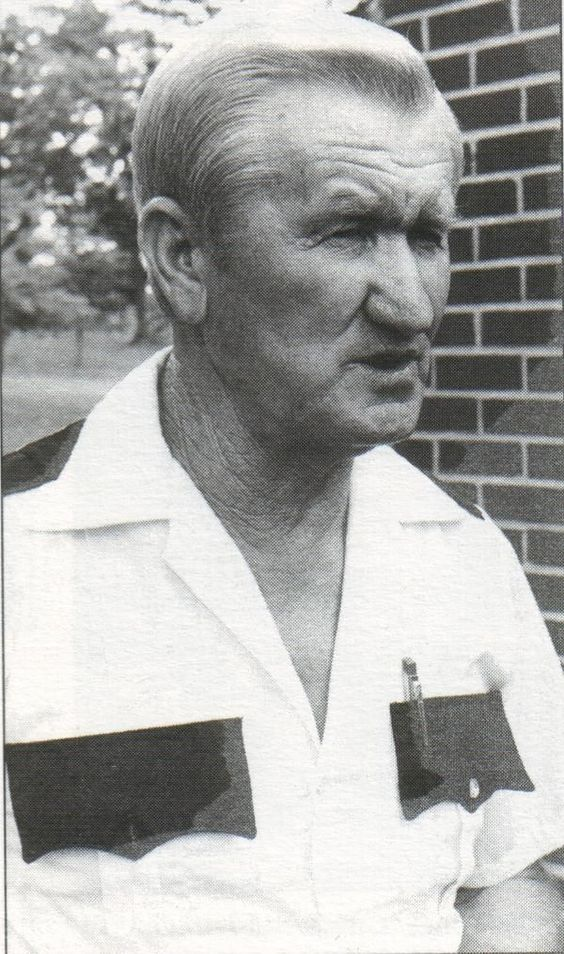
Charlie Appleton, the classic, old-fashioned newspaperman's life reaches "30" mark ("the end" in newspaper lingo). But, in a not-so-bizarre twist: Love lives on, though my rewrite magic fails

 "Timothy, I am looking forward to it, getting back there on the back porch of our cabin, smoking my pipe. Going home Sunday. If not before."

Charlie Appleton told me that, again, just a couple of days ago, Ash Wednesday, when my wife, Suzanne, and I visited him at the NHC rehab center in the southern end of Gallatin. My wife also had been a lifelong journalist, and she just wanted to let Charlie know she loved him, too.

Charlie never made it to that porch or that beloved pipe -- "You only can smoke it outside," semi-chided his wonderful wife, Eben.

Charlie's eyes just sparkled and shifted to me and to my wife. Then he shrugged. And laughed. "Wives," I'm sure he was thinking.

But we all knew the pipe would only be lighted outside. And that was fine with Charlie.
He'd been dreaming of sitting on that porch, in the bright spring sun, for the weeks he'd been hospitalized and then more weeks in rehab.

"They got me so I can get to the bathroom on my own and get to the refrigerator," Charlie bragged.
He was like Charlie always was, full of life.

Three days later he was dead. I'd been trying to call him most days, especially on ones when I couldn't make it to see him, ever since he'd been hospitalized.

Friday, the day or perhaps two after my last visit, he didn't answer his phone. I left a message saying I'd talk to him later.

We never did.


He responded to my call by sending a FaceBook message. Most of it is too personal to repeat here, without crying. He simply said he'd been tied up with doctors etc. and church people and added "Thank you pal. I love you for all your concern .... It's just been incredible. Thank you. Thank you. Thank you."
No such thanks are needed when it's someone you love, a fellow you know had been given a death sentence of 3-6 months tops by his doctors. I spent time talking with and visiting with Charlie because I loved him.

Later in the afternoon Friday, as he and Eben planned their escape from "captivity," the potential of great pie, coffee, a pipe outside and a beer, he sent me a more worrisome message: "Have heart trouble. Waiting EKG."

That was it. I sent him a little note of reassurance after my calls again went to voice mail.

Saturday, I tried again. Then I got a message from Eben that he was dying. The last rites had been delivered. The clergy and church and family was gathering.

I told her I loved her. And Charlie. And the family. And I thought of Charlie's Siamese cat, Taboo, who had been pining for her best friend for weeks, had been sleeping in Charlie's spot at home. Had been anxiously awaiting the return of her "father" and best friend.

Now that cat will need to try to console Eben. I'm sure she won't mind if the cat continues its recently developed habit of sleeping on Charlie's pillow. She used to sleep on Charlie. And he loved her.

I had tried to give Charlie "some flowers while he lived" in a little FaceBook post a few weeks ago. I'd gone to see him at his house and then again after Eben called to say he was in the hospital and my visit might cheer him up.

In an earlier visit and on the phone, he delivered the docs' verdict: "It's OK. I'm ready for it. I've lived a good life."

Yeah he did.

Some of it I tried to capture in that post that I wanted him to read a few weeks ago, recounting our time together in the Banner newsroom and in life, and my love for the guy. Remember he is past tense now. All hope is in the hands of the Lord that was so important to him that last time I saw him he was rubbing the charcoal cross, installed by his priest, from his forehead. A large Anglican cross hanged from a chain around his neck.

Here's that post from just a few weeks ago, when I thought we both would gather on his back porch pretty soon. I'd smell the tobacco and we'd talk about the kid who married his mother over in Dickson County and other bizarre but fabulous stories Charlie discovered:

.........."In another bizarre twist," ... well, only Banner folks will get that ... but I decided there was no better way to spend a chunk of my Friday than hauling it on up to Gallatin and visiting my good friend, Charlie Appleton, who is recuperating in the hospital.
 
This great reporter .. who I purposely kept in the cubicle next to me when I became state editor at the Nashville Banner in the late 1980s -- is enduring some health woes, but he looked great today. Course, Charlie brings nothing but joy to my heart.

In the Banner days Charlie became my chief state writer, and he trolled his law enforcement and radio news pals throughout the state to find the best stories for me to pitch at the 6 a.m. news meeting.
 
I would delight the group -- managing editor Tony Kessler, opinion editor Dan Coleman, business honcho Bob Battle, wire editor Max Moss, deputy editor Mike McGehee and the rest -- when I detailed the stories Charlie had working.
 
We talked about some of those stories today. So many mornings were spent listening to Charlie work the phones, magically unwrapping the layers of a tragedy or calamity before forwarding his raw and compelling copy to me: "Timothy: Here it is: Work your magic." I loved the editing process when it came to a Charlie Appleton story.
 
I love the guy and his wife, Eben, who has taken such great care of this treasure.

Charlie is a great man, another of us silly bastards who only wanted to be a newspaperman (or newspaperwoman), only to see that profession die (or be obliterated in corporate haze) and nobody really care.
 
Still, we rage on.

I thank Charlie for being my friend for all of these decades, and I look forward to seeing him at his home soon.

"I can't wait until it warms up and I can sit on my porch," he told me. I'll relish sitting next to him, talking about life's bizarre twists........"

In many conversations since I published that, he told me he liked that little tribute and talked about his pipe, Eben and reminded me that I was his hero -- that my work as state editor in encouraging this greatest of reporters and editing his work, making sure the bizarre twist was evident enough to the editors' meeting attendants -- made him look good. He knew I worked hard to make sure his stories were the first-edition leads.

But it was Charlie who was the hero. I kept him sitting next to me in the newsroom because I loved old-fashioned journalism.

I loved letting my reporters work and then doing my best to make the stories shine. I had a great staff in Leon Alligood, Gina Fann, Alisa LaPolt, Toni Dew, Patrick Willard, Donna Davis, Beth Fortune and my assistant Andy Telli and others. And we had about 80 correspondents around the state calling in their daily tips.

The Nashville Banner State Desk was a wonderful place to be, and I, as longtime state editor, loved every one of them.

Charlie was special, remains special. I liked having him next to me, because I could listen to his end of bizarre tales told and, if necessary, take that new information, the latest bizarre twist, to Managing Editor Tony Kessler.

Perhaps, well, more often than not, a good Charlie story would kick the Metro Council tale of inaction and flatulence down the page.

There was an uncommon grace in Charlie. The Banner had created a position to hire me from The Leaf-Chronicle in Clarksville at the beginning of 1988.  The purpose, though no one said it, was to eventually take my decade-plus newsroom editing and managing chops to the State Desk.

Basically, I was hired to replace State Editor Charlie Appleton. He and I sat together in the meeting in which Eddie Jones and Tony Kessler and Shaun Carrigan (then city editor, since deceased), discussed this change. That assshole Irby may have been there, too.

Charlie wasn't upset: "You can have the headaches, Timothy. I'll have more fun." We hugged.

My first move as state editor back in 1988 was to change Charlie's title to Chief State Writer and let everyone know that he was the guy who was our chief lieutenant in oft-bloody deadline battle for stories and story placement. Everyone wanted the lead story or they didn't belong in a newsroom.

I had to take the slightly larger state editor's desk, but I moved Charlie down, one cubicle, so he'd be next to me. Leon was on the other side of Charlie.

Freed of management responsibilities and sometimes ridiculous meetings that come with a job, Charlie let his telephone fingers roam the state, cheerily spending his time making that old paper have even more personality than ever.

The State Desk was a team that provided me and that other ink-stained wretch next to me much joy. Stories would come in before 8:20 A-1 deadline, by a minute or two. He and I daily pushed the deadline to get the best and bizarre out to the folks who got the state edition. Sometimes I'd take a quick look over his shoulder, but I didn't disturb him as he worked.  Then, Charlie would push his desk chair away from the antique computer and tell me to "work your magic."

Yes, I did work to make the stories sing, but strove always to keep in mind that it was Charlie's story. It was his magic I was using a bit of fairy dust to, at his urging and cheerleading, make it better. He was my biggest fan, so it was mutual for sure. 

Oh, I know between us we produced some fantastic tales of murder, mayhem, burned bodies, perhaps even cannibalism.  But Charlie also told the good stories, about people who had rescued others, acts of God (he was devout), but was better known for the 400-pound Giles County twins or whatever, who killed folks for the hell of it and burned the bodies. I think they may have roasted marshmallows or hot dogs on the fires. 

 If that was the case, Charlie would have found out where they bought the marshmallows and talked to the grocer about the fat twins.  Then he'd call the parents to ask if they ever knew their monster-sized redneck twins were sociopaths who enjoyed dismembering and burning strangers.

As Suzanne reminded Charlie the other day at the rehab center: "You and Tim were something. You had great adventures. Two great newspapermen, having fun and doing their jobs. He sure loves you, and the most fun he ever had in a newsroom was working with you." 

Charlie was in the rehab center a week ago, when the Banner refugees celebrated the 25th anniversary of the slaughter of a truly great newspaper, butchered by owners and corporate greed combined. We FaceTimed him during that celebration. Afterward, I called and told him how much he obviously was loved.

Who couldn't love such a guy, the sort who, like me, knew that being a newspaperman (or newspaperwoman) was the best and only career where guys like us fit in and could advance as leaders and mentors. And tell dandy stories along the way. And, damn, it was fun before corporate power-hungry jerks stole the joy from newspapers across the nation. 

Charlie and I talked about that change and that perhaps he was really lucky, because the Banner folded before demographics and brokers sucked the life from the world of a true newspaperman.  

Charlie's final story will be told Friday, at his funeral and burial.  I'll be there  -- as he asked me a few months ago, when he first talked about his fatal liver failure diagnosis -- as a pallbearer. So will our pal and cohort, Leon Alligood, the other newsroom pallbearer of choice.

"It's an honor, of course." I told Charlie that. I have to admit to muted tears when he asked me to assume that role.

I've been losing friends to time and neglect lately, and my heart is breaking as I listen to the clock tick  in my empty office, where I think about all the great people who have departed my life. Fortunately, for me and my fragile mind, the last words I said to Charlie on Ash Wednesday were simple: "I love you Charlie."

Also joked him that he'd rubbed the ash cross  -- installed by the Anglican priest who visited moments before I arrived -- off his beautiful and beaming face where serenity overcame the certainty of his future. He shot his thumb up into the air. "I love you."

I wish this was one of those Charlie Appleton stories, and he could push his chair back and tell me "Timothy ... Work your magic."

Because I'd changed the ending.  We'd be sitting on the porch of his log cabin. He'd be smoking his pipe and stroking the back of Taboo, the Siamese cat.

And we'd laugh.

Saturday, January 28, 2023

Test Post for Internal Migration

 Test Post for internal Migration 

Wednesday, January 25, 2023

The life and death of a real newspaperman

 Nothing better than that first pre-dawn cigarette break of the day, then watching as the embers exploded down in the 11th Avenue North Gulch 50 feet or more below. Ink-stained fireworks.

Sorry, this was in a time when it was considered OK to smoke -- especially if you were a newspaperperson -- and to toss the flaming butt to the ground.  Unfortunately, environmental concerns sometimes aren't first in mind at 5 or so in the morning, when the workday is just getting underway. Especially a generation ago.

Such events took place daily more than 25 years ago when I spent my workdays, that began at dark and generally continued well into the afternoon, with Mike McGehee. Mike died January 4. And it was something of a gut punch. 

Time really isn't on our side, after all. I hadn't really kept in touch much with him since the Nashville Banner closed a quarter-century ago. I'd been to some of the McGehee Christmas gatherings and had a couple of long talks about his post-newspaper discovery of Civil War history while he worked with his wife in the real estate business.

Waiting for potential customers in an empty house-for-sale became a good time for him to read about the bloody war.  

It's just that I figured he'd always be around, a guy who would care when I died more than the other way around.

I figured today I'd share my thoughts that I posted on the Neptune Society website shortly after members of the Nashville Banner family -- of which I'm a survivor, so far -- were alerted after his death.

Bad sinuses kept me away from a veterans cemetery service for my old friend on Monday, but I made sure to be at Tuesday evening's celebration of life at the Crow's Nest in Green Hills. For his was a life to be celebrated.

And Judy and the girls, the whole family, are people to be cherished. 

Mike was a real newspaperman, one of those who knew and experienced what truly was the best profession ever (if you had the stamina and the coffee.) Oh, and don't forget the beer at day's end.

He had a variety of editor's and other roles at the old Nashville Banner, which truly was a great local newspaper (when such things were seen as important and the world wasn't reported in Tweets and Toks.)

I am proud that I spent 10 years as a colleague of Mike's. He was perhaps the kindest fellow in the newsroom. He surely was a rock. And he loved that profession.  When the Banner closed, he laid low for awhile, as he wasn't one to seek out employment at The Tennessean, the other newspaper that was upstairs.

About two years into that forced retirement, he called me at The Tennessean --where I had found an uneasy and eventually temporary landing spot -- and said "Tim, I'm ready to come in from the cold if there's anything there."

If it had been up to me, he'd have been there that same day, but there were no openings for older fellows at The Tennessean.  I found out myself later how true that was.

Here is an expanded version of a little note I wrote on the obituary site after he died. Figured I'd share it and my love for Mike and for this great, dying breed that I'm a part of:

Mike was my "booster" and friend at the old Nashville Banner. Of course, he was my boss, too. 

But due to changes brought on over the years, he and I became newsroom brothers, relying on each other, Tony Kessler and Eddie Jones for help weathering all the changes. He also was my smoking partner. Most mornings we'd get in around 4:30 or 5 at the latest.

We would prepare whatever we needed to present or discuss in the morning news meeting at 6, and then Mike and I ... and often Eddie if he was there yet and any other old-fashioned newspapermen who still smoked, would take a break and smoke, overlooking the Gulch. 

When we had Irby-inspired setbacks and other such shit to deal with, we relied on each other. Mike was a steady, sure hand, a proud and brave comrade and, on occasion, when the old Saab was broken down, my ride to and from work. Usually, beer was with us on those afternoon rides. I loved Mike like a brother and Judy was his perfect companion.

I guess his strongest trait was his support of those who he knew were trying their best. He knew mistakes happened, as he'd made them himself in his career.

I'll add here a note of one of our "adventures." One day, Irby (and if you know who that is, well, good for you, and if not, well, better for you) wanted a huge notebook full of documents about, I believe it was Lamar Alexander, photocopied. And he ordered me and Tony and Mike to do it. Hundreds of pages of stuff that never amounted to a story. We did as told. And we bit our tongues as hard as possible.  Well, Mike and I may have discussed how we really felt during our smoke breaks from the busy work.

Workdays that began at 5 a.m. extended until past 6 or even 7 p.m. on  that silly and fruitless day. And Mike and I shared the same opinion about the value of the work and the fellow who ordered it because he could.

Mike was of the breed that still held hard to a pica pole and a scale wheel, long after they went out of fashion.

I know that when there was a big newsroom shakeup, not the infamous massacre, but much later, Michael (as I called him), Tony and I spent hours commiserating while also encouraging each other.

Also, I appreciated his "generosity" when he opened up an unlimited tab for Irby to pay when newsroom management made its two trips to the Don Cesar in St. Pete for Poynter nonsense. 

Michael, Pat Embry and I (then a without-limits drinker) and a few others tried to make sure Irby got more than his money's worth at the poolside bar.  I don't think any of us ever made it into the pool on that long Saturday afternoon. Probably would have drowned.

Heck, we all managed to make it to an evening meal with Poynter folks and, if I remember correctly, we spoke soberly about our boss and the newspaper business with that gang of think-tank "journalists."

 I spent most of my life in newsrooms, and there really are only a few who I label as newspapermen (or newspaperwomen). 

These are people who never lost their love of what was the greatest profession ever. Michael was a brother on that list. Love you, old friend.

Thursday, December 15, 2022

'Timmay' says goodbye to 'Mr. Cooper': Loyal friend also a father, musician, journalist, historian, brother, beloved ex-husband, damn nice guy

                                                 
Somehow, Peter Cooper is dead.

I already wrote a blog of sorts on Facebook after his death December 6.  But I haven't really been able to process it.

                                           Photo by Peter's friend John Partipilo

I stuttered through possible remembrance thoughts at all hours, day and night. And I ran through some of the things I liked best about Peter, who I hired as my chief music writer after old Jay Orr left The Tennessean for ventures that ended up with him in the deserved and honored position of Grand Old Man at the Country Music Hall of Fame and Museum.

This isn't about Jay, though I really love that guy, and he served well as a journalist on my staff at the old Nashville Banner and then The Tennessean.  He took his glorious knowledge and kindness with him to the CMHOF and M. He is a great man who has made a huge impact on me, personally, and on his colleagues, the music world and his family. 

About eight years ago, Peter packed up his desk at The Tennessean and joined Jay at the Hall of Fame. It was his dream job. He wasn't writing much any more, but he was hanging out with visiting dignitaries like Bill Anderson and Tom T. Hall and Joe Walsh and Albert Pujols and working with nice guys like Jay Orr.  

My favorite quote from a Jay Orr story came early on in Garth Brooks' meteoric rise, Garth, who I actually like, talked about some big honor he'd won, and how he went home with then-wife Sandy to their Goodlettsville home to celebrate. "Sandy and I balled all night," Jay quoted Garth. Of course, Garth and his wife actually "bawled all night," meaning they wept tears of joy. Either that or Garth spent the entire night singing "I'm Back in the Saddle Again."  It's a night he probably doesn't like to talk about with Trisha, though perhaps they ball all night, too, when she's not making cookies on TV.

The bawl/ball incident -- and no one complained, by the way -- was actually my fault. Jay, who was as diligent as anyone about making sure his stories were excellent and scholarly, turned this one in -- as was his nature -- right on deadline, if not later. I had to spin through 55 inches of copy about Garth in about 10 minutes. I read right through the bawled/balled miscue without a thought of its sexual content. 

Jay was a great journalist and museum executive and I still love him more than most people I've ever known. In my mind, I saw Peter, who succeeded Jay at The Tennessean, similarly maturing, perhaps growing a scholarly beard, and becoming the next Grand Old Man at the Hall of Fame and Museum. After all, Jay is almost my age, and surely he has plans to step down and spend his time writing cowboy songs and polkas in his golden years.

Seriously, they loved Peter at the museum, although life began catching him by surprise in the last three years or so.  It became obvious that he wasn't going to be the next Grand Old Man at the Hall of Fame when director or whatever Kyle Young and a half-dozen of his frat-style-dressed minions formed something of a receiving line outside Room 5 of the Surgical Intensive Care Unit. They were all taking turns telling the fallen and frail friend, Peter, "goodbye."

I'd already said "goodbye" to my friend, several times over, by the time the receiving line got there.  

Peter was forecast to die that day, or really the night before, according to the SICU doctors and assorted medical experts. But he fooled us. He'd fooled us a lot over the years. He didn't die on schedule. Sadly, the when is not as important as the what ... and he did die, after a few days of giving us false hope by fighting to stay alive. His fight came too late, when he was too weak.

Now, I'm not in the family, but I was there a lot during the four days he was alive in the hospital. Hell, on the Saturday and Sunday of his mortal stay in the SICU, he was even "recognizing" people, a little.

As my friend, I had asked him long ago to write the foreword to my book, Pilgrims, Pickers and Honky-Tonk Heroes, that comes out in March.

He wrote that foreword. He read much of the book, chapter-by-chapter, via my email dispatches. Then he stopped responding. I thought perhaps his interest had tailed off. I didn't realize that life was the problem.

 Still, once I had it assembled, I had a full manuscript printed out that he wanted to edit. But he had excuses. And he didn't. I was not critical of him. Bobby Bare wanted to edit it, too, and he had a copy, but it's a tough job.  Hell, John Sebastian, Lovin' Spoonful honcho and a friend of sorts, volunteered to read it, too. He stopped, though, blaming dyslexia.

As for Peter's participation, it was clear, in sort of a muddied way, that he just couldn't do it. His mother died. He got sick and spent a couple of weeks in the hospital. And he had two or three bouts with COVID that required isolation, not hospitalization. He got divorced from the woman who loved him the most of anyone ever and who held his hands while he died. For some reason or reasons, he was runnin' like he was runnin' out of time, to lift a snippet from my good friend, Kris Kristofferson. Take it all, take it easy, til it's over. And now, it is.


                                                                     Peter Cooper: Photo by John Partipilo

On Sunday, December 4, I held Peter's hand, stroked his forearm, and told him how much I loved him. I talked about the book -- he loved my writing -- and about his foreword and how much I appreciated it. I told him that I was planning on having him play the guitar and sing, if he wanted to, during at least one of my book-signings. He squeezed my index finger and moved his legs and his left arm. There even was the semblance of a nod. Of course, it all was, or perhaps it just fueled, wishful thinking. 

Doctors had said that when he recovered from the brain injury from what turned out to be his mortal fall, he'd be in good shape mentally, but perhaps his motor skills might be diminished. He may not be able to work the frets on the guitar seemed to be a major worry. So, I figured maybe I could get my friend, Thomm Jutz, to join on guitar while Peter sang at a book-signing. 

I was sure he was going to make it, so I was planning for the future. 

I think he was, too, until the next day. Monday, December 5, he was still and struggling. He was not responsive to conversation. He was running a fever. Jason Ringenberg (yes, the Scorchers' front man aka Farmer Jason) stood at his bed and talked to him. Jason recited a long passage from Ezekiel. I rubbed Peter's hand and cried in my heart. I pretty much lost hope that night. He lost life the next day. 

I had to call our mutual friend, Bobby Bare, to inform him. I'd been calling him all weekend. Bare wrote the preface for my book, by the way. I love that guy and it pained me to have to tell him that the fellow I regarded as my best friend in Nashville had not survived. I spoke briefly, tearfully, with our mutual friend, Nicole Keiper Childrey, who spent her share of time at the hospital, with so many others who loved Peter. I messaged our beloved photographer pal, John Partipilo. They already knew.

I dashed off a quick note to Kris and Lisa Kristofferson, as well. They also knew Peter, and they had told me back when their friend, Vince Matthews, died in 2003, to make sure to let them know when folks in the music community had died. It is a solemn honor, though tears drove my fingers as I typed the news about Peter Cooper to those wonderful people.

You may remember that Kris and Lisa delivered Jerry Lee Lewis his Hall of Fame medallion in his Memphis hospital bed, about a week before "The Killer" died October 28.  It had to be a hard task, as Jerry Lee's friend Kris has endured his own medical struggles.  But, at 86, he is proud and determined to live.

Peter's body couldn't measure up to any such determination.

I've been fiddling with this blogpost for more than a week now. I did post one, a mournful and angry lamentation, on December 7, the day his kind baby brother, Professor Chris Cooper, sent out this message: "There's no good way to say this, but I wanted you to know that Peter passed away in his sleep last night."  

Chris wrote the note, and the gentlest guitar genius I know, Thomm Jutz -- Peter's dear, dear friend, who pretty much stayed at the hospital through the ordeal -- forwarded it to those of us who had been keeping what we had hoped was a life watch. It turned out the opposite.

An early effort at this farewell began with me somehow thinking the phrase "Thank you for being my friend."  I think that's kind of a trivial way to say it, reminiscent, I guess, of the geezette sitcom "The Golden Girls," that ran from the mid-1980s into the 1990s. That comparison really doesn't work, given the fact that my friend was not able to reach the golden years. Frozen in time at 52 years old.   

I've had a few days to think about it since Peter Cooper died December 6 in Nashville.

He had fallen and injured his head and his brain. And there was hospital-developed pneumonia. Nothing much else needs to be said about how he died.

It's just that he is dead. The day he fell on his spiral to death, he called me. He'd been MIA for quite awhile, a couple of months really. He hadn't answered calls or texts in which I expressed my worry and my love. My encouragement. He sounded tired, but he was "the same old Peter," and he told me he knew what he needed to do for his health, that he was fine.  He praised his ex-wife Charlotte and talked about his love for his son, Baker.  "It's all going to be OK, Timmay. I love you." "I love you, Mr. Cooper," I said. 

(I've been calling him "Mr. Cooper" pretty much since I've known him, after an old sitcom, "Hangin' with Mr. Cooper," that was about a teacher, which was the world Peter came from, perhaps even where he made his biggest mark. He called me "Timmay," because of the "South Park" character. I'm not sure who really understood why we so-addressed each other. Course, it didn't matter.)

In that phone call, though, Peter said he was going to the Waffle House for flapjacks and hash browns. A pescatarian, he didn't think he'd try the fish there, if there was any. He did that, as far as I know. He was hungry. 

But shortly after, some friends found him, mortally wounded from a fall.

Of all the friends I've made in Nashville since beginning the second phase of my newspaper career here -- I began with a 14-year stint at The Leaf-Chronicle in Clarksville -- Peter was at the top of my list. I told him often he was my best friend in Nashville, "and I hope you don't fucking mind it."   

After I lost my job to corporate change -- I was "bought out" at The Tennessean 15 years ago -- Peter was one of the only members of the newspaper staff to keep up with me.  The rest of them, for the most part, were very kind.  But they had, it turned out in most cases, good reason to want to separate themselves from the outcasts.  The less they knew about the folks who were kicked to the curb, the better.

Most would find out for themselves soon enough how it indeed does feel to be cast out on your own.

Peter and I spoke regularly, from the very first day I was out.  For years, we'd meet every other Wednesday or so at Athens in Melrose (now gone, victim of Nashville-brand progress and greed) for lunch. He seldom let me pay, though I was able to rip the check away from him on occasion.

It had become the place where I'd meet interview subjects for freelance pieces, potential freelance clients and/or simply to grab a cup of coffee and chicken souvlaki or spanikopita (spelling?) while watching the wheels go round and round. I'd tell Peter to meet me at my office. Those were lunches filled with laughter, lullabyes, legends and lies. 

I'd tell him the latest I'd heard from Kris or Bare. He'd talk about his adventures with Whisperin' Bill or maybe even Joe Walsh, the "life's been good to me so far," singer who is the best thing about the  Eagles. Joe really does have that Maserati and gold records on the wall, Peter told me. And I don't want to be hard on The Eagles, especially since they took on young guitarist Vince Gill to take over for the lamented Glenn Frey.  George Jones called Vince "Sweet Pea," I think for his wonderful voice that actually is at its best when he sings "Go Rest High On That Mountain," Nashville's funeral song. I'm going to settle for a recording of John Lennon's "Working Class Hero."

If a country music or roots artist came into Athens who I didn't know, Peter would introduce me, tell them I was the guy who brought him to Nashville from Spartanburg, South Carolina, in 2000, and that I was the nicest man in Nashville, a great writer.

Mostly, the thing that he said though was that "this is my good friend."

I pretty much stole the lead of this post with the "Somehow, Peter Cooper is dead" from the obituary my friend wrote for Johnny Cash.  He had taken three weeks or so to craft the obituary, working full-time from his home. 

You see we all knew Johnny Cash was ill and that things were not likely to get better, so our chief music writer was assigned the role of producing what became a full-section tribute when the inevitable day arrived.

"Somehow, Johnny Cash is dead," the lead of that obit, was also the best part of what was a sprawling, multi-faceted tribute to a great man.

Johnny Cash was 71, had a hard life, some of it self-inflicted, and he was older than his years.

Peter Cooper was different. He was only 52.

Somehow, Peter Cooper is dead.


Tuesday, November 22, 2022

November 22 doesn't seem to mean much any more. Is that because most of us who were stunned to tears are dead? And Thanksgiving wishes

 I shouted out "Who killed the Kennedys?" When after all, it was you and me.

Mick Jagger and Keith Richards wrote that line for their masterful "Sympathy for the Devil," on the album I consider the band's best, Beggars Banquet, released December 6, 1968.

This short blog tale isn't about that album -- the last one with their troubled and soon dead founder Brian Jones on it fully (some post-mortem work appears on Let It Bleed) -- though it and The Beatles Revolver super deluxe remastered package have been my main music in recent days while pedaling my bike.

It is a solitary ritual: An hour spent on the road to nowhere, the same figurative path I've traveled all too often. But this is literal, in that every day, seven days a week, I climb on my stationary recumbent bicycle and pedal as fast as I can, until my heart begins pounding and perspiration soaks my body.

I love it. I've been doing it for several years now, going from three or four days a week at a gym to the last couple of years when I've been riding in my basement, next to my office and the nearest music source, seven days a week.

I'm purging my tensions and disappointments during those rides. I'm thinking. Mostly, though, I'm just singing sometimes in my horrible voice that's perhaps a notch below Johnny Cash's in all of his waiting-to-die splendid albums, produced by Rick Rubin.  The pain in that faded American Recordings voice,  is part of what makes those albums must-haves for anyone who ever liked music.

I do sing better than that arrogant little squirt, Barney Fife, though, if you need some sort of comparison. Anyway, sometimes I just listen, sometimes I sing along with this music turned as loud as I can stand it, while pedaling.  Perhaps the odd thing is that out of all of the thousands of recordings I possess, I return to the same 20 or 30 as my menu.

Most-often, it's Beatles and Stones, though I do a lot of Traveling Wilburys (a relative of The Beatles, of course), Petty (a Wilbury as well), Kristofferson, Dylan (also a Wilbury), Cash and Bobby Bare.  Speaking of Bare, well, he's one of my best friends and I am fortunate to be able to pick up the phone and call him and wish him a Happy Thanksgiving. I love that young man and his family.

I'll wish you all that as well. Happy Thanksgiving.

But, for a moment, I guess, I'll return to the opening lines of this little blogpost. I'm not going to write long, I don't think, as I have real work to do. And a long bike ride to make before the network news comes on and I see the results of the latest mad-man's killing or perhaps asshole Putin's rain of death on Ukraine. Do you remember back when you were young and we always called Ukraine "The Ukraine." The Beatles didn't use "The" when they sang of that country's treasures: "Those Ukraine girls really knock me out, they leave the West behind."

I also use "The" when discussing the other-than-Putin modern scourge. To me it's "The COVID." 

It strikes me that most people alive right now have no reason to regard November 22 as anything other than two days before Thanksgiving this year as well as an ad-whacked predecessor to Black Friday. If they hear "Sympathy for the Devil," they don't place it at a bleak period in their lives. It's just a song by those old, naughty Rolling Stones who Pops likes so much, younger people might say.

I am no Santa or Hallmark movie, so to me Black Friday really is Bleak Friday, signaling the black dogs and the ghosts of Christmases past it's time to begin their monthlong residency in my house and in my brain.

To those of us in my generation and older and to a whole lot of dead people, November 22, which is today, marked the beginning of the darkest holiday period in our history.

It was 59 years ago today that some miserable weasel-faced dick in a book depository and other assorted conspirators, Castro lovers, mobsters and famous Texas politicians -- take your choice in a mix-and-match -- gunned down America's hope.

Whether it was Oswald in the Texas Book Depository or the mafia on the grassy knoll or perhaps jealous politicos and other friends of Jack Ruby, someone blew John F. Kennedy's mind out in a car as it cruised through Dallas. He didn't notice that the lights had changed.

My memories are strong. Mr. Schultz, the social studies teacher at Alan B. Shepard Jr. Junior High School in the Chicago-area town of Deerfield, was summoned to the principal's office. All teachers were. By intercom.

Tears ran down his cheeks when Mr. Schultz came back into the classroom, kicked a trashcan as far as he could, and he left.  It was explained to us that Mr. Schultz had been a JFK campaign worker, a young Democrat who believed in Camelot.

He left the school and never came back. He left teaching, and he went into the milkman business. That was back in the era when the milkman came predawn daily, filling up the little metal-insulated box by the back door with the daily order of milk. If mom wanted eggs, chocolate milk etc., she'd just leave a note in the box and the milkman would add those. Eggnog was big during the holidays. Cider in the fall. 

That really was a more peaceful era, even though it was the Cold War. Today if a milkman left jugs of milk by the door, some asshole would steal it or poison it.  The dry cleaning man used to open up the backdoor and holler "Dry Cleaning!" and hang dad's suits and shirts on a hook in the hallway. The electric, gas and water meter men would let themselves into the house and go to the basement to read that month's usage for billing. 

In the summers, Jimmy Haan and I would meet the milkman in the dawn hours and he'd let us ride in back of the truck. All the ice we could eat and laughter.  Such would be idiocy, of course, in this time of murderous perversion and society's deadliest beasts.

So, thinking back today, I wonder if Mr. Schultz really did spend his life as a milkman. Probably the last generation of that species, because of the nation's loss of innocence trailing back to November 22, 1963.

In some writings I've referred to the people who have ruined it for us all as "the darkest underside of the human spirit." 

I first used that phrase to describe the men who abducted and murdered a pair of teenagers, in separate cases but at the same time, decades ago when I was in charge of news coverage for The Clarksville Leaf-Chronicle.

Now that underside is represented everywhere.

How many times a day do you check your locks? Do you park your car near the lights in a parking lot? How many security lights do you turn on every night?

These are all things we have come to accept as daily precautions, because of that darkest underside, as personified for the first time on a mass scale by Lee Harvey Oswald.

And his friends from Cuba, the New Orleans mafia or Austin, Texas. Hey, hey, LBJ, how many kids did you kill today, we used to chant at anti-war rallies. That's a different topic. Or is it, really?

There really was a time, before that day, when we trusted each other. People didn't lock their doors and we could put a bill payment in the mailbox and know it was going to be delivered to the recipient.

I know I'm old, and I know most people this is directed at have no idea what happened 59 years ago today. They likely have stopped reading by now so they can check on their latest tattoo or nipple ring.

It wasn't the day the music died: that came in Clear Lake, Iowa, on February 3, 1959, or December 8, 1980, in front of the Dakota, or perhaps when a fat guy clutched a commode on August 16, 1977, down at the end of lonely street in Memphis.

But looking back from a 71-year-old relic's perspective, that November 22 really was the end of innocence, the beginning of fear, perhaps just the realization that evil lurked in every shadow.

JFK was a symbol to us all, I had just turned 12, of hope. We didn't worry too much about politicians bedroom adventures back then. Because of JFK we thought about what we could do for our country.

I remember that the only good thing that happened that day is that when I got home, I had a belated birthday present from Grandma and Grandpa Champ.  It was a teenager's version of writer Lowell Thomas' "Lawrence of Arabia."

I still have that book, but I don't keep it within eyeshot of my desk, because, as heartening as it is, the jacket reminds me of the day Mr. Schultz kicked the trashcan of hope down the road.

The changing society perhaps was perfectly described by Msrs. Jagger and Richards back then when they added "Every cop is a criminal and all the sinners saints." 

Hope you have a wonderful holiday. But please be careful. Have some sympathy and some taste and use all your well-earned politeness.


Wednesday, November 16, 2022

Shades of Gray: The truly nice fellow who worked for me but, regardless of that setback, found fame and glory as an acclaimed archivist and The Veep

 In country music circles, they call Michael Gray "The Veep." At least in my country music circle, which mostly includes Bobby Bare, Kris Kristofferson, Jon Byrd and Thomm Jutz. But that's extraneous and you don't care, although they are nice men. 


Now, back to our story: A long, damn time ago, when I was features/entertainment editor at the still-lamented Nashville Banner newspaper, I was in search of a No. 2 music journalist after Cowboy Cal Gilbert went to cash in his chips on Music City Row.

 I love Calvin, but it really worked out amazingly well for me (and him, as he got wealthy and wise and spends his free time playing volleyball with his grandson on his acreage in Bellevue).

You see, it was 30 years ago or so when Cowboy Cal turned in his notice, and I looked to my lonesome No. 1 music writer Jay "Bird" Orr and said: "All right, what the fuck we gonna do now?" I'd been at work since 4:15 a.m. and Jay came in at 10, so I suppose that was a gruff greeting. Fuck it. It's history, which is what this tiny treatise is focused upon.  

Once he got hold of himself, Jay told me he had a young friend who worked in a used records store while polishing up some sort of high-level degree at Middle Tennessee State University, aka "Little Cambridge" down in Murfreesboro.

I told Jay to bring me the head of this Michael Gray fellow, so I could interview him.

I hired him immediately, after getting proper clearance from Banner Editor Eddie Jones (who is late and lamented now, but was one of my liveliest of friends and my mentor back then  -- I'll tell you about our drunken night in D.C. sometime. Bill Clinton was never the same after that.) Eddie and I went out into the parking lot in front of the historic newspaper building at 1100 Broadway (recently nuked by progress or by North Korean grifters) and fired up two or three cigarettes apiece while consulting on this new hire, aka "The Michael Matter." I wasn't going to ask the publisher, because he wouldn't really care who I hired or take time to learn their names. 

In fact, when he and his partner sold all of us out and closed the Banner, the publisher looked from me to Michael and asked: "Who is the side-burned kid, and what is he doing in here?" I bummed one of Michael's clove cigarettes, fired it up and laughed until I farted.
 
Anyway, the end result of that interview with Michael to fill the Cowboy Cal vacancy is that I had made the acquaintance of a guy who needed his first job and who also smoked clove cigarettes, I also made a friend for life. Hell, he'd have even thanked me if I told him he didn't get the job.  

Course he did, and I've come to realize lately just what a gift I gave to Nashville by hiring him so he didn't go to his hometown of Detroit where he had aspirations to be a backup dancer for Smokey Robinson and the Miracles.
 
We don't run in the same circles (I have been known to go round in circles and fly high like the bird up in the sky), as Michael is sort of an academic sort. And my circle of friends really is sitting in this office right now, cheering me on.

Joking about that. My friends know I ain't got no melody, so they mostly don't bother calling or perhaps they are ill or institutionalized or have their own lives.

But I've really got to brag on Michael, something he won't do for himself.

A few years ago, he bought me lunch at the Country Music Hall of Fame and Museum. Now, he got up in the middle of lunch because some alcoholic R&B artist needed some sort of handout, so I finished my lunch with Jay "Bird" Orr and Peter "Mr. Baseball" Cooper and the notorious Chicago folksinger Robbie Fulks (a fine fellow who told me his discs don't belong on the same shelf as Dylan's. I had to explain that my shelves are based on the alphabet not on Isis or anybody's 115th dream, so he needed to butt out and make more fine music so the "Fs" didn't end up on the "E" and "D" shelf.)

I don't see Michael much anymore, as he no longer works at Phonoluxe, the used record store in Little Mexico (It's one of my favorite neighborhoods, especially since the ladder store moved.)

I still remain friends with Cowboy Cal (he called me three years ago to offer condolences after my Dad died, and he told me he was fine, but not to expect a lot of phone calls). And a treasured friend is Jay "Bird" Orr (I called him yesterday at his palatial Oak Hill Retreat). I may make a little fun of Jay in this tale, but truth is, he is one of the three men I admire most, though he's not the father, son nor holy ghost nor did he take the last train to the coast. He's smart and he's tough.
 
But this tale isn't about them. It's about the kid with the vertically-greased hair (here come old flattop) and the clove smokes, one of the nicest guys you'll ever meet, if you are lucky.

When the Banner folded.... well, shit, this is getting too complicated..... Suffice it to say that Michael eventually ended up as a fast-moving, hard-working cog in the artsy and musical mechanism that is the Country Music Hall of Fame and Museum.

By the way, I wrote more about the CMHOF&M than any journalist ever, even getting in trouble with my former newspaper's long-vanished editors and sub-eds and dickheads. I never could get a job there, because I wasn't "part of the culture" I was told long ago. I really could have used the work. Water over the DAMN, 

That's OK. All the culture I need is in my head and hand. And, truth is, I really wasn't part of the culture. They were right. I may fancy myself some sort of archivist, but really all I am is a junk collector.  And to me, the most important moment in music history began in a bedroom at 251 Menlove Avenue.  I do love the Bristol Sessions, but I love "Love Me Do" much more.
 
Michael, however, had all the qualifications, interest, degrees and just the right hairstyle and clove cigarettes to qualify for a job there. I don't think he told the boss, a nice fellow named Kyle Young, that he'd rather listen to Thelonious Monk than Hank Snow, however. And I'm sure not going to tell anyone. 

All of this is jokingly spirited but very true, right down to the greased coif (since turned into a neat, corporate pompadour). "Corporate" because, unlike this old fool, Michael likes to look the part of a successful archivist, programmer, finger-snapper, jazzman and R&B-crazed advocate of country music to the whole world. He'll give you an hour's-worth of wise words about every member of The Foggy Mountain Boys, including why they could whip The Smoky Mountain Boys in games of beer pong and penicillin.
    
He also is just about the nicest guy you'll meet and one of his kids went to school in New York on a trombone scholarship. If you are in Brooklyn and you hear the long, midnight wail of a jazzy trombone, it is Alex (named for Alexander the Great and Alex Van Halen and that cat who inspired "Hamilton.") But that's another story, and it perhaps isn't true, as I'm one of the few who didn't become enamored of the Constitution in hip-hop. The last great musical I saw was "Hair," because I was a 17-year-old boy and sitting in the front row.  Down to where it stops by itself, indeed.
 
I wrote a little note last week congratulating Michael (only the R&B guys can call him "Mike" without getting clove smoke blown in their faces, or, worse still, a lecture about Waylon Jennings' ties to Beethoven. Mike's the only one who knows that story.)

All of this is to say that Michael, who really is a wonderful human being and who does not cuss (he did say "darnnit" to me once in a fit of rage when I told him his story made no sense) has been promoted to a very important position at the CMHOF&M.

Michael was promoted to vice president of museum services. The VEEP.

According to press reports, Michael will be responsible for the care and and feeding (or actually management) of the museum’s diverse artifact and archival collections, which include stage wear, instruments, films, photographs, recordings, a reference library and more. (I'm hoping he'll loan me Hank's suit to wear if I ever go to church again). 

Michael will also oversee all planning, design and installation of exhibitions in the museum’s gallery spaces, as well as the museum’s online exhibits and digital archive.

All of this is to say that if I ever gave you your first job, there still is a chance that you may rebound from that curse and become successful.

By the way, much of the museum's important staff, Michael, Jay (I'll not call him Jay "Bird" again or he'll box me in the ears with his pink eight-ounce gloves; Jay's tough, brilliant, determined, kind and, like I said, one of the men I admire most) and Peter Cooper (currently taking a much-needed breather) have been on my staff over the years. 

And I also worked with Michael "Call me 'Michael', too" McCall. OK, Mike. 

And, to think, I still have to pay my way in at the Hall of Fame and literally beg for favors over there.
That's a smart attitude, by the way.  I'm just a friend and while my pockets may be deep, they are mighty empty.  I do love the folks at that Hall, apparently more than they love me, again, something I can fully understand.  

When the Hall of Fame moved from its Music Row location down to become part of Nashville's tourism and commercial confab, I told then-honcho Liz Thiels that I would happily drive Webb Pierce's Nudie-designed 1962 Bonneville down that short stretch of Demonbreun from the old joint to the new one. Not realizing I was serious, she just had to laugh, she feared the photograph, I'm sure.   

Been joking around with fables and half-truths or less above, but I'm completely serious here, I'm really, really proud of Michael. He more than deserves this role. He is among the most ethical, hardest-working, humble and kindest people I've ever known (though as a journalist, man, it took him days to turn a story, something he learned from Jay. I do exaggerate here. They both offered the roles of academicians to country music coverage here in this city. Brains are horrible things to waste, but then so were deadlines, in the real newspaper days. Still, to me, Jay always will be The Professor. And Michael, well, he was his "Little Buddy.") I suppose Kyle's the Skipper and Peter is either Mr. Howell or Ginger.
 
Sometimes, perhaps too seldom, great things happen to great people.

I love this guy, so this is my way of letting him smell the verbal roses, which he is more able to do in the years since he gave up the clove cigarettes.

As R&B bandleader and great man Jimmy Church would say: "Shit, we love Mike."


Tuesday, August 16, 2022

Elvis, his Uncle Vester, Mason Rudolph, Seve Ballesteros and a drunken Danny Thomas all are on my mind on Dead Elvis Day 2022 (45 years ago, it was a helluva day for a journalist)

 Uncle Vester made sure I took my time at the gravestones of the king of rock 'n' roll and his family. Actually, Elvis' uncle was the closest I got to visiting with rock's royalty.  

It was a few months after Elvis died, or however long it took them to move the body from the cemetery to Graceland, where a visit to the grave is the cornerstone of tourism to that Mecca.  I was in Memphis to cover a golf tournament -- Clarksville's Mason Rudolph made the cut for the last time in his professional career at that Danny Thomas Classic. I liked Mason a lot, and as newspaper sports editor by that point, I was following him around the old Colonial course.

It was the same weekend where I met Seve Ballesteros, then an unknown tour "rabbit" who was sharing the Holiday Inn room next to mine with three other "rabbits."

Seve was a helluva guy and we had some nice conversations. I was sorry when he died in 2011. Brain cancer, I believe.

Anyway, that's not the story today.  I also met Gary Player, who walked with me to the beer stand, and Lee Trevino, who joked around with the press on the practice greens. I think he wanted me to take a shot, but I deferred. I only can putt well when an alligator's mouth or a windmill is involved.

In the morning -- Mason had a late tee time on Saturday --  I went to Elvis Presley Boulevard, to pay my tributes to The King.

Graceland was not a big Walt Disney-esque production then. Just a big house on a grassy hill. The stone walls were covered with graffiti, but there were not tons of people trying to get in.

I parked my old Falcon on Lonely Street and walked right up to the guard gate. Vester Presley, Elvis' uncle, was -- historically -- the main guard.

It was a quiet morning, so after he collected the $2 entry fee (I did "expense" it when I got back to Clarksville) -- he took me up the hill and to the graves. He told me all about his nephew and pointed to the house, which not yet had become open to tourists, to describe what had happened inside.

He was sad as he stood by the graves of Elvis and his folks, but he was glad to be sharing this time with me.  He looked down the hill to see a few folks gathered down at the foot of the driveway and said he needed to get back. If I remember correctly (this was a long, long time ago), I walked with him. I had a limited time to get back to Germantown and Mason's time at the first tee.

I thanked Uncle Vester, who really was a nice guy, and took a left on Lonely Street, where my car was parked right near the gate and the stone wall. I've been back a few times since, and, of course, as they capitalized on Elvis' death, it became a fortress and they charged a king's ransom to get in.  


Anyway, as you likely know, this is Dead Elvis Week in Memphis, where the folks who have turned a guy who has been dead for 45 years, found clutching a commode after heart failure on the john, into that city's sort of Mickey Mouse.
I include both Vester's image and Elvis' here (I think you can tell the difference.) I chose a later image of Elvis in is early 1970s kung fu getup or whatever it was, because that's the Elvis I saw July 2, 1973 at Municipal Auditorium in Nashville. I think my brother, Eric, and a friend at the time, an asshole named "Wizard" joined me. No, it wasn't Jailhouse Rock Elvis, but it was The King, and I was glad for his performance and all of its judo-chopping., 2001: A Space Odyssey theatrics.  
I'm not going to go on a long verbal binge here, but I thought it worth noting that Elvis remains important to, mainly because he got me ready for John, Paul, George and Ringo, who helped shape my life.  Elvis' music inspired me to buy my first recordings -- I got most of his early singles when a friend's father changed out the singles in his bar jukebox in Grand Rapids, Michigan -- for a nickel apiece. Oh, I bought other stuff, too, anything the old man was ditching.
But, of course, Elvis was the treasure.  My first LP, bought for $2 at the 1959 equivalent of a big box store out by the beltway in Grand Rapids, was "Blue Hawaii." By Elvis movie soundtrack standards, it's a fine album. But those soundtrack standards were pretty low.
I bought all of them until early 1964, when the band from Liverpool, changed my perception of rock 'n' roll and changed my life.
While Elvis introduced me to rock music, The Beatles captured my heart in different way, an almost religious fervor that still burns in me today. (Sorry, Padre).
This afternoon, when I take my hourlong trek on my stationary bicycle, I already have plans to play The Rooftop Concert, because it lifts my heart and makes me smile.
But, of course, the backbeat of my life did at least get initiated by Elvis' original drummer, D.J. Fontana, who I regarded highly in his later life. The backbeat, of course, was extended and amplified by Ringo Starr, primarily, but also by Charlie Watts. Ginger Baker. Keith Moon. Bonham.....I'm getting off-topic here.
John, Paul, George and Ringo were my guides, remain so, through life.
But Elvis always has been there. Whether it was when I was talking with my late, great friend, Scotty Moore, who had been Elvis' guitarist and first manager, or with D.J.
It's come up a lot lately when people talk about the movie that I haven't seen. Maybe I will. Maybe I won't.
Maybe I'll leave my Elvis knowledge to the books by Peter Guralnick and the long, drawling and smiling recollections by Scotty Moore.
I remember when Elvis died, and I ripped the bulletin off the Associated Press teletype machine in The Leaf-Chronicle newsroom in Clarksville ........ Bells rang when some sort of news bulletin happened. I can't remember, but it seems a certain number of bells signaled how important the story was.
I was drawn to the teletype machine by a chorus of nonstop bells. I still have that yellowed piece of paper with the bulletin that Elvis was found dead in his bathroom.
Of course, we put out a special run of the newspaper (back when there were such things) and worked on follow-up stories.   
I was a sportswriter, so I didn't do much of that. I cleared my pages out of the way so the news pages could have as much time as possible as they pushed past deadline.
I guess city editor Richard Worden, who is dead these days, and probably reporter Richard McFalls, who is not, and copy desk chief Jim Monday (who I speak with frequently), likely were the ones who put together the special pages.
"Have you heard the news?" I kept asking them. "Elvis is dead. On his toilet." 
We all laughed. That's what newsmen do when grim reality strikes them in the gut. 
Actually, whether on the toilet or near it, accounts vary, it was as good as anyplace to die, as the cleanup would have been relatively simple.
The guy was only 42. After doing what I could to help the news guys, I had to go cover a football practice. Then I went to a box store and went to their record department. I bought a new copy of Elvis' Golden Records, I believe. Or maybe it was a new copy of Blue Hawaii.
Didn't matter. I just wanted to reconnect with the guy who got me into the rock 'n' roll mindset in the first place.
As I walked out of the store, I met George Smith, the newspaper advertising director.  "It's a shame that Elvis died," said George, a nice-enough fellow that to me was an old codger back then. Of course, I'm now probably 15 years older than he was in 1977,
"He was a good boy," said George. "Not like those other ones who died because of drugs."
I didn't say anything, though I was thinking that 42 years old is probably not the age when one dies of natural causes while taking a shit. And I'd been brokenhearted by the drug deaths of Janis, Jim and Jimi.
I mean, I liked Elvis a lot.  And that night I spoke with a former colleague over in Memphis, Steve Jones, a copy editor at the Commercial Appeal newspaper, I believe, and we listened to Elvis records each played over the long-distance phone lines.
When I got to the 18th hole at Colonial and made my way to the clubhouse, there was a message awaiting me. Richard Worden was sick back in Clarksville and I needed to leave Memphis and get back to Clarksville to take over the Sunday paper.
As Sports editor I was second in line. 
So, I hugged Mason and told him I'd call him that night for more quotes when I got back to Clarksville. And I said something to tour sponsor Danny Thomas. For all of his great work with St. Jude, the beneficiary of his tournament, I found him to be a cold asshole.
Of course, he was drunk and I wasn't. That difference sometimes flavors perception.
So, I drove back to Clarksville on the same day that I'd spent the morning at Elvis' grave. 
I didn't have much time to worry about it or to be sad. As soon as I walked in the door of the newspaper, everything was in disarray. I needed to get things in order so we could get the Sunday paper out.
After awhile, I called Mason back at his hotel room. 
I told him it had been a good day. I'd met Uncle Vester and got to walk 18 holes with Mason Rudolph. Oh, and then there was the beer I shared with Gary Player.
Happy Dead Elvis Day. 
 
(FYI: I have a new book coming in March. Pilgrims, Pickers and Honky-Tonk Heroes: My Personal Time with Music City Friends and Legends in Rock 'n' Roll, R&B, And a Whole Lot of Country now is available for pre-order on Amazon or wherever fine books are sold. It is published by Backbeat Books)