Wednesday, June 5, 2024

'Oh, Lucy!' 'Oh, Ricky!" ... Ricardos bring Buffett with me to visit a shorn Jerry, who doesn't have a Pencil Thin Mustache. Relishing when he and Andy Devine were damn nice sidekicks

“I wish I had a pencil-thin mustache, the Boston Blackie kind, a two-toned Ricky Ricardo jacket and an autographed picture of Andy Devine….”

This song was pounded from my brain’s rotting interior when I entered the nursing home where an “I Love Lucy” marathon was playing full-blast on the TVs (all of them) to drown out the drills and sledges of the ongoing “modernization” of the facility where my longest-tenured friend, Jerry Manley, lives in self-enforced isolation.

The residents are always glad to see me when I arrive. I get enough hugs and back-pats from the guys – and sweet, semi-lewd looks from the women – on my visits to make me feel pretty upbeat at first.   Jerry, however, mostly ignores the other dwellers in the Memory Care Ward, perhaps for emotional rescue or self-preservation. No telling when these folks, mostly “old people’’ in their 80s and 90s, will check out, so why become emotionally invested? It’s not a bad point of view, I suppose.  But I’ve become so familiar here, there are many – Jerry included and especially – who I’ll miss when they’re gone. Or I am.

In fact, on every visit to Jerry’s room – at the end of a long hall – I take a deep breath before stepping through the doorway, anxious about the state of the bodies inside.

Jerry was fitfully napping on this day. Roomie Bob, aka “Milford,” a horseman who really likes me and my company, was sleeping like a dead man.  When he finally rolled over to get his Tennessee Vols hat and head out on his morning rounds of the ward I realized, gratefully, that Bob was all right. “I love the dead, before they’re cold; their bluing flesh for me to hold,” as sweet, old Alice Cooper, another random friend, sang as the final track on his 1973 “Billion Dollar Babies,” must-have rock album.

But old Vincent Furnier is going to have to populate my battered -- by space, time, football and random acts of self-abuse -- brain another day. (Perhaps I'll write about the day in 1974 or so that I walked with Alice while he competed in a pro-celebrity golf tournament in Nashville. Other sports writers and journalists stayed close to Mickey Mantle and Whitey Ford. I did meet them, but their inebriated mumbling and the suck-up nature of the pack of scribes made me think I'd get a better quotes from Alice. We drank beer and laughed. Welcome to my Nightmare.) 

On this day, my whole visit to see Jerry was conducted to a mental soundtrack of Buffett’s 1974 lament for days of innocence long-past: “Pencil Thin Mustache.”

Lucy and Ricky Ricardo made sure of that when they triggered those lyrics in my head while doing their insipid comedy show on every TV – from the one right by the nursing home entrance into the section where the “normal’’ old people live to the one in the party/dining room behind the double-locked doors to the Memory Care Ward, where I am obviously loved by all these people who are losing their minds.

It even canceled out the John Kay and Steppenwolf music that had occupied my mind after I got gas, cheese and peanut butter crackers and Diet SunDrop at the Shell Station where I normally stop before going to see my old friend, Jerry.

“Living in a nursing home is like being in prison,” says the station manager Quinssy, who knows why I always buy these snacks.  “Worse….

“It’s good that you go see your friend, though. I’m sure mostly people are put in those places and forgotten.  You’re a good man, old friend.” Perhaps it’s bull shit, but I choose to believe it.

The Steppenwolf music was blasting from the open-air sound system of some large Japanese bike that was as close to a real man’s bike as the skinny teenage boy and girl pilot and passenger were to being bikers.  Captain America, Billy and even George Hanson would have been sent into rollicking laughter to see these Brentwood kids on their $50,000 toy.

I figured John Kay – who is a friend of sorts, allowing me long ago to be the first and only journalist to enter his secluded compound just off the Natchez Trace, where I spent two or three days  – and his band’s music would stick with me all day. “Sookie, Sookie, Sookie, Sookie, Sookie, Sookie, Sue.”

And that would have suited me fine. I’m more Born to be Wild than drunken three-piece-suit Parrot Head in my soul.

But, with Ricky Ricardo’s agonizing “Oh, Lucy!!,” on TV, Steppenwolf’s mental discography was supplanted by Buffett’s “Pencil Thin Mustache” as soon as I was immersed in this headquarters of the living dead just outside the outskirts of Nashville.

I’m not a huge Jimmy Buffett fan, believing that he played too hard to please the idiot Parrot Heads who drank rum concoctions enough to puke and tried to live like Caribbean pirates after finishing up their latest case files and stock deals before driving their Infinitis or BMW SUVs to the arena.

Jimmy Buffett infiltrated my mental jukebox with his lament for Boston Blackie and Andy Devine and Ricky Ricardo's jacket

Thing is, Jimmy was better than that and allowed his songs to turn him into a caricature of the fine young songwriter I saw at the Exit/In a half-century ago or at the Sunset Ceremony at Key West in the early 1980s.  It’s a regular evening carnival down in that straight, gay trans or whatever you wannabe slice of paradise.  I had enough Sloppy Joe’s slushy rum drinks to puke, but I didn’t, and I really enjoyed it when the fine troubadour and songwriter strummed and sang solo as the sun slipped into the Gulf of Mexico.

Jimmy used to do that regularly when he was just a regular cheeseburger in paradise, before he became a huge star and belonged to the world of pirates and starched-collar pirate wannabes and other assholes ...and became really, really wealthy.

Lucy continued being stupid and Ricky aghast on the TV in Bob and Jerry’s room in the dormitory of dementia.

Jerry sat up and reached for the contraband food and drink I had transported into the nursing home in my cargo shorts.  He chomped into the crackers, one after another, quickly, crunching like he was running out of time, pausing long enough to wash down a double mouthful with the SunDrop. I shoulda lined the crackers up like cocaine to make his fast-paced consumption easier.

Just before fleeing town, Tony Durr, little asshole with beard in yellow jacket, posed with his best friend, me, and fledgling News Brothers. From left, Chuckles, Dumbo, Little Asshole with Beard, Flapjacks, Death, StrawBilly Fields and Street, who has the great role of visiting Jerry without being there. 

“Hi, Tim!” said a fellow who usually wears a Vanderbilt sweatshirt as he and his wife (who is a non-resident and is just visiting for lunch) walked past the room and saw me sitting next to Jerry, as Lucy and Ricky ranted “comedically” on the TV.

“Nice haircut,” I tell Jerry, asking if perhaps his daughter cut his long brownish hair into a butch and trimmed his lush beard to stockbroker-appropriate precision.

She did cut it a few months ago, but the nursing home did it this time.  “I haven’t seen her in a long time,” he says of his daughter. “She’s really busy. I guess.”

Course, she could have been here recently, and he just doesn’t remember.  “I don’t remember anything,” he admits.

“You remember the first time I really got in trouble with Luther?” I ask Jerry, who was with me at the time, 43 years ago or so.

“Wasn’t that right after we got those computers?” Jerry asks.

I set the story up in his mind by describing when The Leaf-Chronicle switched from old-fashioned manual typewriters to electric ones.

“Remember, we kept our manuals in the wells of our desks, and anytime the power went out, we’d pull out the manuals to finish that day’s newspaper.” That actually happened so often – perhaps the new gizmos overloaded the circuits – that the quick swap became routine, almost choreographed.  We hardly missed a word in the quick typewriter reinforcement ballet.

I was a simple sports editor without a lot of love for authority when the company bought Harris computers to use in writing and assembling the paper. We got an editor in the deal. Harris troubleshooter and bull-shitter Tony Durr came up from Florida to help us with the transition to his company’s computers. Luther liked the concept of having a computer expert guide his young newsroom, so he hired Tony as editor.  Great guy, lazy editor and one of my life’s four best friends, Tony finally left town, a defrocked editor, in the middle of the night a couple years later.

A group of newsroom grunts who my friend, Rob Dollar, and I dubbed “The News Brothers” threw Tony an all-night farewell party, but he and his girlfriend and soon-to-be his fifth or sixth ex-wife, left at about 2 a.m. He was still wearing the shades and half-tuxedo he’d worn to the party as he drove toward Riverside Drive.

I’m reminding Jerry of all of this to lead up to the fact that there was a bank of the computers set up in the newsroom, and Luther came up to instruct us to practice on them – they were not connected to composing etc. yet – so we’d be ready when we made the switch. We all were required to participate in these between-editions training days.

The little, short asshole with a beard from Harris computers hovered around the newsroom in case we had any questions. I should add that I’m just being honest about Tony, but I loved him as a friend and a dreamer. As far as his managerial duties, once he was hired away from the computer company, well, most of those fell on me.  And I leaned on Jerry and the copy desk and “newspaperman Wendell Wilson” to do their jobs so the paper would get out even while the editor was out chasing rainbows and unicorns or playing golf. Wendell last was spotted in public sitting on hay bales and protesting the death penalty in Arizona, his home state, where he retired.

“StrawBilly Fields,” Jerry inserts when I’m talking about the golf. StrawBilly, who no longer is “the big fat kid”  of Jerry’s faded memories, was taken away from his reporter’s duties to play golf with Editor Tony Durr often.  It was then that Billy likely realized that his greatest successes would come by kissing up to his bosses, which – in addition to his brains, personal loyalty and charm -- is perhaps why he had a long and spectacular career as a good ole boy East Nashville insider in Metro Nashville Government. His last Metro duty, if I remember correctly, was to oversee the party buses and wagons carrying at-least-half-naked bachelorettes around the Lower Broadway tourist district. He would use his short, hand-held ruler and tell the girls if their panties or privates were being displayed to drunken conventioneers. I may have that story wrong.

I actually think Billy is one of the nicest guys on the planet.  And, he never acted otherwise. I’ve known him since he was a student athletic trainer at Austin Peay State University in Clarksville, where I’d chain smoke with head football coach Boots Donnelly every afternoon while I covered practice for the newspaper. Billy didn’t smoke, but I’m sure he’d have taken it up if I’d told him to. I think his main job was to make sure his balls were clean and inflated. I mean the footballs, of course, that he would distribute to the Governors football players. 

Finally, I’ll get to my first nasty encounter with Luther, the first time I was told to sit in a chair facing his desk and listen.

Publisher Luther Thigpen had encouraged us to write whatever we wanted as we learned the new computer system.  I reminded Jerry, when telling the story, that the Big Guy did not tell us he was monitoring us from a master computer in his office.

“It was announced today that Tim Ghianni has taken over The Leaf-Chronicle in a bloodless coup,” or something similar is how Jerry began his shakedown story-writing practice. He went on to explain, in the story, that the newsroom, loyal to me more than to the newspaper (true), had supported me in the bloodless takeover from publisher Luther.

Jerry inserted a quote from me about the future and the types of real news stories that would be our focus. And we’d also begin a steady stream of stories about The Beatles and Muhammad Ali, or something like that.

I think the story ended with “former publisher Luther Thigpen could not be reached for comment at presstime.”

All good clean fun, until my phone rang. “Uhh, Tim, I need you and Jerry Manley to come downstairs.”

It was Luther, and I really didn’t know why he called …. Until he held up a copy of the story he’d printed off the computers upstairs.

“Fellows, because Tim’s name is in this, I think you wrote this,” said Luther, scratching his nuts, turning his head to the left and coughing.

“But if not, then I know it’s got to be from you, Jerry, because you are Tim’s closest friend and would support such a coup.”

He moved his hand into his pocket and began jingling change as his face reddened. “Tim, did you write this?”

“No,” I said. “But it’s a pretty funny story. People are just up there having fun with the computers. That’s what you told us to do.”

Luther again poked at his pocket, where dimes collided, and added: “This is not fun. This is disrespectful. Do you know who wrote it?”

For the first and last time, I lied. “No,” I said. “But I really don’t see it as a big deal. It’s just funny for anyone to think I could be a publisher, since I hate the Chamber of Commerce.”

The Big Guy nodded in agreement and pointed his moist finger at Jerry: “Mr. Manley did you write this?”

“No,” Jerry said. “But it’s just fun. Someone having a good time while practicing.”

Once Jerry added that he had no idea of who wrote the story, Luther huffed slightly, then smiled, recalling, at least briefly, that he blazed his corporate path as a legitimate newsroom editor before he moved to Clarksville.

“I know newspaper people have fun, but I’m reading what you are writing, and don’t do this again.”

So, it’s obvious he didn’t believe our story. As I’ve said elsewhere, the more and more I became the true heart of the newsroom, Luther would call me downstairs for interrogation. I actually liked the guy.  Conflicted corporate bastard.

Sitting in the dementia dorm room, Jerry and I laughed at that story, shenanigans that predated my helping turn the newspaper on its ear with my News Brothers cohorts. Jerry “Chuckles” Manley, Rob “Death”  Dollar and Jim “Flash” Lindgren were my chief co-conspirators.  Others joined up when their wives allowed them to put their incomes on the line for a few pressure-releasing laughs.

That latter group included Ricky G. “Dumbo” Moore and John “Street” Staed. Harold “The Stranger” Lynch literally killed in the gunfight scene. And John Glenn, Jimmy Stewart and Skipper were funny as hell in the resulting movie Flapjacks: The Motion Picture. We screened it at the Roxy Theater in downtown Clarksville and could have raked in thousands of dollars for local charities.

I am Flapjacks, and it is my life story. Later, our dear friend, radio newshound Scott “Badger” Shelton assumed a prominent role when Flash moved to Indiana, a generally thoughtless and ill-fated decision.

Curiously-- though “Street” had the least screen time in the movie for reasons unknown, foreign and domestic -- Staed has been much on Jerry’s mind as he whiles away his nights and days, watching “Gunsmoke” and History Channel offerings and “I Love Lucy” in his dormitory of dementia HQ.

Every time I visit – once or twice a week -- I ask Jerry who has been to see him recently.

“John Staed came by the other day,” Jerry always says. “It’s the first time he’s been here. It was good to see him.

“We went out for a drive, all over the place. We went to eat in a little cafĂ©. I can’t remember the name or what I had to eat.”

Jerry tells me similar stories of John’s first visit every week. Problem is that John, while a damn nice boy, has not visited Jerry.

Those rambles are only in Jerry’s dreams and wishes. And it doesn’t hurt anything.

I have asked the nursing home folks, and Jerry is not only not allowed to go out for a ride, he has to stay behind the double-locked, guarded doors to the Memory Care Ward.  Only his daughter can take him out of the ward, and then, it’s no farther than the game room, in the back of the regular old-folks dwellings. That’s where a family member and an inmate can put together jigsaw puzzles. Before it rains any more.

“I didn’t know anyone could take you out of this place,” I say, gently, to my friend.

“Yeah. All you gotta do is promise to get me back here.”

Maybe, when he sleeps, he pictures himself in a boat on a river or perhaps he and I are going out for a drive, too. Perhaps he’s reliving the after-midnight adventures of our relative youths, like when he pulled up to my Clarksville house in his blue Honda Prelude.  I was standing in the driveway, smoking, regretting the most unselfish but dumbest of my life choices. I had a bottle of Scotch with me and a six-pack at my feet.

Jerry rolled into my driveway, smoke billowing through his sunroof. Bruce Springsteen was wailing away on “Glory Days” on the stereo.

“Hop on into my pink Cadillac,” said Jerry.

I did and the next five hours took us to country roads, with a swing through Guthrie, Kentucky, where my friend Thomas Warren (Robert Penn’s brother) ran the town grain elevator.

Sometimes at night, I too recall those days and how my friend and I, connected like brothers, tried to have fun while negotiating the traitorous ways of life and newspapers.

On this day, I walk Jerry down to the dining hall and sit for a while, until one of the residents needs my chair.

“I Love Lucy” is blaring from the TV set.

And again, I think of that Buffett tune, a fine song that really is aimed at Baby Boomers who wish they could go back. Course, we can’t. We just die.

That's why I wish I had a pencil-thin mustache
The "Boston Blackie" kind
A two-toned Ricky Ricardo jacket
And an autographed picture of Andy Devine….

You likely don’t remember Andy Devine. He played “Jingles” on The Adventures of Wild Bill Hickock TV series and Cookie in a series of Roy Rogers films. He was fat and had a high-pitched laugh. I met him once at the Michigan State Fair when I was a little kid. He and Wild Bill castmates were riding horses and giving out miniature loaves of Wonder Bread. I do not have an autographed picture, though I did see a two-headed cow.

Andy’s Hollywood niche was as the consummate sidekick, kind of like the fellow I left in the lunchroom, where he was asking if he could have bacon and eggs instead of a sandwich for lunch. 

Andy Devine was a great sidekick. In this picture he could be mistaken for StrawBilly in his younger days. Billy, a great guy, really is quite trim, in comparison. In our pre-News Brothers days, Jerry easily assumed the role of sidekick to me.

“You’ll get your bacon and eggs in the morning,” says a strikingly beautiful dining worker, as she brushes her long dreadlocks out of her face.

“Cranberry juice tastes like water, and my legs hurt,” Jerry says in some sort of reply as I get up, and the lovely dining worker lets me out of the Memory Care Ward.

Lucy Ricardo is now screaming about something else on the TV set as I get close to the check-in/check-out station.

“You have a nice time playing spoons?” asks the receptionist, which startles me until I realize she’s talking to one of the “regular” nursing home residents, who is behind me.

“Spoons? What’s that?” the older woman queries.

“That’s what they had you playing all morning,” answers the receptionist.

“I don’t remember that,” is the reply. They continue to talk about that game as the receptionist pushes the button unlocking the two sets of front doors for nine seconds. Enough time to get out before the locks automatically secure.

I walk to my old Saab, with Buffett holding a “Pencil Thin Mustache” accompaniment in my head.

Yeah, but now I'm gettin' old, don't wear underwear
I don't go to church and I don't cut my hair
But I can go to movies and see it all there
Just the way that it used to be

I crank up my old car and drive away from the prison quickly.

'I Love Lucy,' a show I don't respect, conquered the nursing home TVs. As for me, well, I wish I had a two-toned Ricky Ricardo jacket.


Wednesday, May 29, 2024

Old Flap's going "Crackers" after day of sharing contraband, CTA songs, John Glenn memories, today's date with Jerry; both of us wishing there was some way we could travel back to the day we drained the keg with a little help from our friends

“Does anybody really know what time it is? Does anybody really care?”

The lines from the band Chicago’s one great record – Chicago Transit Authority – played in my head when I was sitting in the tidy dormitory of dementia room occupied by my longest-tenured friend, Jerry Manley, and by Milford “Bob” Brown.

Both men were sleeping when I slipped into their Memory Care Ward room in the late morning, maybe an hour before lunchtime.  I really like Bob, and I didn’t want to wake him up, so I softly nudged the knee of my friend, Jerry.

“Mr. Jerry’s got a friend?” an incredulous nurse said later in the day when I was walking with my pal, formerly “Chuckles News Brother,” a nickname earned in some 42-year-old shenanigans. I was “Flapjacks News Brother,” Rob Dollar “Death News Brother,” Jim Lindgren “Flash News Brother” in the main News Brothers planning and execution of merriment and news in Clarksville, Tennessee. 

Others who played roles in what not only was a “Hard Day’s Night”-style movie sendup of the city and pop culture, but which also raised more than two grand for local charities, included John “Street” Staed and Ricky “Dumbo” Moore.  Larry McCormack, a good Christian boy who should have known better, did a scene or two typecast as “The Photographer.” His reward was to get smothered by a storm of thrown whipped rotten egg pies as he lay, innocently, in a boxcar. We tried not to hit the movie camera he was using, primarily because it belonged to my dad. (StrawBilly Fields had already sold his body to public relations and corruption-busting by the time we made the movie. He's never seen it.)

And, perhaps the strongest, most-violent scene was the gunfight on Public Square in which our old friend Harold “The Stranger” Lynch – a semi-reformed rodeo cowboy who liked his beer cold and his women to be his wife – was gunned down.  In fitting with the near Biblical preposterousness of our film, Harold was resurrected from the dead, given a new pair of shades (I always had spares) and sent galloping on his stick horse while Quicksilver Messenger Service played “Happy Trails.”  Harold survived the gunfight, but not cigarettes.  A few years later, it broke my heart to hug his frail body one last time after we had strawberry pie and coffee in a “farewell” at a Shoney’s.

“You go ahead and smoke,” he told me, leading the way to the restaurant’s smoking section (back when such things existed). “I’ll be dead soon, anyway.” I offered him one for the road. 

Anyway, back to the nurse in demented dormitory who was so surprised – even though I’ve been to see Jerry once or twice a week for the last six months – Jerry had a friend.

“You know him long?” she asked.

“We’ve been hanging around with each other, making people happy, for a half-century,” I told the woman, who shortly would take his blood sugar (“it’s a little high”) – perhaps because of the two packs of Ritz crackers – peanut butter and cheddar – that I’d brought into the nursing home in my shorts. I also had a bottle of Diet SunDrop for him.  I sneak this stuff into him, because he can’t get junk food “inside.” Also, it seems like I’m getting a wink and a nudge from the nurses, who come into the room while Jerry is snacking and divert their attention to my crotch, as is the case with most women.  Then they fill his gut with shots of insulin and his mouth on this day with eight pills.

“He’s a little high today,” the nurse repeats when I ask about the huge amount of diabetic medication. When he gulps down the pills, it reminds me of our occasionally refueling in the newsroom on a Saturday morning after the night before a half-century ago. I tell her that if she thinks "he’s a little high today," she should have been around us on our 30th birthday weekend celebration, 42½ years ago.    

Jerry and I laughed about that party – many of the substances were street legal – and how we tapped the keg I bought at Pal’s six hours before the party started.

“We had to make sure it was good beer,” I remind Jerry. He laughs. We drank several Solo cups worth, washing down a bag or two of chips, and took naps on the party room couches, preparing for the onslaught by Rob Dollar, John Staed, Tony Durr, Ricky G. Moore, Greg Kuhl, Wendell Wilson and several semi-nude women. Kidding about the women, but even so, I didn’t see my apartment for a couple of days. Couldn’t.

I look him squarely in his ever-fading eyes and say: “I think we should begin planning our 73rd birthday party for November.” Our birthdays are the 9th and 18th, so Jerry is older and should know better than to hang around with me.

He starts laughing at the notion. “We’ll get all these old people drunk,” he says, as he laughs.

“Be good for them. Those who survive,” I counter.

“Yeah, might be a bad morning here,” he says, gazing at the semi-lucid and the less-so.

This conversation is held in the lunchroom/social room, where I went with Jerry after we’d viewed some old News Brothers movie footage on my telephone down in his room, while he ate the snacks.

“You gonna drink all that?” asks a man at the lunch table where I sit with Jerry. “I’ll drink it.”

The man – I don’t know his name – has been babbling a bit incoherently at the end of our table, and it seems liked he wants to take part in the conversation. He’s simply unable to form most words.

“Marijuana. Weed. Marijuana,” he says, or so it seems, following up on one of our discussion points.

“Man, I haven’t smoked pot in a long time,” says Jerry. He’s not sad. It’s just a grim realization that time has passed. Believe it or not, he’s been in this nursing home for six months.

His pot-smoking days were 40 years before that, by my reckoning. Or maybe five.

The befuddled old man is trying to bum what is the second half of Jerry’s cranberry juice. Jerry is slow in drinking it. The nurse says it’s good for Jerry’s kidneys. My long-time pal does not mind helping his kidneys. And, he says, the cranberry juice is the best thing they give him to drink there.

“But I am glad you bring the Diet SunDrop.”

The old man down the table does not get any of Jerry’s juice, though the nurse does bring him some unsweetened iced tea. No replacement, but at least it gives him enough strength to click his teeth and add, incomprehensively, to the conversation I’m having with Jerry.  “WEEEEED.”

The lunch on this day – I stay for the hour it takes for it to be consumed – is roasted chicken, broccoli, rice, fruit, cole slaw and a nice piece of carrot cake.

Jerry eats most of the plate, but can't get down the broccoli and fruit. “I’m so full,” he says.

The nurse hears this and looks at me, a visual tongue-lashing for the fact I sneak “good stuff” into the building. (Earlier, back in the room, she scolded me, even though I wasn’t caught red-handed.  “He says he’s not hungry now. You must be bringing him stuff.” I admit to nothing, though Jerry, unaware of the conversation around him, picks up his Diet SunDrop and drains it.)

“Man, I could use some dessert,” says Jerry after he demolishes the carrot cake.

“You already had some,” I say. “Looked pretty good.”

He says he doesn’t remember that, hoping for another chunk that never arrives.

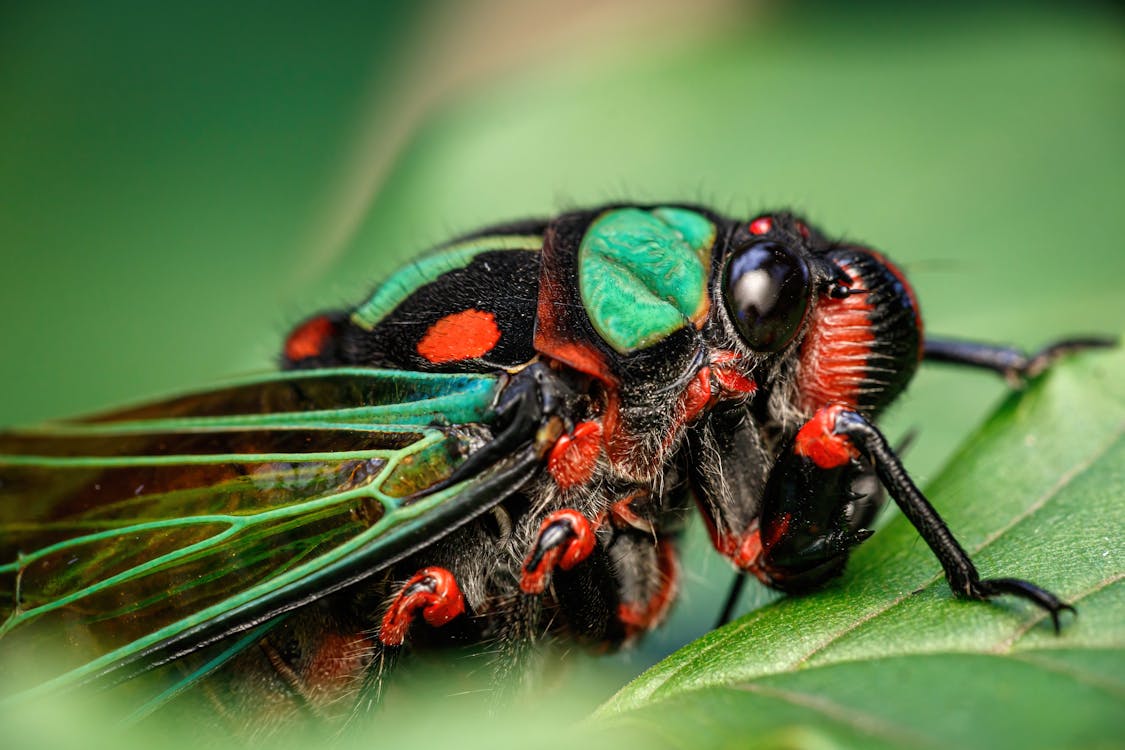
 Then he looks to one of the windows, where the last of the 2024 cicada invasion is evident in the secret, fenced garden, where folks like Jerry are allowed to roam free. It’s kind of like the prison yard in Shawshank Redemption, except there are butterflies and daylilies. And most of the residents – like Jerry – have no idea of how to get out of this place. Maybe I should put a Raquel Welch poster on Jerry’s wall, so he can scrape away the sheet rock and escape to Zihuatanejo, where we can work on some shabby, old boat.

Jerry’s been in the joint for a half-year, and he has yet to venture outside. He didn’t know such a possibility existed until I asked the nurse if I can get him some fresh air, and she tells me we ought to get ourselves back to the garden. Jerry adds “Only if the weather is nice.”

He tells me the last time he’s been outside the joint was “When John Staed came to see me. He took me out for a drive. All through the country.”

That thought – a false memory, as John hasn’t been here nor is Jerry allowed to pass through the security checks to get outside – makes him smile. Staed, who was a good reporter, horrible sports editor (he thought “strikes” were only in bowling and “spares” were backup offensive tackles) and an excellent editor later in his career, seems to occupy some of Jerry’s considerable daydreaming time.

“Cicadas come every 17 years, don’t they?” Jerry says, as one of the red-eyed beasts bumps against the window outside the dining hall. Of course, I’m not sure if this is the one, seven, 13 or 17-year breed, but I agree with him.

“Must be something to be buried for 17 years and then come out to the daylight,” Jerry muses.

“I wish we could come back 17 years after we are buried,” I say and Jerry bursts into laughter. “But it’s not going to happen.’’

“What year did you say this is?”

I tell him it’s 2024, and he begins the count from his birthday to come up with how many years have passed. “Almost 73,” he says.

“What year did you say this was?” he asks almost immediately. “Is it 2023?”

I’ve been answering that “what year is this?” question since about 10:30 this morning. It’s the first thing he says to me when I wake him up.

Then, despite the clock by his bed, he asks me the time.

“I’m really tired,” he says, rolling his head back onto a fluffy pillow, while Bob springs from his queen-size bed and goes skipping down the hall like a magic leprechaun. Nah. He’s pretty slow, but I really like the guy. Today, it seems, he’s wearing his teeth, so it must be lunch time.

It’s about that time Jerry asks me the year again -- adding “Man, it doesn’t seem like it’s been that long” -- that the old CTA song plays in my head, getting stuck there for the day. (Author’s note, today I pulled that old album out and thought about how good Chicago was before Terry Kath, like Richard Cory, went home one night and put a bullet in his head.)

“Does anybody really know what time it is? Does anybody really care?” I semi-sing to Jerry, my gritty, old-Dylan-on-Freon voice likely tickling all the loose screws.

He laughs.

“We’ve been friends for about 50 years. A half-century,” I say to him.

“It just doesn’t seem that long,” he near-repeats. “It’s not fair. We were young.  And then I can’t remember anything. I do remember working a little bit at a newspaper.”

Actually, my friend was a great newspaperman. All he wanted to be. And he was great at it. But other than “I was on the copy desk a little while,” he doesn’t remember.  

Apparently, the only constant in his life, these days, is me. When I describe to him his 40-year newspaper stint, he shakes his head.  “How could it have been that long? I don’t remember anything.

“What year did you say it is now?” he asks.

He looks around his room. “I don’t have any idea how long I’ve been here. Seems like yesterday. I don’t know where I am or why they put me in here.”

For a few minutes, he looks at a bit of News Brothers video on my phone. This one includes our meeting with Great American Hero John Glenn.

Simply put, “The Stranger” was dispatched by me (the associate/Sunday editor) to go out to Outlaw Field, the curiously named Clarksville airport, and interview John Glenn when he landed. He would only have a few minutes, as John Glenn – pondering a presidential bid – was headed to a Democratic fund-raiser in Clarksville. 


Top shot is of John Glenn orbiting the Earth in a NASA photo. Second is a screen grab from Flapjacks: The Motion Picture of Glenn, me, Rob Dollar, John Staed, Jerry Manley, Harold Lynch and Mayor Ted Crozier holding off Secret Service gunmen.

Jerry, Rob and John Staed (in one of his cameos in the heralded film, Flapjacks: The Motion Picture) climbed into the backseat of my old Duster, and we drove out to the airport, determined to meet him.

Glenn’s plane landed and a beige limo showed up to transport him to town. “The Stranger,” in coat and tie, wandered through the unlocked runway gate behind the limo.

And the other four of us all ran in behind.

Secret Service agents were about to shoot me and Rob, when I stepped into the doorframe of Glenn’s limo, blocking him from getting in the car.

“Leave them alone,” the first American to orbit the globe barked at his crew of white, gun-toting hooligans. “I want to talk to these young fellows.”

That’s a shortened version of the story that also included Clarksville’s Mayor Ted “Wild Turkey” Crozier – a retired colonel who flew helicopters in Vietnam – endorsing me for his job.

“Tim Ghianni for Mayor” read his lapel pin. If there is one political figure I loved in my life, it is Wild Turkey, who was propelled by vodka and lemonade and loved the News Brothers and who I regarded as a dear friend. I left Clarksville, basically in silence after 14 years, back in 1988.  Wild Turkey and Chief Sheriff’s Deputy Eddy Patterson both called to lament my departure, ask me to stay and wish me well. I guess everyone else in Clarksville didn’t care.

Patterson, I should note, saved my life one day.  An unidentified briefcase was found in the courthouse across the street from the newspaper, and Eddy led the bomb squad in dragging it safely outside to the middle of Commerce Street, where they were going to detonate it with explosives. 

Curious about the activity outside my window, I walked out onto the street just before detonation – “Tim, get out of there, quick,” Eddy yelled. By the time the empty suitcase was blown up, I was tucked behind a fire department pumper truck.  

I told Jerry that story – I believe the random briefcase was found in the courtroom where Kathy Jane Nishiyama’s kidnapper, rapist and murderer Eddie Hartman, who had been a Dickson County Jail Trusty when he went on his bloody stalking and killing mission – was being sentenced to death. He died of lung cancer on Death Row, where he had been training a pet mouse. Well, that’s half-true.  The mouse was in The Green Mile, filmed at the old Tennessee State Prison’s Death Row.

“So who are you?” the nurse asked me, early in the day, when Jerry was swallowing his SunDrop and dreaming of phantom visitors.

“I’m Jerry’s friend. We’ve been close for a half-century. Started out in newspapers together.”

She shook her head.

“Mr. Manley doesn’t have any friends. People will try to talk to him, and he’ll ignore him. Even when his roommate reaches his hand out to shake, Mr. Manley just pushes the hand away.”  

“Well, I’m his friend,” I say, proudly, but growing mentally weary.

“What year did you say this is?” Jerry asks me again. It’s question 67 or 68 for the day.


Top photo is of CTA founder Terry Kath, before he accidentally killed himself, forever leaving unanswered the question "Does Anybody Really Know What Time It Is." Bottom photo is a 1982 grouping of felons and the like, the lively News Brothers: Jerry "Chuckles" Manley, Ricky "Dumbo" Moore, Tony "Little Asshole with a Beard" Durr, Tim "Flapjacks" Ghianni, Rob "Death" Dollar, StrawBilly Fields and John "Street" Staed. We knew we had time enough to die. Jim "Flash" Lindgren was not here for this shot. He was practicing his light-saber moves and translating the AP Stylebook into Swedish. 

“I don’t know why I’m here. How I got here. Where I am," Jerry says. "I don’t see anybody but you, and I’m glad you come by to talk to me. I know I don’t talk, but it’s good to listen to you. I appreciate it.”

“Do you know why you are here?” I ask, again.

“Mental illness, I reckon.”  We talk about his family to see if anyone else shares this malady. “Maybe my Mom, some.”

He looks again out the window.  “I guess I’m never getting out of here. I’d love to go home.”

That thought seems to cheer him, so I talk a bit about his nice house in Lewisburg and “I’ll bet you’d love to see that white dog you named ‘Snow,’” I say.

He sits upright. “I thought that was your dog.”

I get outside of the secure facility and to my 41-year-old car, and I find on my phone that old Chicago song that has been haunting me for several hours.

“We’ve all got time enough to die,” I sing along as I begin driving away, dreading leaving Jerry inside the confines where he is spending his life. 

My favorite picture from my newspaper career is a 3 a.m. Sunday shot of Rob, Tony, me and Jerry on the curb outside the Roxy Theater in Clarksville. And, to think, we were at work the next day to tell stories of blood, gore and simple human kindness in The Clarksville Leaf-Chronicle, back when it was a newspaper. We were finally catching our breath after all-night screenings of our charity film, financed by me and Rob, that raised hundreds and hundreds and hundreds for local charities.

Wednesday, May 22, 2024

Mason Rudolph Golf Course is in the death throes, thanks to city fathers, clueless newcomers who have no idea how important, historically, he was ... and really "modern" media coverage

They are going to kill Mason Rudolph Golf Course, a slap in the face of a great man and a city’s history.

Oh, I know the plan is on hold after the public learned about the maneuver by government to quietly erase a precious bit of Clarksville, Tennessee’s history.  The public protest came after the deed basically was done. It is one more example of how the lack of effective local newspapers is allowing government to be basically unchecked.  

That hurts me, because I spent my life as a newspaper reporter and editor, and I took our public watchdog duty seriously.  Besides that, I loved Mason Rudolph, a man who, apparently, the big guys in charge of Clarksville have tried to forget.  

(Both photos are from the internet)

Early on in my life as a colorful young journalist in Clarksville – 1974-1988 – I was told by my boss, Gene Washer—to telephone the legendary golfer, Mason Rudolph, and gather some details and quotes about some PGA Tour event in which he was playing.

As the junior sportswriter on the staff of The Clarksville Leaf-Chronicle such tasks were just a part of the job. I once did a two-hour recorded interview with Pat Head (pre-Summitt), the great basketball star from nearby Henrietta, while she was in Montreal as co-captain of the 1976 women’s basketball team that took Olympic silver. I turned the tape over to Washer, and he wrote the story.  It was a decent story, but the quotes were exceptional.

Anyway, Mason was a different story.  He was a PGA legend, the most important athlete – except for Wilma Rudolph, the wonderful woman who ran from a youth marred by polio to buckets full of Olympic medals – in Clarksville’s history.

That may be slightly hyperbolic, as Head became Summitt and revolutionized the women’s basketball game, but at the time all of that was in the future. If not for her, there likely would not be a Caitlin Clark on the news every time she takes a shot or uses the bathroom. Oh, I truly admire both of them, by the way, as they were/are in their ways, rebels with a cause.

Mason-- as kind a man as a 24-year-old sports reporter could be assigned to call on Fridays for first-round details, Saturdays for details to put in Sunday’s paper and on Mondays if he had made the cut and completed the tournament – was a pleasure and didn’t take any offense that the only golf I’d played at that point was for a college Phys. Ed requirement and a few times with my Dad.  I was limited because I always had trouble with my drives, although I could play the short game OK.  And, I always have enjoyed using my putter, but that’s another story, indeed.

Anyway, Mason and I would talk briefly about the highs and lows of the tourney. I’d write a short story that we could put into the Associated Press write-thru or we could use it as a brief across from the agate page. Nobody knows what an agate page is/was in this clicks-journalism era, but it may have been the most-important page in the sports section for gamblers and other sports fans.

Mason was the real deal on the tour, and Clarksville’s greatest ambassador to what then was still a growing sport.

Now, unless good sense and history win, it looks like they are going to take his golf course, a short (good for my “so-called game”) nine-hole course, a green jewel in the heart of his hometown, away.

In a week or so, Mason Rudolph Golf Course, which should be protected as a historic landmark, was going to be closed to make way for walking trails and all the other claptrap that they put in city parks these days. Plans are to call it Mason Rudolph Legacy Park. That, in itself, is silly. Mason Rudolph’s LEGACY is golf. I believe this likely will happen, as the big guys who run the city wait for the delayed (because of ineffective media) reaction and angst to go away.

I’m no longer a Clarksvillian, but I think that is a load of crap.  Mason Rudolph should always be honored by having this 48 acres in the heart of the old city used as a golf course.

Nowadays, as the “Queen City of the Cumberland” booms in population with new industry, Nashville property tax refugees and military retirees, most people likely don’t know that nickname for the city. Let alone the golfer Mason Rudolph. 

Clarksville native Mason, at 16, was the youngest-ever (at the time) player to qualify for the U.S. Open, when he did that in 1950. He went on to win the USGA National Junior Amateur Championship that same year, the first 16-year-old to do so.

He continued to play for his beloved hometown school, Clarksville High, and he won TSSAA titles in 1951 and 1952. He went on to play at the University of Tennessee and Memphis State.

He was on the winning side as a member of the U.S. Walker Cup team in 1957.  Golf World Magazine, in 1999, named Mason as one of the Top 10 Junior players of the 20th Century.

Mason six times won the Tennessee State Open.

He went on the PGA Tour in 1959, and did it in style: He was named Rookie of the Year.

He won five tour events during his 21-year career that included competing in 15 Masters and 16 U.S. Open Championships.

He was an equal to his teammates on the 1971 Ryder Cup team. Jack Nicklaus, Arnold Palmer, Lee Trevino, J.C. Snead and Mason won the cup for America.

There are many other highlights in a fine career that included a stint as Vandy golf coach.

Mason was in the charter class of inductees into the Tennessee Golf Hall of Fame in 1990 and in 1995 went into the Tennessee Sports Hall of Fame.

Like I said, I left Clarksville in 1988, so I don’t have a vote nor do I have any sway over history-blind city administrators and blowhard politicos. And as far as I can tell, the local newspaper, now overseen by the much-ballyhooed Giant Corporate Cannibalize Local American Newspapers Project, has not done its job in letting people know what is happening over on Golf Club Lane.

But I have memories that tie me to that course and to the city. I not only was a regular caller to Mason when he was out on tour, I also spoke frequently with his wife, Carol. If Mason wasn’t available, she had all of his stats and details.  

And on more than a single occasion, I was a coffee-drinking guest in the Rudolph home, overlooking the fairways of Clarksville Country Club, a beautiful course for the city’s white, rich men.  My “friend” O.J. Simpson, a recently deceased double-murderer, movie star and great halfback, broke the color barrier by playing tennis in an Acme Boot Company international outing at the club.

My only other tie to that country club course was my pal, Mason-disciple Larry Schmidt, because we’d get loosened up and go sledding out on the course when snow covered the Queen City.  

I really loved Mason and Carol, and even after I moved to Nashville, I called them, just to say “Hi.” They always were glad to hear from me and vice versa.

When I became Leaf-Chronicle sports editor in the late-1970s, one of my duties was to cover the Danny Thomas Memphis Classic, at the old Colonial Country Club in Germantown, east of Memphis. Regardless of standing on the tour, Mason always played in what essentially was his home tourney.

I stayed at the Holiday Inn out by Interstate 40 and a Shoney’s (an expense-account-friendly fine dining establishment).  Each day, when I went out to the course early and came back late, I kept “bumping” into young Spaniard Severiano Ballesteros, who stayed in the next room. He was then a “tour rabbit,” fellows who lived in their cars and quadrupled up in hotel rooms as they tried to make their marks. Seve, who was a kind and gentle fellow, did more than make his mark.

It was out at the Colonial that I met tour sponsor, the “actor” Danny Thomas. I introduced myself to him, and he literally turned away from my handshake.  Well, really, he was so drunk, he may not even have seen my extended hand or me. He did much for children, of course, but I always will think of him as an asshole too important to bother with a sub-30-year-old journalist. Howard Cosell gave me the same treatment a year or so later at the Ali-Spinks title fight, but it didn’t bother me because Ali embraced me and Leon was not a bad guy, either. Hit in the head too much, probably.

I spent my Colonial days walking the course with Mason, who looked to be in contention in the first round. In reality, age got him and he finished down the list. But it was the last time he made the PGA cut, and I was glad to be out there with him.

And, through him, I met some of his friends. Lee Trevino was such a joyful soul. I even got to walk a fairway with Gary Player, and we both grabbed beers from a stand on the course. Great people don’t look down on young guys, and Gary was a great man.

 I’ve admitted to being no golfer.  In addition to Larry Schmidt, I had a fanatic golfer friend, Freddy Wyatt, who took me out to Swan Lake (an 18-hole course on a lake and near Dunbar Cave), and tried to teach me to drive. I just could never get the grasp, so I mostly drove the cart and oversaw the beer distribution in many days I spent with him and his friends.

Austin Peay Head Basketball Coach Ronnie Bargatze – now better known as comedian Nate Bargatze’s favorite uncle – also was a golf fanatic, so he and Larry played for dimes many afternoons.

And there have been other courses developed around Clarksville since I’ve been gone.

But Mason Rudolph, which reportedly only had 2,790 players last year, was the workingman’s par-three course.  It was forgiving and fun to play.  A stupid statistic from the city, it is pointed out that that number of golf players is less than the number of households in a one-mile radius of the course.  Does that matter? Why?

My non-golf-playing friends and I even staged our own version of the Masters there one week back around 1980.  A red-checked sportscoat I bought for a couple of bucks at the Mustard Seed, went to the winner.

The participants were all ranks of newsroom glory, from the editor to the clerk to the cops reporter, the copy desk chief, a particularly rotund government reporter who couldn’t write but was nice as could be and the sports guys.

A future Army colonel, who was a summer intern at the newspaper to learn the ropes of local media for his future public affairs officer duties in war, peace and I’m sure time spent in Washington’s Concrete Foxhole, drove the cart we rented. His main role was to make sure my friends and I had at least one pint per stroke as the afternoon went on. We did let the more-serious play through.

We ended the night at the Pizza Hut, where the jacket went to Sandy Smith. I don’t think she actually won the competition, but the coat looked good on her, and she was the most-sober among us at the awards ceremony.

I played a few more times at Mason Rudolph Golf Course, the last time being when I took on Billy Fields, formerly the rotund reporter who had sold his body and soul to public relations, and Tony Durr, former editor who left Clarksville in the dead of night for a variety of reasons. But I was his best friend in town, and he came back to visit me occasionally.

We played 18 holes – twice around the course – and the stakes were simple. Durr purchased a used set of Goodwill clubs that morning and the winner of the day would get them.  I gave most of them back to Goodwill years ago, but I continue to hold onto my putter.

Other memories of Mason Rudolph Golf Course are pretty simple. Many days, I drove by the course on my way to work at 200 Commerce Street.   It was out of my way, but it was a peaceful route and helped me mentally prepare for the day’s murders, prostitution busts (the town madam was a distinguished history scholar and a close – not professional – friend), mayoral drunken antics, fatal GI car wrecks and helicopter crashes and the occasional bit of good news or visit with The Lone Ranger.

There were times I’d drive my favorite rodeo cowboy and reporter and his customary 12-pack past the course to get to the nearby rooming house where he lived.  

Sometimes, as I did “man-on-the-street” columns for the newspaper, I’d stop at the course and walk the course, looking for human interest and for my own clarity of mind. Sometimes I found neither.

Fifty years ago, I moved to Clarksville. Fourteen years later, I left, a bit melancholy because no one in town – other than the newsroom and the Chief Sheriff’s Deputy and vodka-chugging mayor – even called to tell me I should stay. There were no farewell celebrations, no invitations for dinner or drinks in the city where I’d worked seven days a week, as much as 12 hours a day, to help make sure the newspaper did its duty.  Truth is, that always has bothered me, but I was not a born-and-bred Clarksvillian, so I shrugged it off.

So, I suppose it’s really none of my business what Clarksville does with Mason Rudolph Golf Course.  Most people up there probably don’t even know who he was.

But I’ll tell you, he was a damn nice guy, a fellow who put Clarksville on the map as a golf and athletic hot spot.

And he was my friend, as well. To turn a golf course named for him into a millennial-favored set of walking trails and politically correct monkey bars is simply the wrong thing to do.

Next thing you know is they’ll turn Wilma Rudolph Boulevard into an overpass.  


Thursday, May 16, 2024

An old punk feels lucky after he stumbles through nursing home blackjack game to make his day hanging out with old pal ... 'Dirty Jerry?'


 “Do you feel lucky?” is the first thing I heard as I stepped between the freshly painted walls of the “regular” nursing home, enroute to the Memory Care Ward, my cargo shorts’ pockets stuffed with contraband food stuffs.

The words didn’t come from one of my favorite movie characters, Inspector Harry Callahan, aka “Dirty Harry,” with whom, despite my non-violent streak, I am able to relate.

Of course, the questioner didn’t punctuate her question with “punk,” nor was she holding a well-polished and frequently used Remington .44 Magnum while addressing some errant killer or insane clown.

(Like most of us, she was misquoting Inspector Callahan, who says: “You’re thinking ‘Did he fire six shots or only five?’  Now to tell you the truth, I’ve forgotten myself in all this excitement. But being this is a .44 Magnum, the most powerful handgun in the world and will blow your head clean off, you’ve gotta ask yourself a question: ‘Do I feel lucky?’ Well, do ya punk?”)

In this case, the punk was a woman, at least 90, and she was smiling at the “Dirty Harry” imitation, because she had just been dealt a Jack, shooting her hand to 16.

The “normal” folks in the nursing home -- in the wing I must cross to get to the Memory Care Ward, where my pal, Jerry Manley, resides -- were in the thick of a game of Blackjack, using playing cards that likely measure 6-by-9 or some such.

She did feel lucky. “Hit me,” she said to the nursing home recreation staffer and card dealer, and she landed a three of diamonds, taking her to 19 and tying her with the woman across the table.

“You want another card?” asked the dealer, anxious to flip another one to either of these women.

“Too rich for my blood,” answers one of the players, even though, as far as I can tell, the stakes literally are nothing.  They simply are keeping score as to which Mabel, Sheila or Rita wins the most hands.

There are no men at the table. I’ve noticed, in general, a lack of men in the normal nursing home.  This could be disturbing, except I know being male is basically a fatal disease, as we are dealt the genetic earlier-death hand at birth.  I’ve been running like I’m running out of time for 72 years.  It may not actually be death that thins the ranks in the social room, though. Perhaps the men stay in their rooms, playing solitaire or coughing up phlegm. Or both.

I don’t know, as I do my best to not scrape against the freshly painted walls, since I’m wearing my Beatles rooftop concert T-shirt, among the favorite of the 30 or so Beatles shirts I own. On that topic, if you are a Disney-plus streaming customer, a restored version of “Let It Be” – the film that originally chronicled the final days of the Fabs 50 years ago – is restored and on that platform.

I first saw that movie when it was on first run, in the theater at the old Harding Mall in Nashville (now a Mexican Walmart is there).  The movie, which was critically panned at the time and that was heartbreaking for any Beatles fan, only stayed at the theater in Nashville for a week. I sat through it alone, twice, in the Summer of 1972.  And, I will have to say, it felt like a gut punch … or lower. Deflating and painful. I like to sit alone in the darkness and cry whether I’m at a movie or looking at the stars. 

Anyway, I talked with Jerry some about the Beatles movie during this visit. He doesn’t have Netflix in the Memory Care Ward.   In fact, he was watching “The Moonshiners,” or whatever the Discovery show about the purveyors of white lightning is called. This edition had nothing to do with illegal spirits. Instead, the ‘shinemakers were racing big-wheeled “mudbug” three-wheel ATVs through the swamps.

I turned the volume down, so I don’t know what that had to do with making moonshine, although perhaps you needed to down a quantity of the gut-burning stuff to drive one of these contraptions.  The last moonshine I ever drank – other than the legal stuff they sell at retail stores – was given to me by my late friend Tom T. Hall.  I know he liked bourbon in the glass and grass, but he also liked his moonshine. I believe he got it from another late friend of mine, the Civil Rights Warrior and errant Baptist preacher to the Outlaws the Rev. Will Campbell.

In the many years before he himself went into a Memory Care Ward, the Reverend Will used to call me from his front porch in Wilson County to my desk at the morning newspaper or at my house. “You are the only one up there who remembers these guys,” he’d say. And we’d talk about Martin Luther King Jr., Waylon’s famous knife-throwing expertise with Captain Midnight and Tompall, Kris’ beer-soaked fellowship and, of course, Jesus.  I never met Dr. King, but it would have been nice.  The rest of them I consider/considered friends. Jesus, of course, is just all right with me.

Actually, Jerry wasn’t in his room when I got there. He was down in the social/meal room, sleeping in a recliner while a game show – I don’t know which one – played. Given the hour, it likely was “The Price is Right,” but, since I no longer have pets to spay or neuter, I didn’t pay attention.

My new friend Milford Brown – who goes by the name Bob and who has to be in his mid-90s – saw me first.  He was sitting next to Jerry, who is his roommate in this dormitory of dementia, and he tapped him, trying to awaken him.

Two other fellows, one who always wears a Vanderbilt sweatshirt and another who closely resembles Bob, call out Jerry’s name. First, they extend their hands for me to shake. Folks in this ward in general like to see me.  It’s a mutual feeling.

One woman, who is curled up in her wheelchair, tells me “I’m really cold.  I wonder if you can get me a blanket for my legs?”

I walked a dozen feet to where a nurse was playing rummy with a cranberry juice-sipping resident and told the nurse about the woman. “Please get her a blanket,” I said. “She’s really cold.”

The nurse does that, as Jerry pushes himself up from his recliner and we begin the long trek down the hall to his dorm room – where I already have put his Diet SunDrop and two packages of Ritz cracker sandwiches, cheese and peanut butter.

He plops down on his queen-size bed, which is stripped for laundry I suppose, and reaches for the SunDrop. I’ve already pried it open, when I was at the Shell station where they stock it for me to take to Jerry. If I can’t loosen it there, then I ask the folks who work there – who I regard as friends since I’ve gotten gas there for decades – to open it.

Fact is this Shell station at Old Hickory and Franklin Road is a newer version of the first stop I made in Nashville when I drove my old Falcon down here after my folks moved here in 1972.  I blew a hole in my exhaust manifold around Indianapolis, and I roared with engine noise and little compression to this location, where I put a dime in the pay phone and called my folks to get precise directions to their home.

It is near another Shell Station where Metro cops stopped and frisked me one night when I was driving from my family home to my small Clarksville apartment. I was pushed around and threatened, because they said I “match the description” of some long-haired guy in a similar car who forced a motorcycle cop off Granny White Pike.  I would never do that, and I finally convinced them to let it be.

I did write a long letter to Metro Police Chief Joe “Hang ‘Em High” Casey about that swarm, push and frisk operation.  We became friends, and as far as I know I was the last person to interview him, spending an afternoon with him in his Donelson apartment months before his death.

All aside the point, except Jerry and I spent a lot of time talking with friendly coppers – and cold-blooded back-shooters, as well – during our lives in newspapering.  He was, besides me and Rob Dollar, the only friend I had who had no desire to do anything else. He was totally unequipped to deal with life after his 30 years at the morning newspaper ended with a “Don’t come back/Don’t look back” call from the now-vanished historic newspaper building on Nashville’s Broadway.

I have continued writing as a freelancer and authoring several books, most of which are available from amazon.com or if you simply stop me in the street. Please buy them.

Jerry really didn’t continue with anything. His second marriage had failed not that long before his newspaper dreams were jerked away from him, so he retreated to Lewisburg to be around his mother (who died a couple of years ago), his brothers and his cousins.

The last few years found him fighting colon cancer – “I guess they got it, I don’t know,” he responds when I ask him about that.

“I don’t remember anything,’’ he says, adding that the only person who has visited him other than me lately was John “Street” Staed, a former reporter/horrible sports editor/and fine newspaper editor, who is among our shared old friends.

John’s a good guy. And he tells me he’s never visited the nursing home.  But he is glad to be remembered by Jerry and says he will visit when he comes up from Birmingham, Alabama, to visit his sister in Brentwood.

“I was glad to see him,” adds Jerry. “Can’t remember much of what we talked about.”

I turn Jerry’s semi-frown into a smile when I bring up the tragic story of Chico, the Monkey.  Remembering the night we – copy desk chief Jerry, cops reporter Rob Dollar and me as the associate editor – chronicled the panicked pursuit of an escaped pet monkey by Montgomery County Sheriff’s deputies.

As noted in earlier transmissions, I elected to lead the Sunday morning Leaf-Chronicle with that story, with the headline “Deputies go bananas: ‘Monkey at large!’”

I got my semi-regular audience with an angry publisher on the following Monday, but it was worth it. Not for Chico, of course, as his two months of freedom ended when he was eaten by dogs.

When we are sitting in his nursing home dorm room, I use the Chico story to open the partially closed mental doors in Jerry’s head, and we talk about other newspaper adventures.

We spend a lot of time talking about Rodney Wayne Long and Kathy Jane Nishiyama. Both beautiful young people, they were abducted and murdered in the winter of ’81-’82, and those stories forever scarred us all.

“That was a lot of work, but we did a great job,’’ says Jerry. “They ever find out who killed them?”

I go through the prison lives and deaths of Rodney’s joy-killers David Frey and Stephen Drake and the Death Row lung cancer that killed Kathy’s monstrous murderer/rapist Eddie Hartman. Frey is the sole survivor, finally enjoying a parolee’s life.

I remind Jerry of the story I broke, at about 1 on a Sunday morning, when I bullied Chief Sheriff’s Deputy Eddie Patterson to admit to scanner rumors that Rodney’s wallet had been found along I-75, past Knoxville, as the murderers drove his car to escape justice. They were bound for New Jersey and eventually apprehended when Montgomery County Detective Cliff Smith climbed into a window in the house where they were hiding. “He came in through the bathroom window” was a newsroom joke back then.

The wallet story led to a 90-point streamer hed: “Wallet found: It’s Rodney’s.” The next day, in those eerily similar cases, Kathy’s purse was found down in Houston County.

“Did I write that ‘Wallet Found’ hed?” asked Jerry. Actually, he didn’t.  Editor Tony Durr, shortly before he was run out of town, wrote that headline.

But Durr’s dead. And Jerry is grasping for memories. So, “Yep. You wrote that headline,” I told him.

He nodded. (I should mention that Durr left town in the middle of the night at the suggestion of the newspaper chain. He was one of my closest friends, and he tried to hire me away to San Antonio, Chicago, Anchorage and Kodiak newspapers when he became an editor at each. I went for interviews, but didn’t get the jobs. Which was good. Tony washed out of those jobs like he washed out of six marriages in his short life. I loved the guy.)

“That’s when we made the movie, isn’t it?” Jerry says, and it indeed was.
After the trauma of the teenage murder victims and young killers, including the funerals (which I covered, scenes and sounds that still make my heart ache), Rob Dollar and I created The News Brothers, as a way to act and dress while dealing with the black damage to our souls.

From that sprang our movie “Flapjacks: The Motion Picture,” in which me as “Flapjacks,” Rob as “Death,” Jerry as “Chuckles” and Jim Lindgren as “Flash” made fun of murders, cops, popular culture and our corporate bosses.  The slightly over two-thousand we raised all went to local charity. Staed, Ricky “Dumbo” Moore and a very large StrawBilly Fields also were in that film. Harold “The Stranger” Lynch killed in the gunfight scene.

“That’s what I really remember most about working with you,” says Jerry. “Making the movie and hanging out with you until dawn on Sunday nights.’’

“I was thinking about your dogs the other day,” I say. “You and Gloria (first wife, who got the house) had two tiny poodles. When you went on vacation, I’d go over to your house in St. Bethlehem and take them out in the morning and at night. I think I went over there at lunchtime, too.”

He doesn’t remember the dogs or their names, though he does remember one he and his nephew, Steven, had in the Lewisburg house they shared, and where Jerry was found, passed out on the floor, before he was shipped to the nursing home.

“It was a white dog. I think we called him Snow. Or at least that would have been a good name for him, since he was all white.”

Jerry finishes his packages of crackers and the pint of SunDrop, and looks up. “I’m really hungry,” he says.

“Well, it’s 11:45, so they’ll be serving lunch soon,” I say.

“Let’s go down there,” he says, struggling to his feet. “I need to walk some, anyway.”

We arm-over-shoulder walked down to the lunchroom, and I turned to go out the double-secure door.

The Blackjack game had ended. Giant cards nowhere in sight. I wondered if they used those giant foam dice – that the “cool kids’’ and Low Riders hang on their rear-view mirrors – when they play craps.   

After I check out at the front desk, I talk, briefly, with an old woman who is enjoying the rainy day beneath the portico.  “Regular residents” are allowed this freedom.

Jerry’s not seen the world outside his freshly painted Memory Care Ward since Thanksgiving.

“I don’t know how I got here,” he’ll always say. “But it’s OK. I eat and I sleep and watch TV.”

I look back at the nursing home as I climb in my old car.  Inside, my old friend is eating bologna and cheese sandwiches to get fueled for an afternoon of “Gunsmoke” reruns. Or old movies. He is especially fond of movies about his favorite Harrys, both Callahan and Potter.

I feel pretty damn lucky for a 72-year-old punk.         


Thursday, May 9, 2024

Like Chico, the Monkey, and a cicada, I escape incomprehensible gloom as well as capture by "the keepers" who look after my pal, Jerry, and his comrades in the Memory Care Ward


Jerry "Chuckles" Manley 42 years ago celebrates the world premiere of Flapjacks: The Motion Picture. My late brother liked Jerry a lot, referring to him as "the guy who always wore the aviator's hat." I see Jerry regularly at his nursing home. My brother, Eric, I see only in my aching soul. 

A cicada accompanied me into my old Saab as I went out in search of a laugh, a smile. A friend.

Incomprehensible loneliness -- a paralyzing sadness that has accompanied my every waking … and some sleeping … moment since the late afternoon of March 26, 2024 … when my brother, Eric, died – pretty much drove me into the nursing home where my longest-tenured friend has lived for almost a half-year.

Jerry doesn’t know how he got here or even where he is and why, but he listens, carefully, as I try to tell him how I’ve been feeling. 

“Eric was a good guy,” Jerry Manley says, trying to focus his hazy eyes – “I can’t see to read anymore” – on me as I sit in the recliner next to his nightstand in the Memory Care Ward of the nursing home.

We talk a few minutes – Jerry mostly listening, but adding the smiles I need – about my brother and his kindness and his firm conviction – after attending News Brothers functions and film premieres and Lone Ranger encounters – that his baby brother was crazy. And so were his friends.  Jerry, Eric would say, was “the guy who always wore the aviator’s hat.”  It was yellow, and Jerry doesn’t know what happened to it.

Gangs of work crews are painting the hallways and public areas.  Just the other day – on my most-recent prior visit here – the old, dark-haired woman who parades up and down the full length of the hallway in this dormitory of dementia (not necessarily demented) seemed to be watching the painters’ progress. Or perhaps she was just talking about me.

“Knucklehead. Knucklehead. Knucklehead,” she repeats, almost non-stop as she makes her journey.  She’ll probably have to cut off her pacing for a few hours after the wall-painting is done. The carpets, paint-spattered and looking like they’d played host to a flock of seagulls, obviously are going to be replaced.  

I ask Jerry if he knows the purpose of the extra sheet on top of his bedding.

“I don’t know what’s that for,” he says. Perhaps it’s laundry day. Perhaps he spilled his breakfast tray. Those are just two of the reasons I concoct, but it’s not worth pressing the issue.

It’s better for me to just be here, talking about real brothers and News Brothers with this old man – nine days older than me -- who has stood by my side, a disciple almost to the occasional point of near-death, since he introduced me to the Rhinestone Fatman at a party in a house somewhere over near Adams, Tennessee.

Actually, it was the first party I’d been at since joining The Leaf-Chronicle newsroom on September 12, 1974.  As a high school sportswriter, I worked most Thursday, Friday and Saturday nights. And often Tuesdays and Wednesdays as well, covering the football and basketball games of the high schools and middle schools.   And I always needed to be in the office by 5 the next morning.  Except for my brother’s frequent visits to my apartment and to the sidelines, I was mostly alone for a long time.

The newspaper had plenty of young people. And they partied most weeks. I wasn’t even invited, as they knew I was working.  Or perhaps it was my Yankee accent and fashion-forward bowties. Of course, what they considered partying would pale in comparison to the parties Jerry and I attended, even hosted, during our too-many years in Clarksville.

I may be wrong when I say the party where I first drank beer with Jerry was while David Rush – the aptly nicknamed “Rhinestone Fatman” – strummed guitar and imitated David Allan Coe.

“You don’t have to call me darlin’, darlin’,” I said to the Rhinestone Fatman as we sat in chairs near the record machine in the house where the party was held.

“You don’t have to call me Charley Pride,” he answered. I’ll insert here that later in my life, when I was entertainment editor at Nashville’s morning newspaper, I interviewed Charley Pride a couple of times. Gentle enough soul, as long as you don’t disagree with him, or some such, I’d been warned.  

My first interview with Charley came after his “mentor,” the reddest neck in country music, Faron Young, killed himself. Despondent because “hat acts” had ruined his own chances to thrive in country music anymore and with a checkered love life and emphysema, Faron penned a suicide note and followed through.

He had been Charley’s biggest booster, and I interviewed Charley about the supposed racist with the heart of an integrator, his champion. We spoke later for another story in the years before Charley died.

Back to the party. Jerry and the Rhinestone Fatman – belly pushing hard at the snaps of his Western-style shirt -- were at the party as representatives of their paper, The Gallatin News-Examiner.  Jerry soon would move up the Multimedia ladder to his job at the flagship newspaper in Clarksville. The last I heard of the Rhinestone Fatman, he was a slender fellow in South Florida trying to get a review of his mediocre album in the Nashville morning newspaper. I told him there were much-more-mediocre albums mailed to the office daily from the “stars” on Music Row.  

But enough on that.  Jerry, who put his Gallatin weekly together in the Leaf-Chronicle composing room before getting the promotion to Clarksville, was an acquaintance. It didn’t take long before we became diehard friends. We both liked beer, laughter, The Beatles, Stones and could sing the Kristofferson songbook from memory (if not well … although that never has stopped my friend, Kris).

Hell, after he moved fulltime to Clarksville, Jerry and his first wife had a son and lived on two lots – one for the house, another for the garden – in St. Bethlehem, which now is part of Clarksville but back then was unincorporated Indian Territory.

I spent a lot of time with the Manleys. I was their dog-sitter when they took vacations – they had a pair of miniature poodles I took out in the morning and at night while the family was gone.

I also was the emergency contact for the daycare if something went wrong with little John and the parents weren’t reachable. Sometimes I just picked John up and took him to Poor Man’s Country Club, where I’d have a beer and he’d sit on the bar-top eating pickled hard-boiled eggs. Perhaps I joke about the eggs. I was careful with John. Jerry and that wife also asked me to be John’s guardian if they died.

Of course, I agreed and have been happy they didn’t die, although John was a good kid and now does some sort of computer razzmatazz for the space program down in Houston.

Jerry and I had a lot more adventures, and usually I bring them up when I visit him in the Memory Care Ward where he lives with a fellow named Milford, but who goes by Bob.

Chico, the Monkey, was a squirrel monkey, similar to this royalty-free image from shutterstock.com. This monkey appears to be fine. Chico tried to live free, only to be eaten by dogs. Some see similarities to The News Brothers newspaper careers.  

“What was that headline we put on the Chico, the Monkey story?” Jerry asked me twice on this visit.

“Deputies go bananas: ‘Monkey at large!’” I tell Jerry.

We agree that the night we worked with reporter Rob “Death” Dollar to put that story, filled with primate poofery and puns, was among our happiest in our half-century of newspapering.


The most-famous photo of The News Brothers includes Neesa (Perry) Trotter enticing Jerry "Chuckles" Manley and Jim "Flash" Lindgren (back row) and Rob "Death" Dollar and Tim "Flapjacks" Ghianni (front row.) Neesa was our newspaper clerk and she's gone on to a prestigious life. The rest, well, not so much. 

For that one night, we weren’t working with a headline about “The Full Moon Rapist” (I gave the beast the nickname for headline purposes) and the terror he was causing in New Providence and out in the trailer parks near Fort Campbell. We weren’t working on a lead story about a redneck who almost got his balls shot off by an angry neighbor. And, as a relief, there was no dead GI traffic wreck nor teenage abduction, rape and decapitation tale to deal with.

Instead, we spent that night covering the tale of the monkey who escaped from his cage in a subdivision near Swan Lake.  He thought he belonged somewhere he’d feel free. Tragically, neighborhood dogs cornered him and ate him a couple months later. But he’d been able to swing through the branches, outside the jail-like cage, for two months. It probably was worth it.     

Bob came back into the dormitory room while Jerry was using the facilities. Bob is always glad to see me when I enter their room, and on this visit, he plopped down in the second recliner in the room.

“They call you ‘Bob,’ but your real name is ‘Milford?’” I asked. He nodded and laughed.

“Yes. Bob. And Milford.”  Bob used to raise Tennessee Walking Horses, according to a newspaper story that’s framed and hanging on the wall.

“How long have you lived here, Bob?” I asked.

“Long, long time. Too long.”

“They take good care of you here, Bob?” I asked. He just shrugged.

He extended his right hand. “I’m glad to know you, Bob,” I said as we shook.

“Me, too,” he said.

It was before Bob returned to the room to wait for lunch – he went down there with me and Jerry as the woman who proclaims everyone a “Knucklehead” trailed us – that I talked about my mental state with Jerry. (By the way, as she trailed us down to the lunchroom, I tried to allow her to pass us in the hallway. She declined. She didn’t call me a Knucklehead, but instead hummed an off-key version of Amazing Grace.)

“I can’t remember anything,” Jerry told me as we sat in his room, him chowing down on the packs of crackers and Diet SunDrop I’d smuggled into the facility in my cargo shorts. After he finished those, he had a container of chocolate pudding and some Pringles. He doesn’t know where those came from, but I reckon the staff gave the snacks to him because he skipped his morning oatmeal. A diabetic, Jerry needs food, though perhaps not what I deliver.

“I’m still hungry,” he said. “I hope we have lunch soon. I sure could use a bologna and cheese sandwich. Or whatever and cheese.”

I told him that since my brother died, I have been aching in my heart. Some days I can’t do anything. I try to put words together on the keyboard to keep myself going.

“I didn’t feel as bad as this when my parents died,” I told Jerry. “I just can’t shake the gloom.

“He was the only one left who had lived my life’s story, who knew all of my aunts and uncles, our grandparents, our cousins, Mom’s cooking. Thanksgivings at Walnut Lake. The midget toads we collected there and released in Chicago. Everything. I’ve got no one to talk with about those things.”

Jerry’s eyes grew a little moist, as he has loved me and pretty much “followed” my lead for 50 years.

“It also reminds you of how damn old we are,” Jerry said, matter-of-factly, as he finished off the SunDrop.

“You bring this to me today?” he asked. I confirmed I’d brought the cheese and peanut butter Ritz crackers and the SunDrop. The other stuff must have come from the dietician.

“Thanks,” he said. “I can’t remember much.”

 We then entered into a discussion of whether he has dementia or if his memory has been wiped clean by another cause. Like our lack of restraint in the last quarter of the 20th Century. Or perhaps Alzheimer’s?

“Doesn’t matter,” he said. “Can’t remember anything.”

Twice the subject of visitors came up. “John Staed came a little bit ago,” he said, both early and late in our conversation.

I didn’t want to tell him that John, an original if not particularly active News Brother --has told me he hasn’t been to see Jerry. He’d like to, perhaps.  But he’s not been there. “Only in Jerry’s mind,” or something like that John replied when I asked him if he’s made the trek up here from Birmingham, Alabama.

“Other than John Staed that one time, you’re the only one I see at all. Come more often if you can.”

I’ve been there once or twice a week for almost six months, and I’ll continue doing that, as it’s good for me. I am sure Jerry’s daughter and a few other friends visit, but he just can’t remember.

As we walked down to the lunchroom, the Knucklehead lady singing Amazing Grace behind us, I promised Jerry I’d be back soon. He was eager to get in line for the bologna sandwiches, so I hugged him and slipped away.

There is a lock on the door from the Memory Care Ward to the rest of the nursing home. You have to be buzzed in and out.

I hit the buzzer, but no one came to help me. Then the double doors swung open, two women pushing carts filled with bologna sandwiches and cranberry juice.

I thanked them for opening the door, and I tried to slip past them. But they spread out, using their arms and the food cart to block my way.

“You must be a new one here,” one of the women said, as they tried to force the door closed, trapping me in the Memory Care Ward.

“I’m not an inmate,” I told them both, pointing at my visitor badge. “I’m here to see my best friend. I’m here all the time.”

They pondered, quietly, whether to call an orderly and have me carted off to be lobotomized, when they studied my badge.

They called the front desk, where it was confirmed I was a visitor and not an inmate.

I will say here that I like the folks who live in the bright lights behind the locked doors better than most people I’ve ever met. Quick with smiles, handshakes, pats on the back.   Uncommon and much-welcome kindness snipes away at my desolation.

So, the two women – both sturdy souls in their blue-smock uniforms -- move their arms and let me pass.

“We thought you were a new person here,” one said.

“I’ll bet you get that all the time when you come here.”

I stepped past them, at first a little angry, but then pleased that at least they confused me with this special race of kind people. “Really, we’re sorry. We thought you were a new one living here. I’m sure you understand.”

“Knuckleheads,” I muttered as I made my way to the front door and freedom. “Knuckleheads.”

When I get to my car and open the door, the giant cicada on my car seat doesn’t move.  I push him slightly and he barks at me before flying into the humid air near Granny White Pike.

I know the bug won’t live long. Nobody really does. But, for now, he flies free as a bird outside the freshly painted walls of the nursing home.

Cicada escaped my car and went on to live a gloriously short life. This is not the particular cicada, but it is similar in appearance. Royalty-free photo from Pexels.