Wednesday, May 22, 2024

Mason Rudolph Golf Course is in the death throes, thanks to city fathers, clueless newcomers who have no idea how important, historically, he was ... and really "modern" media coverage

They are going to kill Mason Rudolph Golf Course, a slap in the face of a great man and a city’s history.

Oh, I know the plan is on hold after the public learned about the maneuver by government to quietly erase a precious bit of Clarksville, Tennessee’s history.  The public protest came after the deed basically was done. It is one more example of how the lack of effective local newspapers is allowing government to be basically unchecked.  

That hurts me, because I spent my life as a newspaper reporter and editor, and I took our public watchdog duty seriously.  Besides that, I loved Mason Rudolph, a man who, apparently, the big guys in charge of Clarksville have tried to forget.  

(Both photos are from the internet)

Early on in my life as a colorful young journalist in Clarksville – 1974-1988 – I was told by my boss, Gene Washer—to telephone the legendary golfer, Mason Rudolph, and gather some details and quotes about some PGA Tour event in which he was playing.

As the junior sportswriter on the staff of The Clarksville Leaf-Chronicle such tasks were just a part of the job. I once did a two-hour recorded interview with Pat Head (pre-Summitt), the great basketball star from nearby Henrietta, while she was in Montreal as co-captain of the 1976 women’s basketball team that took Olympic silver. I turned the tape over to Washer, and he wrote the story.  It was a decent story, but the quotes were exceptional.

Anyway, Mason was a different story.  He was a PGA legend, the most important athlete – except for Wilma Rudolph, the wonderful woman who ran from a youth marred by polio to buckets full of Olympic medals – in Clarksville’s history.

That may be slightly hyperbolic, as Head became Summitt and revolutionized the women’s basketball game, but at the time all of that was in the future. If not for her, there likely would not be a Caitlin Clark on the news every time she takes a shot or uses the bathroom. Oh, I truly admire both of them, by the way, as they were/are in their ways, rebels with a cause.

Mason-- as kind a man as a 24-year-old sports reporter could be assigned to call on Fridays for first-round details, Saturdays for details to put in Sunday’s paper and on Mondays if he had made the cut and completed the tournament – was a pleasure and didn’t take any offense that the only golf I’d played at that point was for a college Phys. Ed requirement and a few times with my Dad.  I was limited because I always had trouble with my drives, although I could play the short game OK.  And, I always have enjoyed using my putter, but that’s another story, indeed.

Anyway, Mason and I would talk briefly about the highs and lows of the tourney. I’d write a short story that we could put into the Associated Press write-thru or we could use it as a brief across from the agate page. Nobody knows what an agate page is/was in this clicks-journalism era, but it may have been the most-important page in the sports section for gamblers and other sports fans.

Mason was the real deal on the tour, and Clarksville’s greatest ambassador to what then was still a growing sport.

Now, unless good sense and history win, it looks like they are going to take his golf course, a short (good for my “so-called game”) nine-hole course, a green jewel in the heart of his hometown, away.

In a week or so, Mason Rudolph Golf Course, which should be protected as a historic landmark, was going to be closed to make way for walking trails and all the other claptrap that they put in city parks these days. Plans are to call it Mason Rudolph Legacy Park. That, in itself, is silly. Mason Rudolph’s LEGACY is golf. I believe this likely will happen, as the big guys who run the city wait for the delayed (because of ineffective media) reaction and angst to go away.

I’m no longer a Clarksvillian, but I think that is a load of crap.  Mason Rudolph should always be honored by having this 48 acres in the heart of the old city used as a golf course.

Nowadays, as the “Queen City of the Cumberland” booms in population with new industry, Nashville property tax refugees and military retirees, most people likely don’t know that nickname for the city. Let alone the golfer Mason Rudolph. 

Clarksville native Mason, at 16, was the youngest-ever (at the time) player to qualify for the U.S. Open, when he did that in 1950. He went on to win the USGA National Junior Amateur Championship that same year, the first 16-year-old to do so.

He continued to play for his beloved hometown school, Clarksville High, and he won TSSAA titles in 1951 and 1952. He went on to play at the University of Tennessee and Memphis State.

He was on the winning side as a member of the U.S. Walker Cup team in 1957.  Golf World Magazine, in 1999, named Mason as one of the Top 10 Junior players of the 20th Century.

Mason six times won the Tennessee State Open.

He went on the PGA Tour in 1959, and did it in style: He was named Rookie of the Year.

He won five tour events during his 21-year career that included competing in 15 Masters and 16 U.S. Open Championships.

He was an equal to his teammates on the 1971 Ryder Cup team. Jack Nicklaus, Arnold Palmer, Lee Trevino, J.C. Snead and Mason won the cup for America.

There are many other highlights in a fine career that included a stint as Vandy golf coach.

Mason was in the charter class of inductees into the Tennessee Golf Hall of Fame in 1990 and in 1995 went into the Tennessee Sports Hall of Fame.

Like I said, I left Clarksville in 1988, so I don’t have a vote nor do I have any sway over history-blind city administrators and blowhard politicos. And as far as I can tell, the local newspaper, now overseen by the much-ballyhooed Giant Corporate Cannibalize Local American Newspapers Project, has not done its job in letting people know what is happening over on Golf Club Lane.

But I have memories that tie me to that course and to the city. I not only was a regular caller to Mason when he was out on tour, I also spoke frequently with his wife, Carol. If Mason wasn’t available, she had all of his stats and details.  

And on more than a single occasion, I was a coffee-drinking guest in the Rudolph home, overlooking the fairways of Clarksville Country Club, a beautiful course for the city’s white, rich men.  My “friend” O.J. Simpson, a recently deceased double-murderer, movie star and great halfback, broke the color barrier by playing tennis in an Acme Boot Company international outing at the club.

My only other tie to that country club course was my pal, Mason-disciple Larry Schmidt, because we’d get loosened up and go sledding out on the course when snow covered the Queen City.  

I really loved Mason and Carol, and even after I moved to Nashville, I called them, just to say “Hi.” They always were glad to hear from me and vice versa.

When I became Leaf-Chronicle sports editor in the late-1970s, one of my duties was to cover the Danny Thomas Memphis Classic, at the old Colonial Country Club in Germantown, east of Memphis. Regardless of standing on the tour, Mason always played in what essentially was his home tourney.

I stayed at the Holiday Inn out by Interstate 40 and a Shoney’s (an expense-account-friendly fine dining establishment).  Each day, when I went out to the course early and came back late, I kept “bumping” into young Spaniard Severiano Ballesteros, who stayed in the next room. He was then a “tour rabbit,” fellows who lived in their cars and quadrupled up in hotel rooms as they tried to make their marks. Seve, who was a kind and gentle fellow, did more than make his mark.

It was out at the Colonial that I met tour sponsor, the “actor” Danny Thomas. I introduced myself to him, and he literally turned away from my handshake.  Well, really, he was so drunk, he may not even have seen my extended hand or me. He did much for children, of course, but I always will think of him as an asshole too important to bother with a sub-30-year-old journalist. Howard Cosell gave me the same treatment a year or so later at the Ali-Spinks title fight, but it didn’t bother me because Ali embraced me and Leon was not a bad guy, either. Hit in the head too much, probably.

I spent my Colonial days walking the course with Mason, who looked to be in contention in the first round. In reality, age got him and he finished down the list. But it was the last time he made the PGA cut, and I was glad to be out there with him.

And, through him, I met some of his friends. Lee Trevino was such a joyful soul. I even got to walk a fairway with Gary Player, and we both grabbed beers from a stand on the course. Great people don’t look down on young guys, and Gary was a great man.

 I’ve admitted to being no golfer.  In addition to Larry Schmidt, I had a fanatic golfer friend, Freddy Wyatt, who took me out to Swan Lake (an 18-hole course on a lake and near Dunbar Cave), and tried to teach me to drive. I just could never get the grasp, so I mostly drove the cart and oversaw the beer distribution in many days I spent with him and his friends.

Austin Peay Head Basketball Coach Ronnie Bargatze – now better known as comedian Nate Bargatze’s favorite uncle – also was a golf fanatic, so he and Larry played for dimes many afternoons.

And there have been other courses developed around Clarksville since I’ve been gone.

But Mason Rudolph, which reportedly only had 2,790 players last year, was the workingman’s par-three course.  It was forgiving and fun to play.  A stupid statistic from the city, it is pointed out that that number of golf players is less than the number of households in a one-mile radius of the course.  Does that matter? Why?

My non-golf-playing friends and I even staged our own version of the Masters there one week back around 1980.  A red-checked sportscoat I bought for a couple of bucks at the Mustard Seed, went to the winner.

The participants were all ranks of newsroom glory, from the editor to the clerk to the cops reporter, the copy desk chief, a particularly rotund government reporter who couldn’t write but was nice as could be and the sports guys.

A future Army colonel, who was a summer intern at the newspaper to learn the ropes of local media for his future public affairs officer duties in war, peace and I’m sure time spent in Washington’s Concrete Foxhole, drove the cart we rented. His main role was to make sure my friends and I had at least one pint per stroke as the afternoon went on. We did let the more-serious play through.

We ended the night at the Pizza Hut, where the jacket went to Sandy Smith. I don’t think she actually won the competition, but the coat looked good on her, and she was the most-sober among us at the awards ceremony.

I played a few more times at Mason Rudolph Golf Course, the last time being when I took on Billy Fields, formerly the rotund reporter who had sold his body and soul to public relations, and Tony Durr, former editor who left Clarksville in the dead of night for a variety of reasons. But I was his best friend in town, and he came back to visit me occasionally.

We played 18 holes – twice around the course – and the stakes were simple. Durr purchased a used set of Goodwill clubs that morning and the winner of the day would get them.  I gave most of them back to Goodwill years ago, but I continue to hold onto my putter.

Other memories of Mason Rudolph Golf Course are pretty simple. Many days, I drove by the course on my way to work at 200 Commerce Street.   It was out of my way, but it was a peaceful route and helped me mentally prepare for the day’s murders, prostitution busts (the town madam was a distinguished history scholar and a close – not professional – friend), mayoral drunken antics, fatal GI car wrecks and helicopter crashes and the occasional bit of good news or visit with The Lone Ranger.

There were times I’d drive my favorite rodeo cowboy and reporter and his customary 12-pack past the course to get to the nearby rooming house where he lived.  

Sometimes, as I did “man-on-the-street” columns for the newspaper, I’d stop at the course and walk the course, looking for human interest and for my own clarity of mind. Sometimes I found neither.

Fifty years ago, I moved to Clarksville. Fourteen years later, I left, a bit melancholy because no one in town – other than the newsroom and the Chief Sheriff’s Deputy and vodka-chugging mayor – even called to tell me I should stay. There were no farewell celebrations, no invitations for dinner or drinks in the city where I’d worked seven days a week, as much as 12 hours a day, to help make sure the newspaper did its duty.  Truth is, that always has bothered me, but I was not a born-and-bred Clarksvillian, so I shrugged it off.

So, I suppose it’s really none of my business what Clarksville does with Mason Rudolph Golf Course.  Most people up there probably don’t even know who he was.

But I’ll tell you, he was a damn nice guy, a fellow who put Clarksville on the map as a golf and athletic hot spot.

And he was my friend, as well. To turn a golf course named for him into a millennial-favored set of walking trails and politically correct monkey bars is simply the wrong thing to do.

Next thing you know is they’ll turn Wilma Rudolph Boulevard into an overpass.  


Thursday, May 16, 2024

An old punk feels lucky after he stumbles through nursing home blackjack game to make his day hanging out with old pal ... 'Dirty Jerry?'


 “Do you feel lucky?” is the first thing I heard as I stepped between the freshly painted walls of the “regular” nursing home, enroute to the Memory Care Ward, my cargo shorts’ pockets stuffed with contraband food stuffs.

The words didn’t come from one of my favorite movie characters, Inspector Harry Callahan, aka “Dirty Harry,” with whom, despite my non-violent streak, I am able to relate.

Of course, the questioner didn’t punctuate her question with “punk,” nor was she holding a well-polished and frequently used Remington .44 Magnum while addressing some errant killer or insane clown.

(Like most of us, she was misquoting Inspector Callahan, who says: “You’re thinking ‘Did he fire six shots or only five?’  Now to tell you the truth, I’ve forgotten myself in all this excitement. But being this is a .44 Magnum, the most powerful handgun in the world and will blow your head clean off, you’ve gotta ask yourself a question: ‘Do I feel lucky?’ Well, do ya punk?”)

In this case, the punk was a woman, at least 90, and she was smiling at the “Dirty Harry” imitation, because she had just been dealt a Jack, shooting her hand to 16.

The “normal” folks in the nursing home -- in the wing I must cross to get to the Memory Care Ward, where my pal, Jerry Manley, resides -- were in the thick of a game of Blackjack, using playing cards that likely measure 6-by-9 or some such.

She did feel lucky. “Hit me,” she said to the nursing home recreation staffer and card dealer, and she landed a three of diamonds, taking her to 19 and tying her with the woman across the table.

“You want another card?” asked the dealer, anxious to flip another one to either of these women.

“Too rich for my blood,” answers one of the players, even though, as far as I can tell, the stakes literally are nothing.  They simply are keeping score as to which Mabel, Sheila or Rita wins the most hands.

There are no men at the table. I’ve noticed, in general, a lack of men in the normal nursing home.  This could be disturbing, except I know being male is basically a fatal disease, as we are dealt the genetic earlier-death hand at birth.  I’ve been running like I’m running out of time for 72 years.  It may not actually be death that thins the ranks in the social room, though. Perhaps the men stay in their rooms, playing solitaire or coughing up phlegm. Or both.

I don’t know, as I do my best to not scrape against the freshly painted walls, since I’m wearing my Beatles rooftop concert T-shirt, among the favorite of the 30 or so Beatles shirts I own. On that topic, if you are a Disney-plus streaming customer, a restored version of “Let It Be” – the film that originally chronicled the final days of the Fabs 50 years ago – is restored and on that platform.

I first saw that movie when it was on first run, in the theater at the old Harding Mall in Nashville (now a Mexican Walmart is there).  The movie, which was critically panned at the time and that was heartbreaking for any Beatles fan, only stayed at the theater in Nashville for a week. I sat through it alone, twice, in the Summer of 1972.  And, I will have to say, it felt like a gut punch … or lower. Deflating and painful. I like to sit alone in the darkness and cry whether I’m at a movie or looking at the stars. 

Anyway, I talked with Jerry some about the Beatles movie during this visit. He doesn’t have Netflix in the Memory Care Ward.   In fact, he was watching “The Moonshiners,” or whatever the Discovery show about the purveyors of white lightning is called. This edition had nothing to do with illegal spirits. Instead, the ‘shinemakers were racing big-wheeled “mudbug” three-wheel ATVs through the swamps.

I turned the volume down, so I don’t know what that had to do with making moonshine, although perhaps you needed to down a quantity of the gut-burning stuff to drive one of these contraptions.  The last moonshine I ever drank – other than the legal stuff they sell at retail stores – was given to me by my late friend Tom T. Hall.  I know he liked bourbon in the glass and grass, but he also liked his moonshine. I believe he got it from another late friend of mine, the Civil Rights Warrior and errant Baptist preacher to the Outlaws the Rev. Will Campbell.

In the many years before he himself went into a Memory Care Ward, the Reverend Will used to call me from his front porch in Wilson County to my desk at the morning newspaper or at my house. “You are the only one up there who remembers these guys,” he’d say. And we’d talk about Martin Luther King Jr., Waylon’s famous knife-throwing expertise with Captain Midnight and Tompall, Kris’ beer-soaked fellowship and, of course, Jesus.  I never met Dr. King, but it would have been nice.  The rest of them I consider/considered friends. Jesus, of course, is just all right with me.

Actually, Jerry wasn’t in his room when I got there. He was down in the social/meal room, sleeping in a recliner while a game show – I don’t know which one – played. Given the hour, it likely was “The Price is Right,” but, since I no longer have pets to spay or neuter, I didn’t pay attention.

My new friend Milford Brown – who goes by the name Bob and who has to be in his mid-90s – saw me first.  He was sitting next to Jerry, who is his roommate in this dormitory of dementia, and he tapped him, trying to awaken him.

Two other fellows, one who always wears a Vanderbilt sweatshirt and another who closely resembles Bob, call out Jerry’s name. First, they extend their hands for me to shake. Folks in this ward in general like to see me.  It’s a mutual feeling.

One woman, who is curled up in her wheelchair, tells me “I’m really cold.  I wonder if you can get me a blanket for my legs?”

I walked a dozen feet to where a nurse was playing rummy with a cranberry juice-sipping resident and told the nurse about the woman. “Please get her a blanket,” I said. “She’s really cold.”

The nurse does that, as Jerry pushes himself up from his recliner and we begin the long trek down the hall to his dorm room – where I already have put his Diet SunDrop and two packages of Ritz cracker sandwiches, cheese and peanut butter.

He plops down on his queen-size bed, which is stripped for laundry I suppose, and reaches for the SunDrop. I’ve already pried it open, when I was at the Shell station where they stock it for me to take to Jerry. If I can’t loosen it there, then I ask the folks who work there – who I regard as friends since I’ve gotten gas there for decades – to open it.

Fact is this Shell station at Old Hickory and Franklin Road is a newer version of the first stop I made in Nashville when I drove my old Falcon down here after my folks moved here in 1972.  I blew a hole in my exhaust manifold around Indianapolis, and I roared with engine noise and little compression to this location, where I put a dime in the pay phone and called my folks to get precise directions to their home.

It is near another Shell Station where Metro cops stopped and frisked me one night when I was driving from my family home to my small Clarksville apartment. I was pushed around and threatened, because they said I “match the description” of some long-haired guy in a similar car who forced a motorcycle cop off Granny White Pike.  I would never do that, and I finally convinced them to let it be.

I did write a long letter to Metro Police Chief Joe “Hang ‘Em High” Casey about that swarm, push and frisk operation.  We became friends, and as far as I know I was the last person to interview him, spending an afternoon with him in his Donelson apartment months before his death.

All aside the point, except Jerry and I spent a lot of time talking with friendly coppers – and cold-blooded back-shooters, as well – during our lives in newspapering.  He was, besides me and Rob Dollar, the only friend I had who had no desire to do anything else. He was totally unequipped to deal with life after his 30 years at the morning newspaper ended with a “Don’t come back/Don’t look back” call from the now-vanished historic newspaper building on Nashville’s Broadway.

I have continued writing as a freelancer and authoring several books, most of which are available from amazon.com or if you simply stop me in the street. Please buy them.

Jerry really didn’t continue with anything. His second marriage had failed not that long before his newspaper dreams were jerked away from him, so he retreated to Lewisburg to be around his mother (who died a couple of years ago), his brothers and his cousins.

The last few years found him fighting colon cancer – “I guess they got it, I don’t know,” he responds when I ask him about that.

“I don’t remember anything,’’ he says, adding that the only person who has visited him other than me lately was John “Street” Staed, a former reporter/horrible sports editor/and fine newspaper editor, who is among our shared old friends.

John’s a good guy. And he tells me he’s never visited the nursing home.  But he is glad to be remembered by Jerry and says he will visit when he comes up from Birmingham, Alabama, to visit his sister in Brentwood.

“I was glad to see him,” adds Jerry. “Can’t remember much of what we talked about.”

I turn Jerry’s semi-frown into a smile when I bring up the tragic story of Chico, the Monkey.  Remembering the night we – copy desk chief Jerry, cops reporter Rob Dollar and me as the associate editor – chronicled the panicked pursuit of an escaped pet monkey by Montgomery County Sheriff’s deputies.

As noted in earlier transmissions, I elected to lead the Sunday morning Leaf-Chronicle with that story, with the headline “Deputies go bananas: ‘Monkey at large!’”

I got my semi-regular audience with an angry publisher on the following Monday, but it was worth it. Not for Chico, of course, as his two months of freedom ended when he was eaten by dogs.

When we are sitting in his nursing home dorm room, I use the Chico story to open the partially closed mental doors in Jerry’s head, and we talk about other newspaper adventures.

We spend a lot of time talking about Rodney Wayne Long and Kathy Jane Nishiyama. Both beautiful young people, they were abducted and murdered in the winter of ’81-’82, and those stories forever scarred us all.

“That was a lot of work, but we did a great job,’’ says Jerry. “They ever find out who killed them?”

I go through the prison lives and deaths of Rodney’s joy-killers David Frey and Stephen Drake and the Death Row lung cancer that killed Kathy’s monstrous murderer/rapist Eddie Hartman. Frey is the sole survivor, finally enjoying a parolee’s life.

I remind Jerry of the story I broke, at about 1 on a Sunday morning, when I bullied Chief Sheriff’s Deputy Eddie Patterson to admit to scanner rumors that Rodney’s wallet had been found along I-75, past Knoxville, as the murderers drove his car to escape justice. They were bound for New Jersey and eventually apprehended when Montgomery County Detective Cliff Smith climbed into a window in the house where they were hiding. “He came in through the bathroom window” was a newsroom joke back then.

The wallet story led to a 90-point streamer hed: “Wallet found: It’s Rodney’s.” The next day, in those eerily similar cases, Kathy’s purse was found down in Houston County.

“Did I write that ‘Wallet Found’ hed?” asked Jerry. Actually, he didn’t.  Editor Tony Durr, shortly before he was run out of town, wrote that headline.

But Durr’s dead. And Jerry is grasping for memories. So, “Yep. You wrote that headline,” I told him.

He nodded. (I should mention that Durr left town in the middle of the night at the suggestion of the newspaper chain. He was one of my closest friends, and he tried to hire me away to San Antonio, Chicago, Anchorage and Kodiak newspapers when he became an editor at each. I went for interviews, but didn’t get the jobs. Which was good. Tony washed out of those jobs like he washed out of six marriages in his short life. I loved the guy.)

“That’s when we made the movie, isn’t it?” Jerry says, and it indeed was.
After the trauma of the teenage murder victims and young killers, including the funerals (which I covered, scenes and sounds that still make my heart ache), Rob Dollar and I created The News Brothers, as a way to act and dress while dealing with the black damage to our souls.

From that sprang our movie “Flapjacks: The Motion Picture,” in which me as “Flapjacks,” Rob as “Death,” Jerry as “Chuckles” and Jim Lindgren as “Flash” made fun of murders, cops, popular culture and our corporate bosses.  The slightly over two-thousand we raised all went to local charity. Staed, Ricky “Dumbo” Moore and a very large StrawBilly Fields also were in that film. Harold “The Stranger” Lynch killed in the gunfight scene.

“That’s what I really remember most about working with you,” says Jerry. “Making the movie and hanging out with you until dawn on Sunday nights.’’

“I was thinking about your dogs the other day,” I say. “You and Gloria (first wife, who got the house) had two tiny poodles. When you went on vacation, I’d go over to your house in St. Bethlehem and take them out in the morning and at night. I think I went over there at lunchtime, too.”

He doesn’t remember the dogs or their names, though he does remember one he and his nephew, Steven, had in the Lewisburg house they shared, and where Jerry was found, passed out on the floor, before he was shipped to the nursing home.

“It was a white dog. I think we called him Snow. Or at least that would have been a good name for him, since he was all white.”

Jerry finishes his packages of crackers and the pint of SunDrop, and looks up. “I’m really hungry,” he says.

“Well, it’s 11:45, so they’ll be serving lunch soon,” I say.

“Let’s go down there,” he says, struggling to his feet. “I need to walk some, anyway.”

We arm-over-shoulder walked down to the lunchroom, and I turned to go out the double-secure door.

The Blackjack game had ended. Giant cards nowhere in sight. I wondered if they used those giant foam dice – that the “cool kids’’ and Low Riders hang on their rear-view mirrors – when they play craps.   

After I check out at the front desk, I talk, briefly, with an old woman who is enjoying the rainy day beneath the portico.  “Regular residents” are allowed this freedom.

Jerry’s not seen the world outside his freshly painted Memory Care Ward since Thanksgiving.

“I don’t know how I got here,” he’ll always say. “But it’s OK. I eat and I sleep and watch TV.”

I look back at the nursing home as I climb in my old car.  Inside, my old friend is eating bologna and cheese sandwiches to get fueled for an afternoon of “Gunsmoke” reruns. Or old movies. He is especially fond of movies about his favorite Harrys, both Callahan and Potter.

I feel pretty damn lucky for a 72-year-old punk.         


Thursday, May 9, 2024

Like Chico, the Monkey, and a cicada, I escape incomprehensible gloom as well as capture by "the keepers" who look after my pal, Jerry, and his comrades in the Memory Care Ward


Jerry "Chuckles" Manley 42 years ago celebrates the world premiere of Flapjacks: The Motion Picture. My late brother liked Jerry a lot, referring to him as "the guy who always wore the aviator's hat." I see Jerry regularly at his nursing home. My brother, Eric, I see only in my aching soul. 

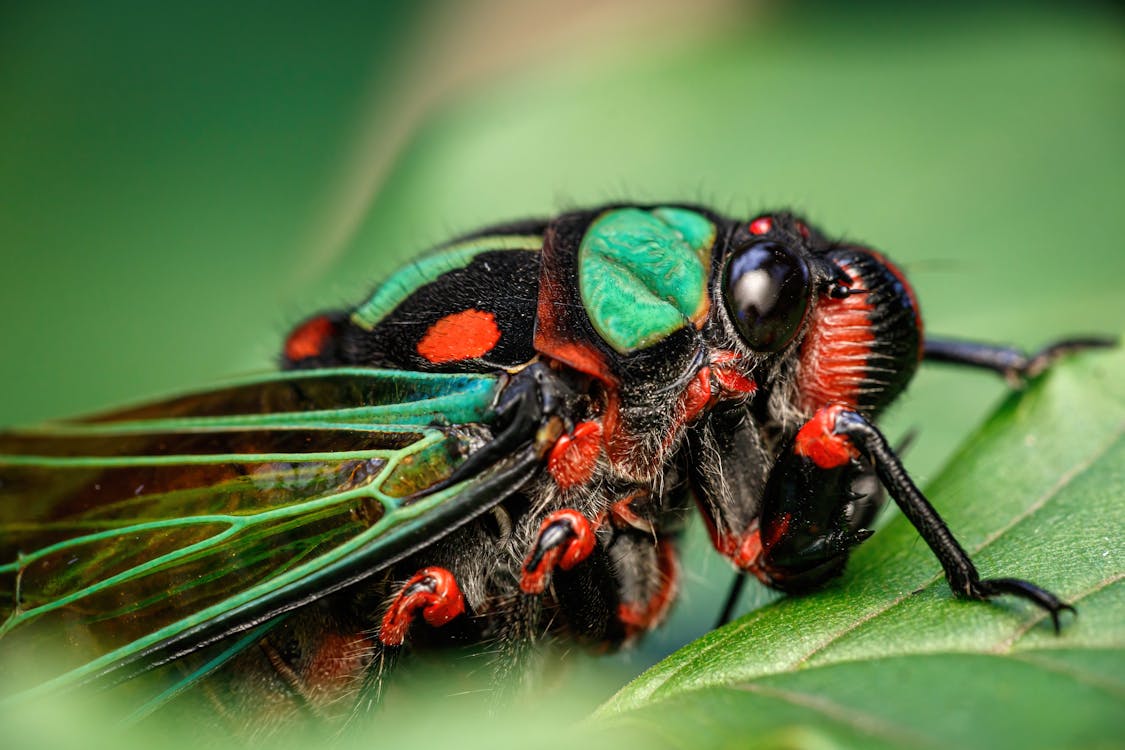
A cicada accompanied me into my old Saab as I went out in search of a laugh, a smile. A friend.

Incomprehensible loneliness -- a paralyzing sadness that has accompanied my every waking … and some sleeping … moment since the late afternoon of March 26, 2024 … when my brother, Eric, died – pretty much drove me into the nursing home where my longest-tenured friend has lived for almost a half-year.

Jerry doesn’t know how he got here or even where he is and why, but he listens, carefully, as I try to tell him how I’ve been feeling. 

“Eric was a good guy,” Jerry Manley says, trying to focus his hazy eyes – “I can’t see to read anymore” – on me as I sit in the recliner next to his nightstand in the Memory Care Ward of the nursing home.

We talk a few minutes – Jerry mostly listening, but adding the smiles I need – about my brother and his kindness and his firm conviction – after attending News Brothers functions and film premieres and Lone Ranger encounters – that his baby brother was crazy. And so were his friends.  Jerry, Eric would say, was “the guy who always wore the aviator’s hat.”  It was yellow, and Jerry doesn’t know what happened to it.

Gangs of work crews are painting the hallways and public areas.  Just the other day – on my most-recent prior visit here – the old, dark-haired woman who parades up and down the full length of the hallway in this dormitory of dementia (not necessarily demented) seemed to be watching the painters’ progress. Or perhaps she was just talking about me.

“Knucklehead. Knucklehead. Knucklehead,” she repeats, almost non-stop as she makes her journey.  She’ll probably have to cut off her pacing for a few hours after the wall-painting is done. The carpets, paint-spattered and looking like they’d played host to a flock of seagulls, obviously are going to be replaced.  

I ask Jerry if he knows the purpose of the extra sheet on top of his bedding.

“I don’t know what’s that for,” he says. Perhaps it’s laundry day. Perhaps he spilled his breakfast tray. Those are just two of the reasons I concoct, but it’s not worth pressing the issue.

It’s better for me to just be here, talking about real brothers and News Brothers with this old man – nine days older than me -- who has stood by my side, a disciple almost to the occasional point of near-death, since he introduced me to the Rhinestone Fatman at a party in a house somewhere over near Adams, Tennessee.

Actually, it was the first party I’d been at since joining The Leaf-Chronicle newsroom on September 12, 1974.  As a high school sportswriter, I worked most Thursday, Friday and Saturday nights. And often Tuesdays and Wednesdays as well, covering the football and basketball games of the high schools and middle schools.   And I always needed to be in the office by 5 the next morning.  Except for my brother’s frequent visits to my apartment and to the sidelines, I was mostly alone for a long time.

The newspaper had plenty of young people. And they partied most weeks. I wasn’t even invited, as they knew I was working.  Or perhaps it was my Yankee accent and fashion-forward bowties. Of course, what they considered partying would pale in comparison to the parties Jerry and I attended, even hosted, during our too-many years in Clarksville.

I may be wrong when I say the party where I first drank beer with Jerry was while David Rush – the aptly nicknamed “Rhinestone Fatman” – strummed guitar and imitated David Allan Coe.

“You don’t have to call me darlin’, darlin’,” I said to the Rhinestone Fatman as we sat in chairs near the record machine in the house where the party was held.

“You don’t have to call me Charley Pride,” he answered. I’ll insert here that later in my life, when I was entertainment editor at Nashville’s morning newspaper, I interviewed Charley Pride a couple of times. Gentle enough soul, as long as you don’t disagree with him, or some such, I’d been warned.  

My first interview with Charley came after his “mentor,” the reddest neck in country music, Faron Young, killed himself. Despondent because “hat acts” had ruined his own chances to thrive in country music anymore and with a checkered love life and emphysema, Faron penned a suicide note and followed through.

He had been Charley’s biggest booster, and I interviewed Charley about the supposed racist with the heart of an integrator, his champion. We spoke later for another story in the years before Charley died.

Back to the party. Jerry and the Rhinestone Fatman – belly pushing hard at the snaps of his Western-style shirt -- were at the party as representatives of their paper, The Gallatin News-Examiner.  Jerry soon would move up the Multimedia ladder to his job at the flagship newspaper in Clarksville. The last I heard of the Rhinestone Fatman, he was a slender fellow in South Florida trying to get a review of his mediocre album in the Nashville morning newspaper. I told him there were much-more-mediocre albums mailed to the office daily from the “stars” on Music Row.  

But enough on that.  Jerry, who put his Gallatin weekly together in the Leaf-Chronicle composing room before getting the promotion to Clarksville, was an acquaintance. It didn’t take long before we became diehard friends. We both liked beer, laughter, The Beatles, Stones and could sing the Kristofferson songbook from memory (if not well … although that never has stopped my friend, Kris).

Hell, after he moved fulltime to Clarksville, Jerry and his first wife had a son and lived on two lots – one for the house, another for the garden – in St. Bethlehem, which now is part of Clarksville but back then was unincorporated Indian Territory.

I spent a lot of time with the Manleys. I was their dog-sitter when they took vacations – they had a pair of miniature poodles I took out in the morning and at night while the family was gone.

I also was the emergency contact for the daycare if something went wrong with little John and the parents weren’t reachable. Sometimes I just picked John up and took him to Poor Man’s Country Club, where I’d have a beer and he’d sit on the bar-top eating pickled hard-boiled eggs. Perhaps I joke about the eggs. I was careful with John. Jerry and that wife also asked me to be John’s guardian if they died.

Of course, I agreed and have been happy they didn’t die, although John was a good kid and now does some sort of computer razzmatazz for the space program down in Houston.

Jerry and I had a lot more adventures, and usually I bring them up when I visit him in the Memory Care Ward where he lives with a fellow named Milford, but who goes by Bob.

Chico, the Monkey, was a squirrel monkey, similar to this royalty-free image from shutterstock.com. This monkey appears to be fine. Chico tried to live free, only to be eaten by dogs. Some see similarities to The News Brothers newspaper careers.  

“What was that headline we put on the Chico, the Monkey story?” Jerry asked me twice on this visit.

“Deputies go bananas: ‘Monkey at large!’” I tell Jerry.

We agree that the night we worked with reporter Rob “Death” Dollar to put that story, filled with primate poofery and puns, was among our happiest in our half-century of newspapering.


The most-famous photo of The News Brothers includes Neesa (Perry) Trotter enticing Jerry "Chuckles" Manley and Jim "Flash" Lindgren (back row) and Rob "Death" Dollar and Tim "Flapjacks" Ghianni (front row.) Neesa was our newspaper clerk and she's gone on to a prestigious life. The rest, well, not so much. 

For that one night, we weren’t working with a headline about “The Full Moon Rapist” (I gave the beast the nickname for headline purposes) and the terror he was causing in New Providence and out in the trailer parks near Fort Campbell. We weren’t working on a lead story about a redneck who almost got his balls shot off by an angry neighbor. And, as a relief, there was no dead GI traffic wreck nor teenage abduction, rape and decapitation tale to deal with.

Instead, we spent that night covering the tale of the monkey who escaped from his cage in a subdivision near Swan Lake.  He thought he belonged somewhere he’d feel free. Tragically, neighborhood dogs cornered him and ate him a couple months later. But he’d been able to swing through the branches, outside the jail-like cage, for two months. It probably was worth it.     

Bob came back into the dormitory room while Jerry was using the facilities. Bob is always glad to see me when I enter their room, and on this visit, he plopped down in the second recliner in the room.

“They call you ‘Bob,’ but your real name is ‘Milford?’” I asked. He nodded and laughed.

“Yes. Bob. And Milford.”  Bob used to raise Tennessee Walking Horses, according to a newspaper story that’s framed and hanging on the wall.

“How long have you lived here, Bob?” I asked.

“Long, long time. Too long.”

“They take good care of you here, Bob?” I asked. He just shrugged.

He extended his right hand. “I’m glad to know you, Bob,” I said as we shook.

“Me, too,” he said.

It was before Bob returned to the room to wait for lunch – he went down there with me and Jerry as the woman who proclaims everyone a “Knucklehead” trailed us – that I talked about my mental state with Jerry. (By the way, as she trailed us down to the lunchroom, I tried to allow her to pass us in the hallway. She declined. She didn’t call me a Knucklehead, but instead hummed an off-key version of Amazing Grace.)

“I can’t remember anything,” Jerry told me as we sat in his room, him chowing down on the packs of crackers and Diet SunDrop I’d smuggled into the facility in my cargo shorts. After he finished those, he had a container of chocolate pudding and some Pringles. He doesn’t know where those came from, but I reckon the staff gave the snacks to him because he skipped his morning oatmeal. A diabetic, Jerry needs food, though perhaps not what I deliver.

“I’m still hungry,” he said. “I hope we have lunch soon. I sure could use a bologna and cheese sandwich. Or whatever and cheese.”

I told him that since my brother died, I have been aching in my heart. Some days I can’t do anything. I try to put words together on the keyboard to keep myself going.

“I didn’t feel as bad as this when my parents died,” I told Jerry. “I just can’t shake the gloom.

“He was the only one left who had lived my life’s story, who knew all of my aunts and uncles, our grandparents, our cousins, Mom’s cooking. Thanksgivings at Walnut Lake. The midget toads we collected there and released in Chicago. Everything. I’ve got no one to talk with about those things.”

Jerry’s eyes grew a little moist, as he has loved me and pretty much “followed” my lead for 50 years.

“It also reminds you of how damn old we are,” Jerry said, matter-of-factly, as he finished off the SunDrop.

“You bring this to me today?” he asked. I confirmed I’d brought the cheese and peanut butter Ritz crackers and the SunDrop. The other stuff must have come from the dietician.

“Thanks,” he said. “I can’t remember much.”

 We then entered into a discussion of whether he has dementia or if his memory has been wiped clean by another cause. Like our lack of restraint in the last quarter of the 20th Century. Or perhaps Alzheimer’s?

“Doesn’t matter,” he said. “Can’t remember anything.”

Twice the subject of visitors came up. “John Staed came a little bit ago,” he said, both early and late in our conversation.

I didn’t want to tell him that John, an original if not particularly active News Brother --has told me he hasn’t been to see Jerry. He’d like to, perhaps.  But he’s not been there. “Only in Jerry’s mind,” or something like that John replied when I asked him if he’s made the trek up here from Birmingham, Alabama.

“Other than John Staed that one time, you’re the only one I see at all. Come more often if you can.”

I’ve been there once or twice a week for almost six months, and I’ll continue doing that, as it’s good for me. I am sure Jerry’s daughter and a few other friends visit, but he just can’t remember.

As we walked down to the lunchroom, the Knucklehead lady singing Amazing Grace behind us, I promised Jerry I’d be back soon. He was eager to get in line for the bologna sandwiches, so I hugged him and slipped away.

There is a lock on the door from the Memory Care Ward to the rest of the nursing home. You have to be buzzed in and out.

I hit the buzzer, but no one came to help me. Then the double doors swung open, two women pushing carts filled with bologna sandwiches and cranberry juice.

I thanked them for opening the door, and I tried to slip past them. But they spread out, using their arms and the food cart to block my way.

“You must be a new one here,” one of the women said, as they tried to force the door closed, trapping me in the Memory Care Ward.

“I’m not an inmate,” I told them both, pointing at my visitor badge. “I’m here to see my best friend. I’m here all the time.”

They pondered, quietly, whether to call an orderly and have me carted off to be lobotomized, when they studied my badge.

They called the front desk, where it was confirmed I was a visitor and not an inmate.

I will say here that I like the folks who live in the bright lights behind the locked doors better than most people I’ve ever met. Quick with smiles, handshakes, pats on the back.   Uncommon and much-welcome kindness snipes away at my desolation.

So, the two women – both sturdy souls in their blue-smock uniforms -- move their arms and let me pass.

“We thought you were a new person here,” one said.

“I’ll bet you get that all the time when you come here.”

I stepped past them, at first a little angry, but then pleased that at least they confused me with this special race of kind people. “Really, we’re sorry. We thought you were a new one living here. I’m sure you understand.”

“Knuckleheads,” I muttered as I made my way to the front door and freedom. “Knuckleheads.”

When I get to my car and open the door, the giant cicada on my car seat doesn’t move.  I push him slightly and he barks at me before flying into the humid air near Granny White Pike.

I know the bug won’t live long. Nobody really does. But, for now, he flies free as a bird outside the freshly painted walls of the nursing home.

Cicada escaped my car and went on to live a gloriously short life. This is not the particular cicada, but it is similar in appearance. Royalty-free photo from Pexels.


Friday, May 3, 2024

He misses Lewisburg, but Jerry's content in this clean, well-lighted place; Crackers for my pal, handshakes with my new friends

Jerry "Chuckles" Manley, with aviator's cap, speaks with radio news hound Scott "Badger" Shelton as, left, Rob "Death" Dollar and, at right, Tim "Flapjacks" Ghianni, Jim "Flash" Lindgren and ET look on. A few months later, Chico, the monkey, escaped. I think ET phoned home.  

 “I keep thinking I’m in Lewisburg,” says my beloved friend, as he waits for lunch to be served in the dining and social hall of the Memory Care Ward.

“I don’t know why,” Jerry says.

Actually, it is wishful thinking for Jerry Manley, my pal for a half-century … most of which he has forgotten.

Still, he wishes he was in the Lewisburg house where he lived for a few years after life and a newspaper – for guys like him and me, those things are one in the same – let him down.

“All I remember is being in my house. I think I fell down and couldn’t get up. And I guess they brought me here. Here I am.”

He rocks back in the padded chair – “It’s not as comfortable as it looks” – and says he wishes he still was in that house.

“But I guess I won’t be. Who is living there now?”

I answer that it’s his nephew, Steven, who moved in long ago to share the house near a creek. Steven gradually assumed more and more of the care of his deteriorating uncle. That last fall was what triggered the move to the nursing home.

“I don’t remember much. Don’t even remember how long I’ve been here,” Jerry says, with a smile, no bitterness.

I tell him it was right after Thanksgiving when his family -- the loved ones who had done their best for him in between regular stays in hospitals, rehab centers and old folk’s homes down in Lewisburg -- realized they couldn’t care for him. And, he couldn’t take care of himself.

“We had a dog down there at my house,” he says. “A white dog. Name was Snow. I’m surprised I can remember that. Course, I guess we named him that because he was all white.”

My friend has always loved pets – I used to dog-sit for him and his then-wife up in Clarksville, when they went to family reunions and such.

Those family reunions were what Jerry built his summers around for as long as I knew him.  Folks from Petersburg, Lewisburg and rural areas not deserving of names would show up around the Fourth of July for a week or so.

He had two uncles who would come in from California.  “One lived in San Diego, one in San Francisco. One year we went out and visited them both. It was a beautiful drive between them.”

He and his second wife took the Pacific Coast Highway – my favorite road in all my ramblings – at least part of the way.

I remind Jerry that he was at the reunion (and single again) when he got the call from the morning newspaper that they were buying him out. That’s what they do with people like us, put a little package together and sweet-talk you about their generosity as they stab you in the back. The sweet-talk fell on deaf ears in my case, though there literally seemed to be a sharp pain between my shoulder blades. Or maybe a couple feet lower.

Jerry didn’t even get the courtesy of being stabbed in the back, and he’d been a valuable editor and leader at the paper for about 30 years. It was simply a cold call. The coldest variety.

“They just called me at the family reunion and said ‘don’t come back to work,’” is one thing he remembers clearly, in a conversation we had back in his room, before we ambled down to the lunch room.

I ask him what his response was.  “I told them that was a shitty way to treat me,” he says.   “Shitty way. Shitty.”

I’d gotten to the nursing home in the morning, and as I walked in with food contraband in my cargo shorts, I had to walk around a gathering in the hallway of the part of the facility where people still have most of their marbles.

“We had a lot of complaints about yesterday’s lunch,” says a tall, young guy in his late-50s or early 60s.

He’s clearly some sort of administrator and, from the size of the gathering of folks – many in wheelchairs – it is clear that he is attempting to stave off some sort of revolt.

“We won’t serve that again,” he said, to a sour chorus of “no more mystery meat.”

I gave the rebels two thumbs-up as I cut through their cafeteria, where one resident was laughing about the hubbub, and continued to the Memory Care Ward.

I heard one more “mystery meat” jeer as the door closes behind me.

Jerry was sleeping as “Columbo” stumbled and yammered through another murder on the big television.

I woke him by putting the bottle of Diet SunDrop in his right hand.

“This for me?” he asks, as he twists the cap off. Both of us had trouble with the cap the other day, so I had a woman at the gas station where I bought this drink loosen it for me before I went to the nursing home.

I also gave him two packs of Ritz sandwich crackers – peanut butter and the other cheese – and I sat down next to him.

“What was that headline we wrote?” he asks me right after I bring up the subject of the legend of Chico the Monkey, a highlight of the many years when I was in charge of the Sunday newspaper.

I bring that up every visit, because he smiles and he remembers the night in the newsroom in Clarksville when police reporter Rob “Death” Dollar wrote the tale of a police pursuit of an escaped monkey in a neighborhood not far from Swan Lake Golf Course.

The monkey’s quest for freedom – sometimes people just want to be free – baffled the sheriff’s deputies, who kept code-talking on the scanner and talking about the monkey business.

Rob had gone out to the scene for a while, then came back with notes and a report and worked the story as we listened to the scanner.  Then I read it out loud, with Jerry and Rob right there, all chipping in monkey puns and aping the words of Chico’s pursuers.

“Deputies go bananas; 'Monkey at large'” was the headline Jerry wrote – again with help from me and Rob.

We streamed it across the top of the front page of the Sunday editions of The Leaf-Chronicle, and adjourned for scotch with the exhausted deputies -- who did not catch the monkey --  to Buford Thaxton’s Camelot nightclub.

The following Monday morning began with one of my frequent invites to publisher Luther Thigpen’s office.

I’ve written this story before, and it ends with a column I wrote a few months later that begins “Chico, the monkey, is dead” or something like that. He’d survived for months on his own before neighborhood dogs ate him. Poor damn Chico. “Freedom’s just another word for nothin’ left to lose,” a friend wrote back in the 1960s.

This Chico story always perks Jerry up, and we go on to remembrances of other stories told – most much more tragic, involving many GI traffic fatalities (Fort Campbell is adjacent to Clarksville), asbestos in schools, teenage rape and murder victims and killers. I guess, come to think of it, Chico’s story was plenty tragic as well.

“Remember Skipper?” I’ll ask Jerry, when I bring up the name of a down-and-outer we’d befriended, even taking him to bars and parties. He was probably only 70, which seemed so old at the time.

“Sure,” Jerry says, reciting the first line of my initial column about Okey “Skipper” Stepp: “Me and old Skipper sat on a bench. It was hot. Boy was it hot.”

I had a deep love for Skipper, and he was the last person I visited – at a nursing home, where he spent his final days – before I left Clarksville for a somewhat spectacular, somewhat bittersweet life of a newspaperman in Nashville.

“John Staed was here the other day,” Jerry says. John’s nickname is “Street News Brother,” and he’s a good guy. He visited Jerry about six weeks ago.

 “Columbo gets too much for me,” says Jerry, switching the channels and wildly ending up on a gospel preacher’s show.  We watch it for a little bit before finding a cartoon version of Spiderman.

“Man, I’m hungry,” my friend says, as he throws the cracker wrappers away and washes down the last crumbs with Diet SunDrop.

It is almost lunchtime, so we get up and walk, carefully – I’m as much of a falling risk as Jerry is – through the hallways, stepping around the workmen who are painting the walls. The rain of careless spots on the carpet indicates that new floor covering is on its way.

“What is the name of this facility?” Jerry asks, as he sits down in a comfortable – it seems --chair to wait in the dining hall/social room for his lunch.

I tell him the name and add that it is in Brentwood.

“I don’t know why, but I keep thinking I’m in Lewisburg.”

I leave him there to await his lunch and I go to the dining room door, propping it open so that three other men I’ve met here can get in for their lunch.

All of them shake my hand, like I’m the end of a receiving line, as they pass me. I really like these people.

A dietician rolls her cart through the locked doors from the regular wing to the Memory Care Ward.

“What you got for them today?” I ask her, as I see something resembling big trays of hamburger and pasta and veggies, on her cart. Hamburger Helper, perhaps?

“I just bring this stuff from the kitchen,” she says. “I don’t know what it is.”

I look back and wave to my friend.  I'm sad at the realization:

Jerry's not in Lewisburg anymore.        


Thursday, May 2, 2024

Regretting that my last 'Dance with The Guitar Man' has ended, but celebrating long conversations with twang-master Duane Eddy

 When I learned that the great man Duane Eddy finally had succumbed to the cancer he had been fighting valiantly -- his wife Deed always by his side -- for so many years, I rubbed at my eyes.

I’d always figured we’d have another phone call, and then another.  He could regale me with tales of Beatles and Wilburys and the sound of a guitar inside an Arizona sewer pipe.

I would likely ask him again about his friend, Richard Boone, who was Paladin in “Have Gun -- Will Travel.” Duane performed “The Ballad of Paladin” and even appeared in a few episodes back when he was making his minor dent in Hollywood.

Boone’s friendship was precious to Duane, and – as a fan of both men and a friend of the latter – I knew that by mentioning it, we could veer off into all sorts of fun and off-the-record (figurative and literal) tales about Hollywood.  He would tell me about being a guest on the set of The Shootist, John Wayne’s last and best movie.  His pal, Richard Boone is one of the guys dispatched by J.J. Books in the 1976 film’s blood-spattered climax.  

When I told Duane I had that movie poster framed and on the wall of whatever house I’ve lived in since the Clarksville, Tennessee, movie house operator, Johnnie Harper, gave it to me 48 years ago, he was impressed.

Whenever I added that 1963’s “Dance with The Guitar Man” – with “Stretchin’ Out” on the B-side – has been a part of my life since it was released 61 years ago, I could hear the smile in his voice.  That 45 rpm disc sits in front of me as I write this.   

This 45 rpm recording has been with me since 1963, except for a few years after I gave it to my late, great friend, Peter Cooper, also a friend of Duane and Deed Eddy. Grimey's gave it to me after they collected Peter's records to sell for the estate. 

No more opportunities for conversations now, and it sucks at my soul. I just want to make one last call to check in on my hero. None of us ever gets that “one last call” before the Grim Reaper settles in for the kill on anyone we love. It doesn’t seem fair.

But I also smile when recalling the number of free-flowing conversations – Duane was as interested in my life as I was in his – that weren’t so frequent once the disease began to sap him even more, forcing him to rest and try to recover.

The pandemic limited us to phone calls, because we couldn’t risk me dragging a deadly virus into the home of a man whose body was immunocompromised by cancer treatment.

The last several times I called him, the answering machine – with Deed’s voice on it – would be all I could reach, and I’d leave a quick message of hope, love and my gratitude at calling this man a friend.

Other times, I get Deed herself, a wonderful and kind woman, who would tell me Duane was resting and for me to call back later. Perhaps he’d be feeling more like talking. Those follow-up calls were either too late or somehow missed.  And I’d think, well, Timothy, just remember to call him again.

Deed Eddy is by her husband's side through glory, illness and, now, in her memories. Photo provided by Americana Music Association for my book, Pilgrims, Pickers and Honky-Tonk Heroes.

And I did. No one answered.

Duane was one of many musicians who I considered as something much more important. I considered him a friend.

When I constructed a book featuring those friends, Pilgrims, Pickers and Honky-Tonk Heroes, a chapter on Duane was critical to me.  The book is about musicians I befriended, most of them dead, but who I thought the world needed to appreciate in this era of disposable music.

The fact a guy like Morgan Wallen is packing three nights of shows at Nissan Stadium is evidence of how far the music world has fallen. Or perhaps the world in general, if you follow the news. (I could understand it when Taylor Swift had her long stand, but, to my knowledge she neither ranted racist words nor threw a bar stool from a sixth-floor rooftop bar, nearly hitting a police officer on Broadway below.)

Friends like Duane, Bobby Bare, Mac Wiseman, Kris Kristofferson, Perry Baggs, Earl and Louise Scruggs, Tom T. and Dixie Hall, Billy Joe Shaver, Frank Howard (and the Commanders), Waylon and Willie and the boys and a score more are featured in that book’s chapters.

Few of them remain on the right side of the grass. I talk with Bare frequently. Willie remains one of the world’s true forces of good, Kris is trying to enjoy life in Hawaii as his memories of glory fade, but his love for Lisa and the kids keeps him strong.

The book took a year to write.  It started from a list of musicians I loved and knew belonged in this elite company. I am not a musician, so my appreciation for these people is as just that, people … human beings whose hearts and souls somehow connected with my own.

Several of them died even as I was in the process of writing, rewriting and editing of that book – all told a three-year process.

Duane lived to read the book, especially his chapter.

Instead of sending it to him, I simply called and asked Deed to make him comfortable. I wanted to read it to him. I figured it would be easier for him to listen to it and offer any corrections on the phone.

Then I sent him a copy. He only found one error (I had Deed listed as his fourth wife, but she was  his third … and she was the love of his life), and said he wasn’t worried about it if the publisher couldn’t correct it. I got on the phone to New York or New Jersey or wherever the Rowman & Littlefield Backbeat Books editors were located and made sure that correction was made.

In my past as a newspaperman, the “rule” was that you never let the subject of a story read it ahead of publication.  I, though, am not much of a guy for rules. Never have been. Paying for it, but hell, I am me. Besides that, the rules of book-authoring are different and more flexible. And the newspaper world didn’t want me anymore, ever since the guards helped carry my memories, mugs and personal paraphernalia to the parking lot at 1100 Broadway back in 2007. There’s not even a newspaper there anymore.

On the day Duane died, I had been in an e-mail exchange with Professor Chris Cooper, multiply honored political science and public affairs dude at Western Carolina University.  He was the baby brother of my friend Peter Cooper, a great fellow whose ugly disease pursued him for years before it captured and killed him in 2022.

I was simply sending Chris something I had written a month ago when my own big brother died. I knew he would appreciate it. Different cause, but death just the same.

And there is that impenetrable baby brother loneliness of having no one alive who shares the same family-unit life experiences.

I have tried to compensate by calling my friends. There aren’t many still alive. Duane was on my list to “call soon.”

When I found out that Duane died, a loss that was all-but-ignored by Nashville media, I went down to my record room, where 68 years of record collecting fills every space. 

Many of them are CDs, of course, as the CD era hit hard in my “early” adult years and, while slowly vanishing, will return to prominence when younger people rediscover the value of an album rather than a streamed song. There are countless LPs as well, most from my elementary and high school and college years until the CD era hit when I was in my 30s. And others I’ve picked up more recently. The last LP I bought, before CDs killed that form for a few decades, was Springsteen’s “Born in the USA.”

I passed my Bruce collection the other day.

I knew exactly what I was looking for: “Dance with The Guitar Man.” I bought it when I was in sixth or seventh grade. It has been with me ever since, through life changes, college years, lives and deaths.

I find solace in this collection, even though the stereo system I can afford is battered, old and lonely. Like me.

This 45 rpm was not in my collection for almost 20 years, though.

After I brought Peter Cooper to Nashville to write about music on my staff at The Tennessean (a local Nashville daily), a deep friendship grew.

He was much younger than I, and he reported to me. But when he wasn’t working, and even later when he was a big shot at The Country Music Hall of Fame and Museum, we spoke of things like marriage, children, life, death, brown liquor and music. Often, all of those elements combined.

Perhaps 20 years ago, Peter first met Duane, for a story in the newspaper.  It became one of those emotional stories he “wrote from home” for me, always with his wiener dog, Russell, in his shirt. 

On the following Christmas Eve, I went down to my record room and rescued this old 45. I drove it over to the Cooper home – my wife, Suzanne, had wrapped it – and I gave it to Peter for Christmas. There was not yet a young Baker in the house, but Peter played the 45 loud for his wife and Russell. I’m sure passersby on Fatherland could hear it.

When Peter died, I didn’t think about that record.

But my friends Doyle and Mike, the think tank that is Grimey’s, the most-human record store in Nashville, purchased all of Peter’s music collection from the estate. 

When I learned that, I called them, and asked that, when they got to sorting through that collection of CDs, tapes and vinyl, if they found the “Dance with The Guitar Man” 45 rpm, complete with my grade-school scribbling signature on it (we used to take records to each other’s houses, so it was necessary to tag them to make sure you got them back), that they pull it aside and I’d buy it from them.

Mike called me to tell me he found it and would put it away for me. It was mine. No charge. “Peter would have wanted that,” he said.   

I did buy some other stuff when I went to the store – music from The Band, The Byrds and Tom Petty – but I didn’t have to pay for the old 45, on which my old signature is still there. Just fading, with life and time.

The record was on a shelf with Beatles, Stones, Elvis and other notable musicians’ work. So I fished it out, played it on my crackling system and brought it here for inspiration as I write this.

I should add that my friendship with Duane came long after I first interviewed him.  I was entertainment editor at the newspaper, and I found out that Duane had just released a new record, in the UK, where his star never faded. I think the information came from Deed, proudly calling to tell someone that her great husband had a hit overseas…. And ask why no one in America was interested.

I spoke with Duane – and Deed – for a story about a great man, a great artist, who can hardly be heard in the States, but who continued, then, to pack them in over in Swinging England. Even in his most-ill years, Duane entertained going back over to the UK, where he remains an iconic figure.

We spoke a few times over the years after that story, and when I became a freelance writer (after being aged out in the daily business), I knew that a story on Duane, his history, his continued relevance, his pure humanity, was worth doing.

I posted that story, published when I was a regular contributor at Nashville Ledger, on my Facebook page Wednesday.

With that 2018 story came a lasting friendship, and it included many conversations.

And, of course, there was the chapter in my book.

The fact I’d been able to not only write about, but befriend this man, a humble and honorable man whose twang changed music, is the stuff that has made a life in journalism – unfortunately abbreviated by age and by the steady demise of newspapers – worthwhile.

I looked at the 45 rpm record the whole time I’ve been spitting this reflection out, from my melancholy heart.  

Then I called Deed and left a message. The words were halting in delivery, harder on my heart. I wanted to ask her to have Duane call me back.


Monday, April 29, 2024

I save Jerry from orange balloon attack that brings joy and anger to the Memory Care Ward, cheese crackers and Diet SunDrop in my boxers, dead teenagers, movie, Chico evokes smiles and sorrow

 The massive orange balloon was rocketing straight for Jerry Manley’s face when I, by instinct, reached across and belted it, as hard as I could, across the room.

“Sorry, man,” I said to Jerry, as the other folks in the social and dining room of the Memory Care Ward either looked disgusted or laughed at me for my fevered interference. “I think you were supposed to hit that one.”

“That’s all right, Tim. I didn’t see it coming.” Jerry rolled back and forth on his heels and toes and watched the balloon soar from patient to patient in the Memory Care Ward. Or, perhaps, I should say “from resident to resident,” since the main medical attention I’ve seen involves Jerry lifting his shirt, so the nurse can put insulin injections in his stomach, something that troubles my friend: “I don’t know why they have to put them in my stomach.”   

Diabetes protocol debates aside, I had intruded on the Memory Care Ward residents’ game by accident.  Jerry was supposed to hit it.  One of the other folks even hollered “Jerry” as the balloon floated across the room.  It would have hit my old friend square in the face if I’d not reacted.

Jerry "Chuckles" Manley, me "Flapjacks" and Rob "Death" Dollar a dozen years ago as we share flapjacks. Jim "Flash" Lindgren took this photo. The restaurant went out of business shortly thereafter.

Jerry didn’t even know he was playing. They “dealt him in” on the morning’s festivities by sending the massive Volunteer-orange object toward his head.  As noted earlier, my natural reaction, when an object is soaring toward the head of a pal or loved one, is to throw myself – or at least my left hand – into the path of danger. I’d do it for just about anyone who has shown me kindness, let alone a fellow who “grew up” with me, purple hazily flavoring my 20s and 30s and 40s …. etc.   

The entire balloon attack incident, as shocking as it was to us both, was not what we were expecting after we walked down the hall from his dorm-like room to see if it was lunchtime yet.

It was 11:29, a minute to lunchtime in this world where time is meaningless, and Jerry simply wanted to stretch his legs and see if the ham and cheese sandwiches and chips and sugar-free pudding were ready.

The balloon then flew back to Jerry, and I – not wanting to again risk the ire and possible trampling by this horde – simply stepped out of the way. Jerry tapped it back toward a tall guy with a Vanderbilt sweatshirt.  That man hit it back, and it landed on top of a woman who was napping in her wheelchair. She didn’t wake up when another resident punched it out of her lap.

The Vandy guy again hollered “Jerry!” and sent the balloon toward my friend. Jerry delivered a perfect punt, sending the balloon toward the console TV where Emmylou Harris was singing her greatest hit. I love Emmylou, by the way, she’s beautiful and loves dogs and always treats me with kindness and respect. But she’s not a hitmaker.  I do wish Gram Parsons hadn’t died, his body stolen and burned in the desert at Joshua Tree by my friend Phil “Road Mangler” Kaufman. Different story, but Gram and Emmy were magic.

Up until the balloon attack, Jerry and I spent a couple of hours down in his room, where he feasted on two eight-packs of Keebler cheese crackers – white and orange cheddar -- and washed them down with a pint of Diet SunDrop. I had requested my local Shell station to start carrying that beverage after Jerry told me, weeks ago, that it was the beverage he’s missed most since his voluntary incarceration in a place where he’s not seen the sun since Thanksgiving.  It’s a full-time total eclipse for him, as he and roomie Milford Brown keep the shades and blinds shut. It could be 4 a.m. or High Noon, and they’d not know the difference as “Gunsmoke,” “Harry Potter” movies and “Wheel of Fortune” play round the clock.  

The crackers and soda were this day’s contraband food, that I snuck into the nursing home in the lining of my jacket. I worry that I’ll have to figure out some other way to get the snacks past the watchmen and watchwomen at the facility. (I also feel bad for not bringing any for Milford, but I can only kill one sick, old man at a time with my kindness.)

Even on this day, when it is sunny and 70, the black Iowa State jacket with the pockets in the lining, is a little too warm. In fact, I took it off as soon as I unloaded the contraband goods.

“I don’t know how I’m going to get this stuff in here next week. Summer’s coming and it won’t look right to show up here wearing this black jacket,” I told my friend, as he began what has become a weekly feast in recent months.

Even though he doesn’t remember it’s in recent months.

“When was the last time you were here? Four months ago?” Jerry asked.

“No, Jerry, it was six days. I try to come at least once a week,” I answered, as I pondered how to hide crackers and soda in my pants.  (“Is that a bottle of SunDrop in your pants or are you in love with me?” I fear the guardwoman at the front desk might ask.)

“I thought you’ve been here a lot,” Jerry responded, shaking his head at his confusion. “Sorry, I’ve got no concept of time. You live near here?”

I told him 5-6 miles away, and he nodded. When I told him the nursing home was only a mile or so from my late parents’ home – Jerry used to come over to swim in the pool and drink with me when I lived there between lives – he smiled. That was 35 years ago. To Jerry, it could have been yesterday or never.  My mother always was concerned by our vodka consumption out by the pool, particularly if Jerry was headed to work that night.

He told me that famous former journalist and respiratory therapist “John Staed was here just the other day.”

That visit was on Easter, which was last month. John, who lives in Birmintham, Alabama, is a good guy and a News Brother of the original vintage. “We talked about what we used to do,” Jerry said. “But I can’t remember what we talked about.”

Other than “Street” Staed’s visit, and my weekly forays into the nursing home where the patients now know my name, Jerry doesn’t remember having visitors.

As for my “familiarity” here in this clean, well-lighted place, it actually is fulfilling.

In fact, after “signing in” on a facial recognition gizmo, I wandered through the “main” part of the nursing home.  This section is for people with physical or age-related disabilities or woes who still possess all their marbles. 

I have to cross this nursing home’s width to get to Jerry’s locked ward. I generally smile at folks as I pass right through their games of dominoes or cornhole. When I was in college in Ames, Iowa, “cornhole” was not a game involving beanbags and polished wood. Wood was involved, though.

I always apologize for interrupting the competitors, and sometimes I can avoid it by swinging wide through their dining hall, especially if it’s not lunch hour.  One day – when all of the cornholers were playing from wheelchairs -- I stopped and watched.  I may even have applauded their abilities to “put a little English” on the bean bags even while trapped in wheelchairs.

An attractive and well-dressed 80-plus woman, pearls hanging around her neck, was happy to see me. “You are here to see your friend, Mr. Manley,” she said.

I did wonder how she knew Jerry, who is confined to the back half of the facility where nobody even knows their own names – or so seems.

 I thought briefly that perhaps she was an escapee from that secure mind-fogged unit, making a brave escape out into the wilds of Brentwood, Tennessee.  But she stopped at one of the tables where other folks sat, and she fished a pack of cards from a pocket.

“Must be playing crazy eights,” I said, to myself and no one in particular.  Instead, she started dealing five-card stud.  Read ‘em and weep.

Anyway, I like these people, both in the “regular’’ wing and in the “behind-locked-doors” section, where my longest-tenured friend has resided for almost half-a-year but admits he has no concept of time. He could have checked in here yesterday or years ago, in his mind. Doesn’t matter, since he really doesn’t know how he got here.    He does have a pretty good idea of when he’ll leave. Me, too.

As Jerry munched, greedily, on his first pack of crackers – he had skipped the oatmeal and toast, his breakfast that remained on a tray on the chair next to me – I struggled with the top of the SunDrop bottle.

Jerry then tried it. No luck. And he handed it back to me. It was about five minutes of give-and-take between two old men who had been friends most of their ever-shortening lives. (Sorry, I’ve been dwelling on mortality lately, as my brother died a month ago and I keep waiting for his regular 10:30 a.m. call and his booming “What’s new in the world of high adventure” greeting. Often, our conversations continued over burgers at Brown’s Diner, so I’ll never visit that establishment again.)

Finally, I told Jerry I’d take the soda bottle down the hall to see if one of the nurses, lovely Black women with charming smiles to make an old man cry, would open the bottle.

“If I go down there, I’m afraid they’ll take it away,” I said to Jerry as we eyed the greenish-yellow pint I was holding.

“We won’t be any worse off,” said Jerry, nodding toward the bottle that neither of us could open. If the nurse took it away, well, it wouldn’t be much worse than having it grow warm and unopened on his nightstand, next to the empty cracker wrappers.

Preparing mentally to lose my $2.29 liquid investment, I ambled down the hall, or ambled as fast as my cane would let me, until I found a nurse.

“You are young and strong and lovely,” I said. “I’ll bet you can open this.”

I thought I’d get scolded for the contraband. Instead, she opened it and handed it back to me.

Two minutes later, Jerry was drinking his favorite concoction and we laughed while I talked about Chico the Monkey.

I grew more serious when I brought up the subject of the 1982 murders of Kathy Jane Nishiyama and Rodney Wayne Long.    

“They ever find out who did those?” asked the man who daily edited the stories, sized the art, laid out the pages and wrote the headlines for those horrible tales 42 years ago.

I won’t bother to go into it here much, but Kathy’s rapist killer, Eddie Hartman – a Dickson County Jail trusty who borrowed a sheriff’s car to pull over victims like Kathy (God knows how many he got away with) died on Death Row. A handsome young killer, Eddie had grown old and wizened while waiting for Old Sparky. I think lung cancer got him.

Stephen Drake and David Frey, who killed Rodney, an Austin Peay football wideout, just so they could steal his car and escape Clarksville cops looking for them in relation to a series of Memorial Drive burglaries, both went to prison.

Drake got shanked in the yard over in the prison in Only. Frey finally was paroled about a year ago and lives about 10 miles from me.  I’ve tried to contact him to see if his life turned out as well as he planned, but neither he nor his attorney will respond.

The gun they used to execute Rodney – “Good shot!” they congratulated themselves after a powder-burn bullet to his skull – was stolen earlier that brutal day in one of the burglaries. Rodney was at a Wendy’s drive-thru near the Red River in Clarksville.  The young murderers tricked him, said their car had broken down out near Oakland Road. He drove them out there, just off the Guthrie Highway, and they executed him.

Those murders of beautiful young people and also contact with the killers pretty much soured all of our lives at the newspaper where we day-to-day covered the almost consecutive bloodshed.  They revisit me sometimes at night.

That constant stress of covering those murders and pursuits of killers and funerals and trials exhausted all of us.  I wrote a book with police reporter Rob Dollar – When Newspapers Mattered: The News Brothers & their Shades of Glory—about those days. And we even made a movie Flapjacks: The Motion Picture to break the tension and raise a couple thousand, more or less, for charities.

For Jerry’s pleasure and to spark memories, I call snippets of that movie up on my phone. (I was “Flapjacks”, Jerry was “Chuckles,” Rob was “Death” and Jim Lindgren “Flash” in the film’s starring roles.  John “Street” Staed, Ricky “Dumbo” Moore, Larry “the photographer” McCormack, Billy “StrawBilly” Fields all played themselves in the film. Harold “The Stranger” Lynch steals the show in the crucial gunfight scene.

Jimmy Stewart, John Glenn, Clarksville Mayor Ted “Wild Turkey” Crozier (endorsing me for mayor), Okey “Skipper” Stepp, diner owner Raissa Gray and her son Judson, and Dennis “Danny” Adkins and the bouncing head of the late Tony Durr all play smaller roles. Laura Warren cuts a fine figure as one of the folks who run behind Rob and me in the “Rocky” scene. I always liked Laura. Wonder what became of her?

A K9 cop, another cop who was known for fatally back-shooting fleeing suspects, motorcycle gang, the entire Clarksville fire department and hundreds of Hollywood extras celebrating Lindbergh’s solo flight across the Atlantic, all appear in the film.

When I play those scenes on my phone, Jerry laughs at what he sees. His favorite memories in his life involve hanging out all night with me,  “making movies” and the newsroom night when reporter Rob Dollar, with assists by me and Jerry, turned Chico, an escaped pet monkey, into Clarksville folklore.

“Lifesavers, a part of living,’’ Jerry sorta sings along during the scene when I pull a pack of that soothing candy from the pocket of my ugly Mustard Seed sportscoat and pass them down the line of News Brothers, all gathered on the railroad bridge over the Cumberland River, after we get thrown out of town by “The Big Guy,” our publisher, played by “Danny” in a Reagan mask.

“This really makes me happy,” says “Death” when the candy gets to him.

It makes Jerry happy to see it these days. It’s a colorful reminder that 40 years ago, we had the world by the horns (while the newspaper execs and lawyer had us by the balls) and celebrated that fact.

Jerry’s real memories are mostly gone, but they live on in the movie.

And, as everyone knows, Chico the Monkey is dead. Eaten by a pack of dogs, a brutal act ending his own attempts to be free.

After we watched a few scenes from that long-ago movie, Jerry and I walked, arm-over-shoulder, down to the recreation/dining room where residents were laughing at each other’s reactions to being pummeled by an orange balloon.